Nowhere in Particular
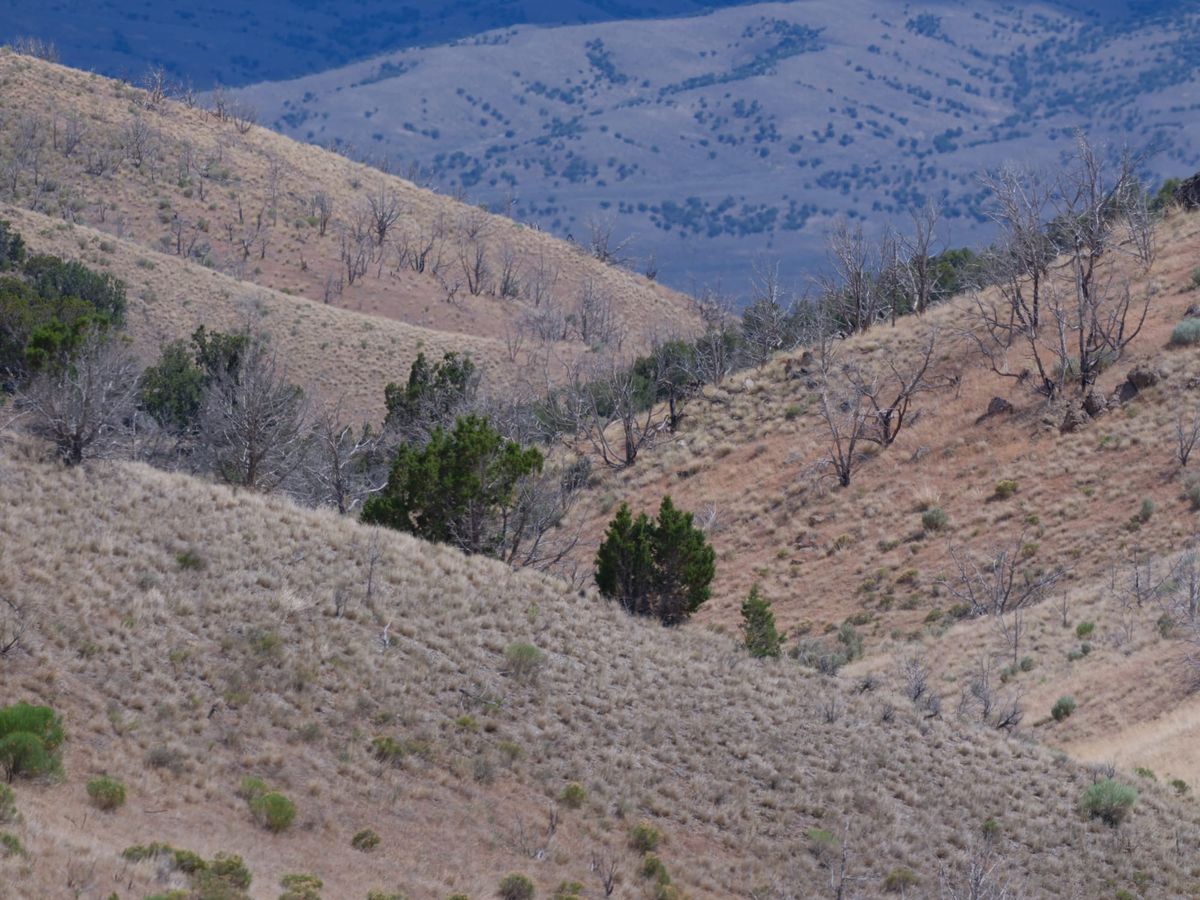
Here in northern Nevada the space is so boundless that it seems the cartographers have given up on names. Never reluctant to have a Rock Creek every few hundred miles I find myself in Nineteeen Mile Canyon for a couple of nights. Why?
Primarily because I was tired of driving and the wind and rain were not going to let up. I reconciled myself to retiring early into the camper and waiting the storm out.
We parked on some level ground and I rousted Mollie (or perhaps she rousted me) and put on my only warm clothes, hoody, and a windbreaker, and we ventured up the low hills that rose above our campsite. Recurrent rain squalls and gusting wind accompanied us. We didn’t go far but the leg-stretch did wonders for the mental state despite the awful weather.
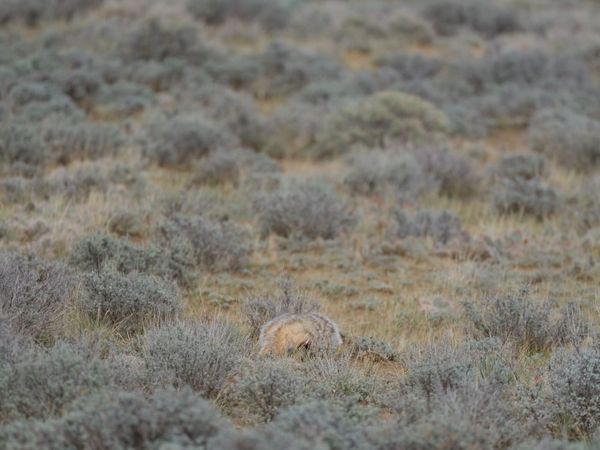
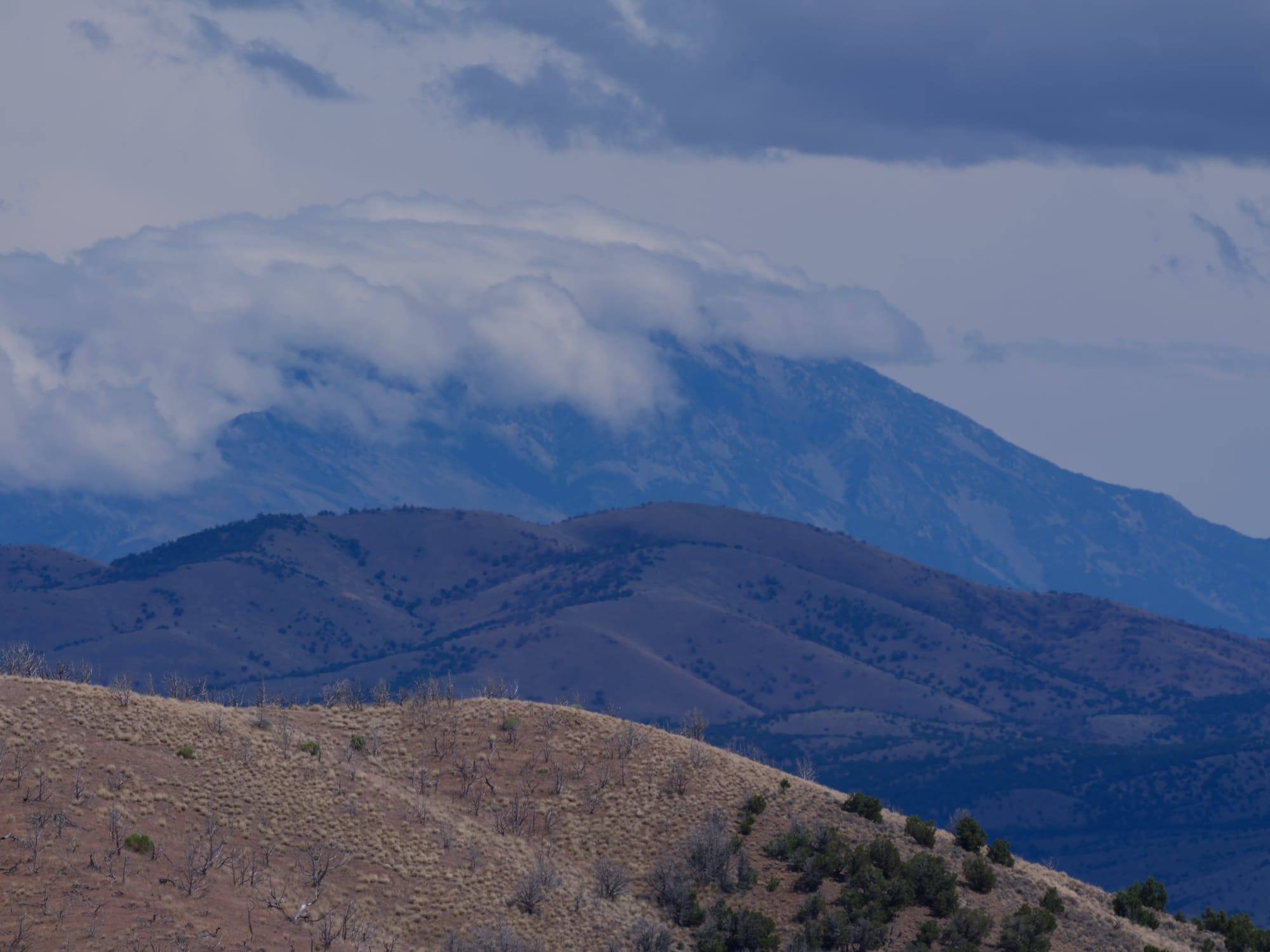
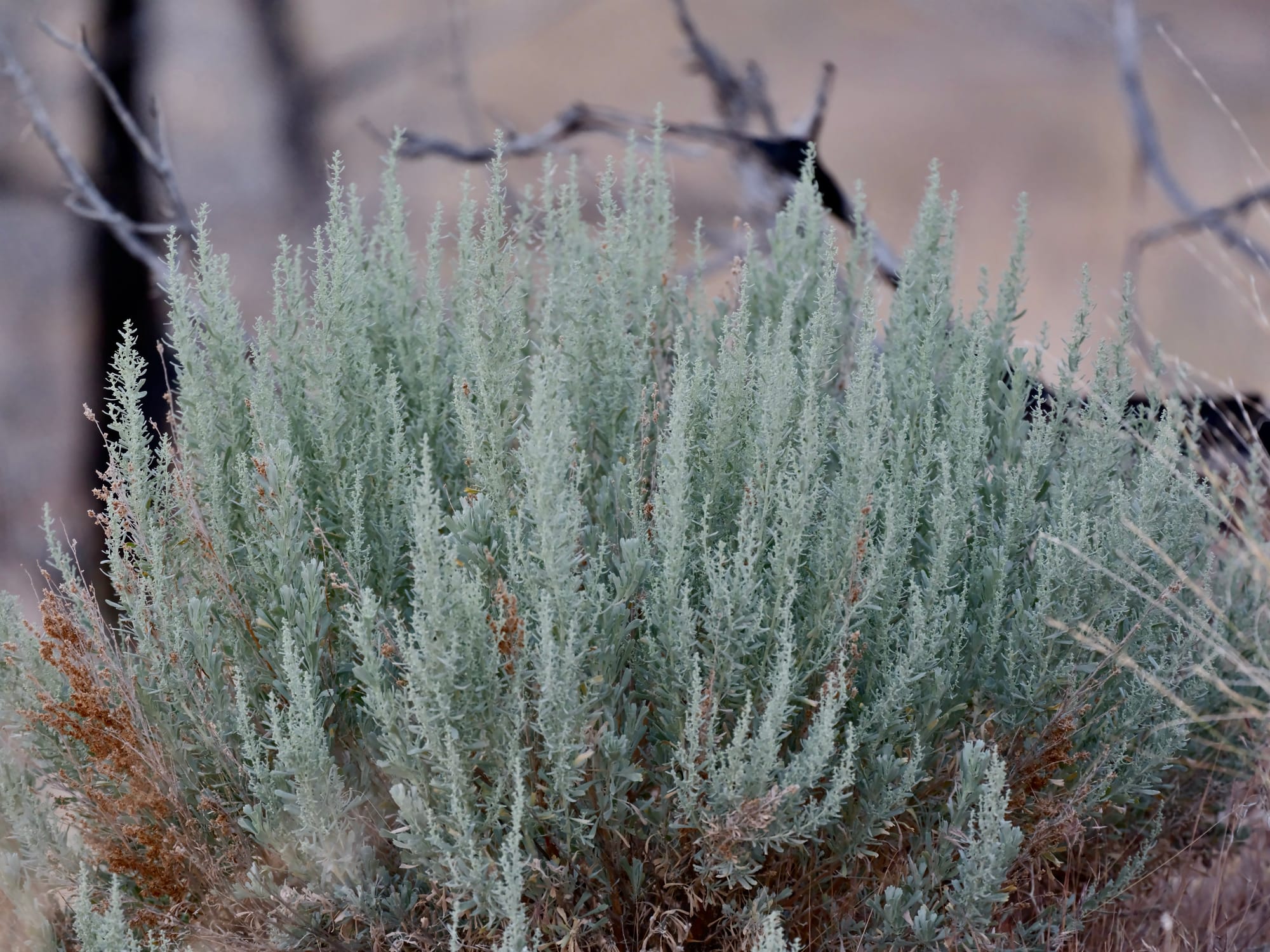
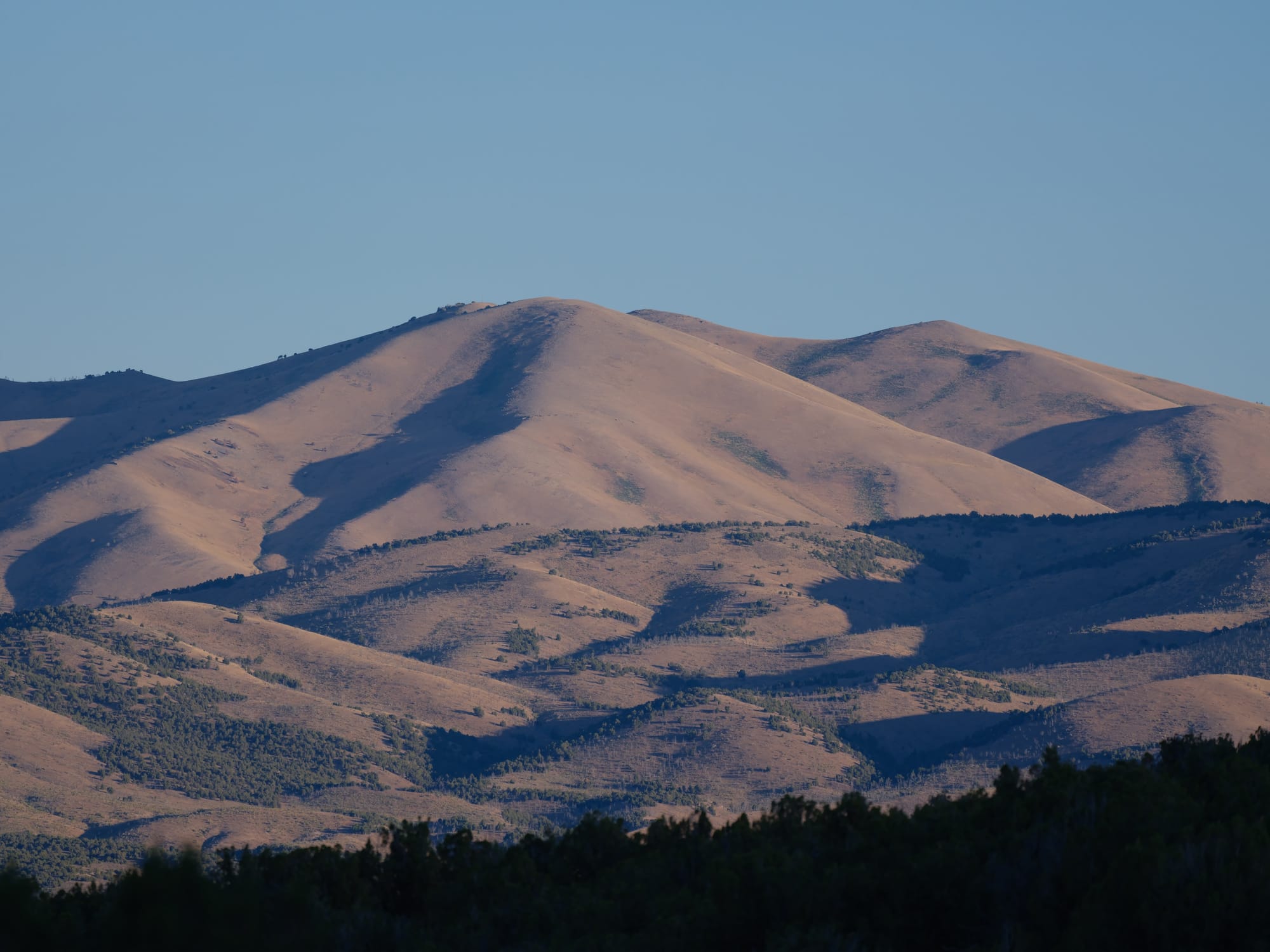
From the top of the ridge we got a good view of the surrounding country. Mollie found a Jackrabbit. We are in soft rolling gullies of blond grass, sage, and juniper trees. At about 5600 feet, it is arid and the ground crunches under foot. Spring has come and gone here and the country has settled into the rhythm of long hot summer days and chill nights.
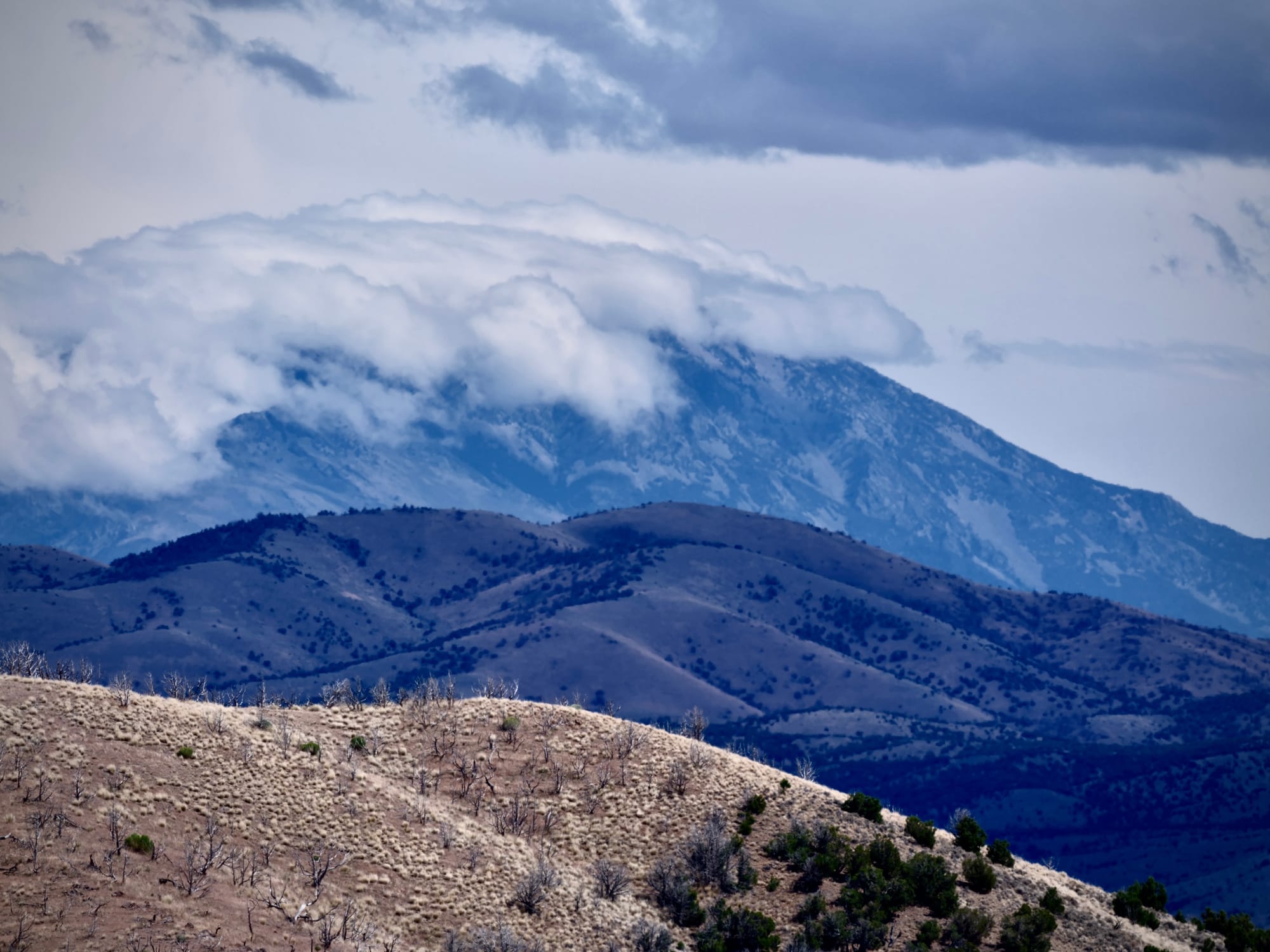
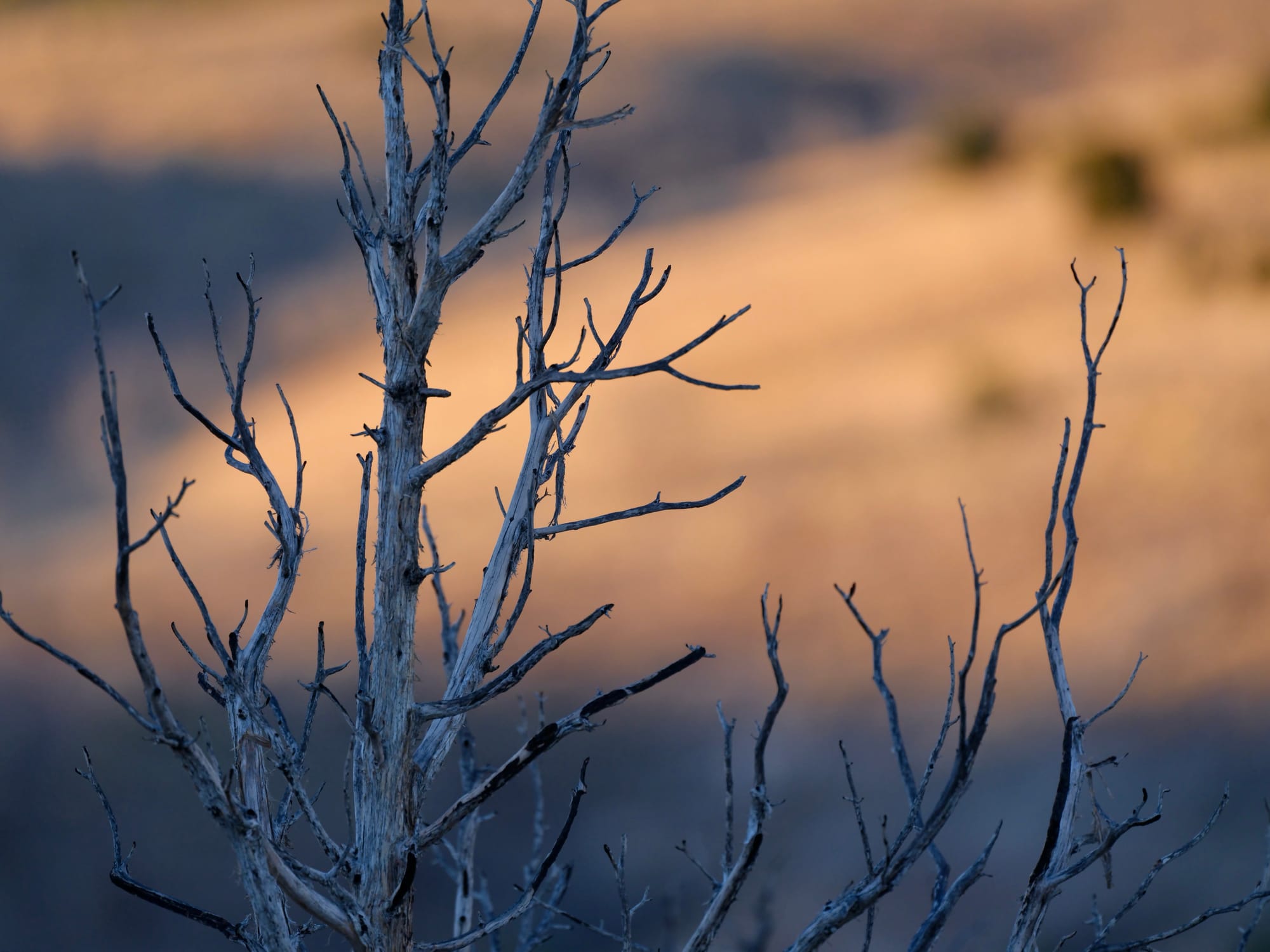
A fire has burned through at least half the canyon leaving the blackened skeletons of juniper trees; many waving husks of unburnt bark like someone who has been flayed. The burnt country is open and walking it is easy and one’s view is unimpeded. Cross the fire-line into the living juniper and one is in a midget forest of bright bushy juniper trees many still bearing hard blue berries. Here the feeling is enclosed and intimate. The ground at the base of the bigger trees is carpeted in thick moss where the sun rarely reaches. One weaves a staggering trail to make way between them.
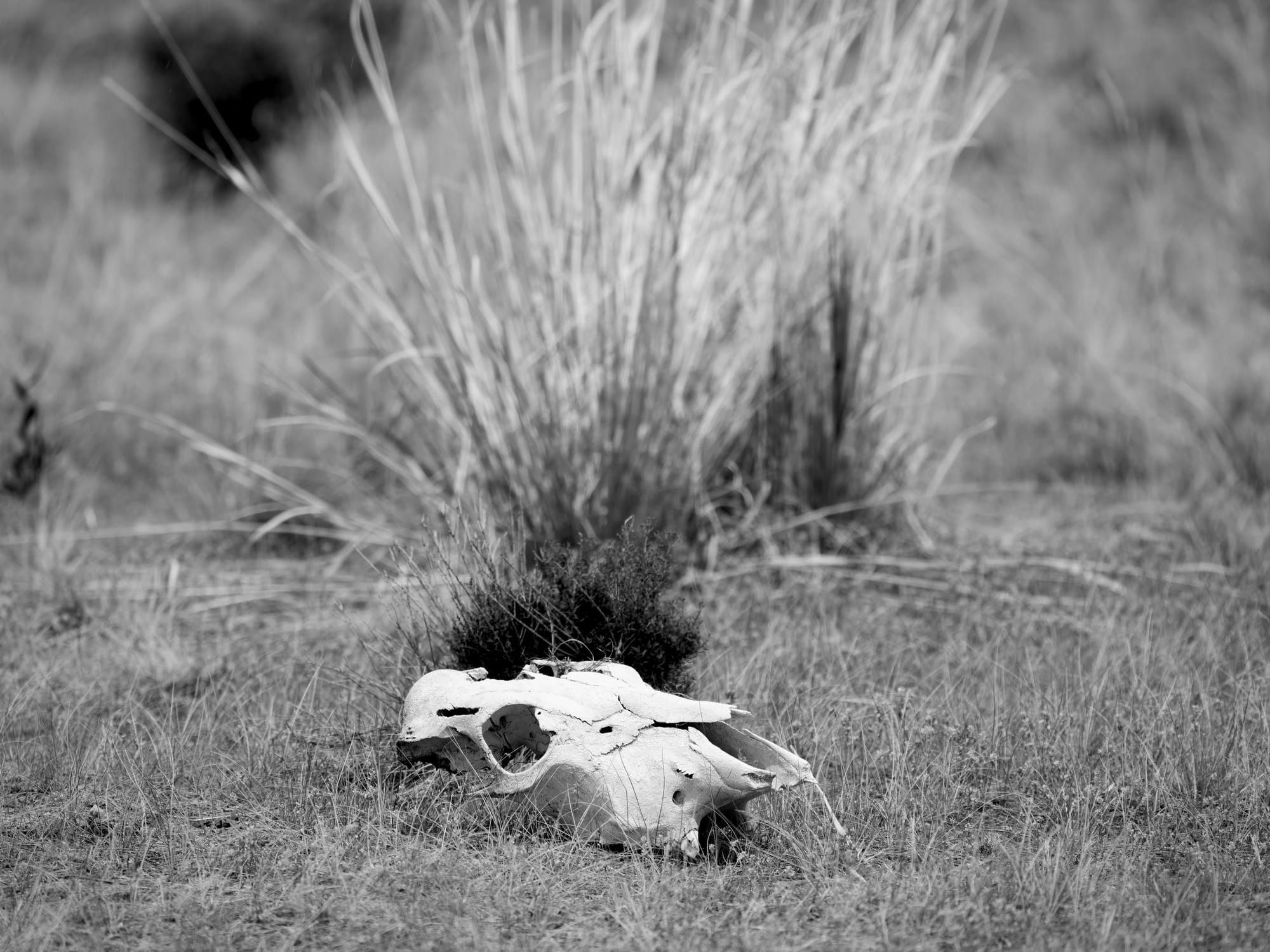
Later, our first long walk extended up the canyon on the dirt road that follows the dry wash’s course. A couple of disarticulated cow skeletons of many year’s past demise leave bright white litter. A skull I carry back to camp as some grim decoration for which I can only blame Georgia O’Keeffe.
We do not go to the end of the road, for while our arrival had dismal prospects, they steadily improved and now the way was hot, without water. We turned around at a giant steel water tank that fed a round fiberglass watering hole complete with float valve. It seems the public lands ranchers haul water when the cattle are driven up here. This watering tub was of a plain variety and showed how it was lacking compared to more advanced ones.
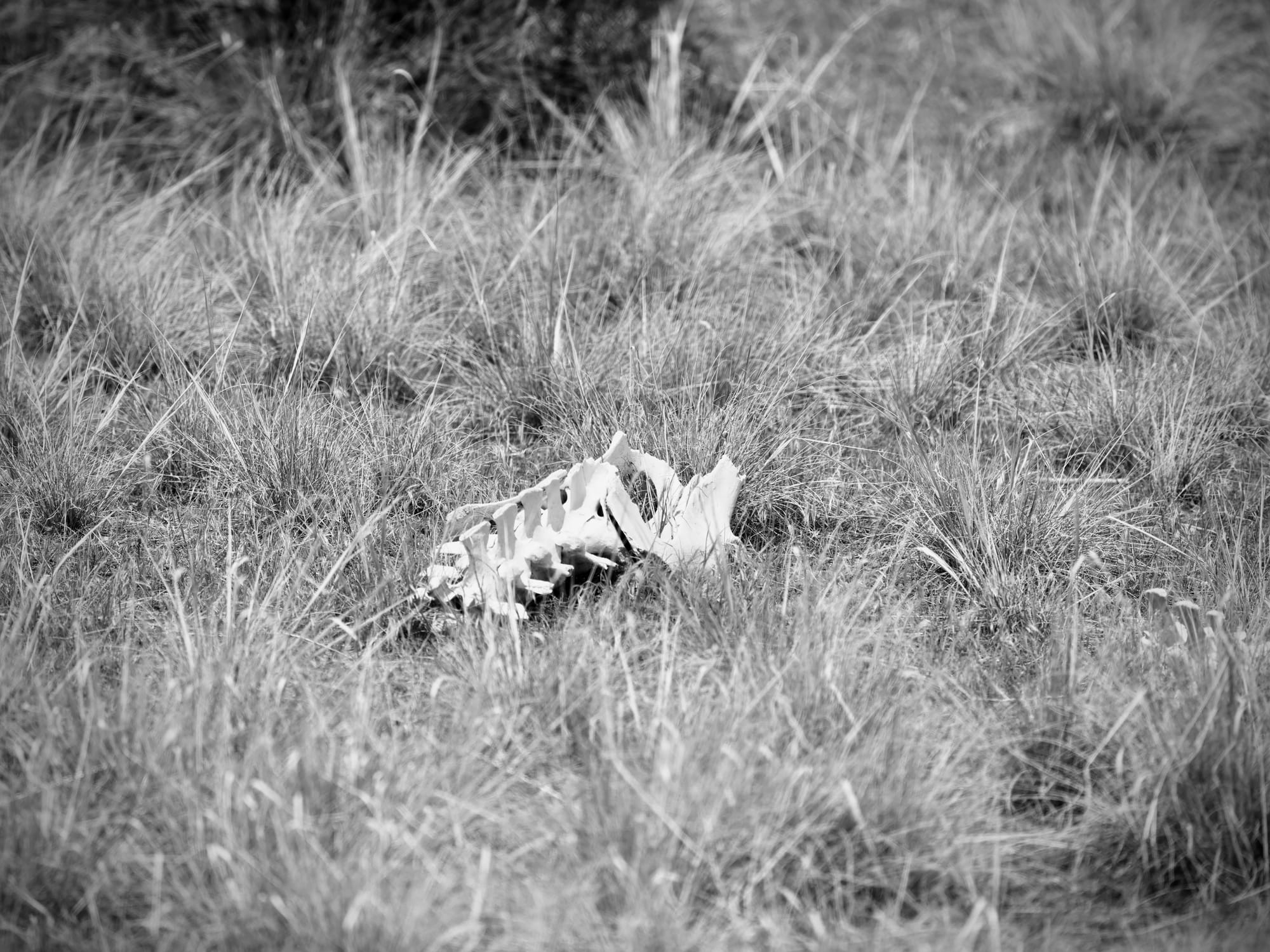
I have encountered the same type of tub elsewhere but the better ones have ramps molded into them and a platform to the edge. This means small animals that find themselves in the tub have a means to swim and walk to safety. The one here however had no such feature, and though dry now, the grisly result could be seen in the bottom. A skeleton of a rabbit with hair all about. It had apparently drowned. It was still damp from the rain and there was still some meat on the head. That significance was revealed the next day.
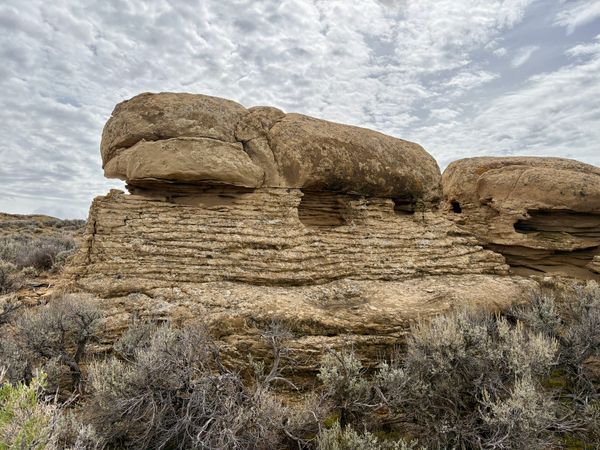
Most of the walking we did on return and the next day was ridge and contour walking. The ridges give a better view and in this open country and are not much slower than walking a road. So we walked the western ridge of the canyon. Skirting cryptogam soils on some slopes, others a shale-like gravel and sand resembling a hill of pot sherds. Clay soils and dark rock outcroppings amongst the variety and textures.
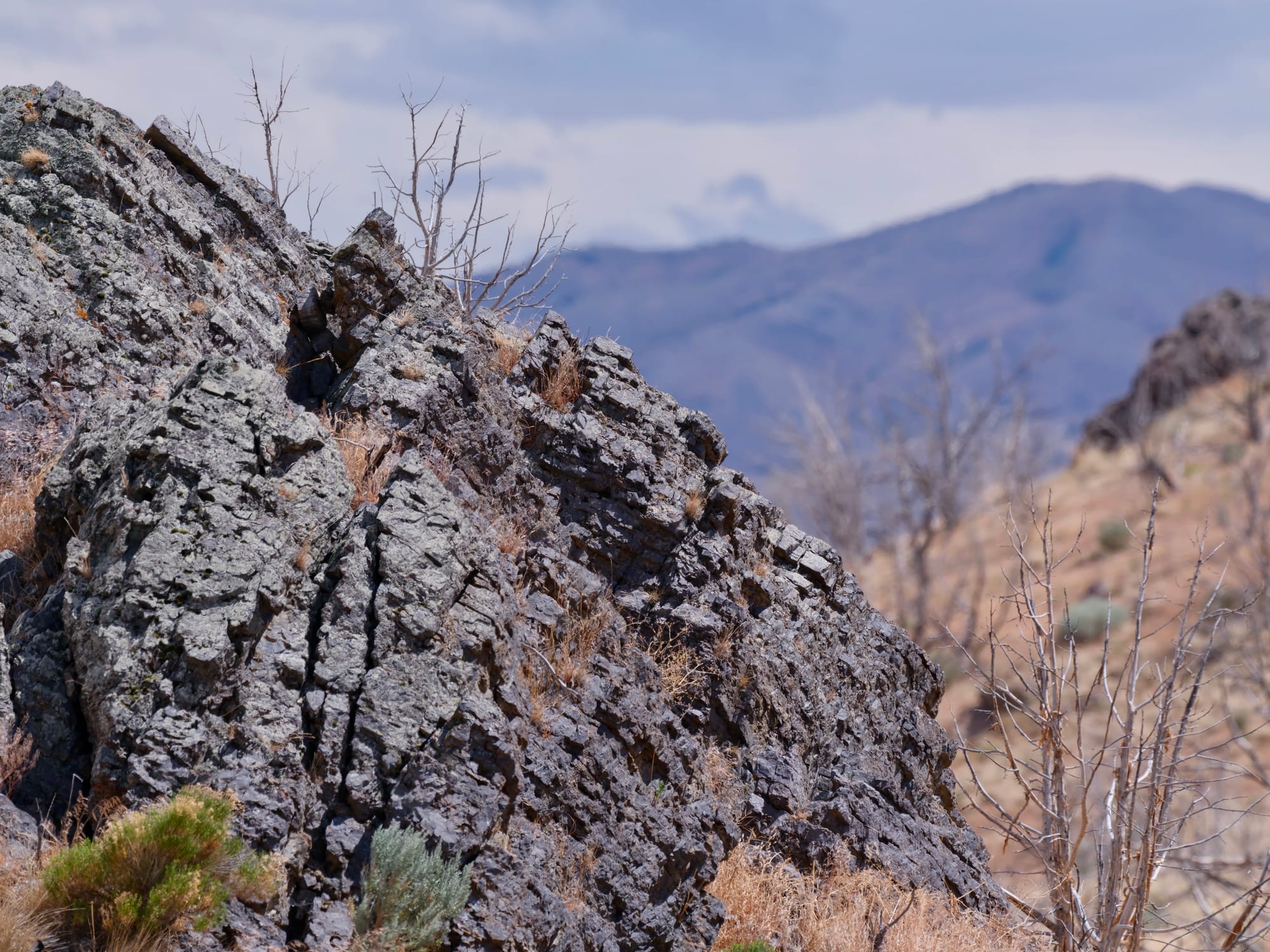
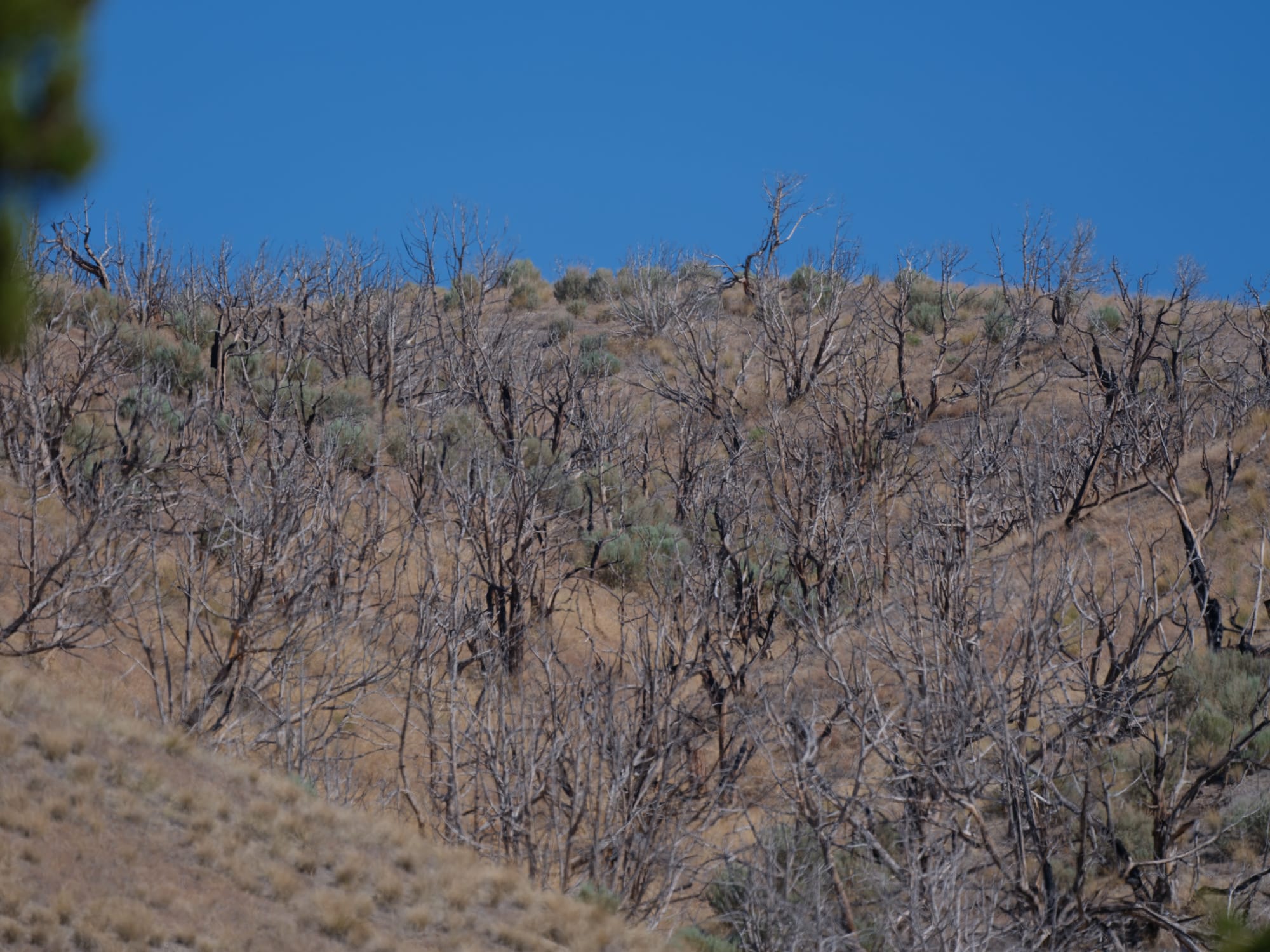
We found the bulldozed firebreaks from the fire up there as well as whole six point buck skull bleached white over the years. Perhaps shot by a hunter, it died nearby though the rest of the skeleton was not apparent. Alternatively, it may have died in the fire. There is ample evidence of deer and elk though we see none. The elk droppings are old enough to suggest this may be their winter range and they have migrated to higher ground.
Mollie manages to scare up a couple more jackrabbits and one cottontail.
In Nineteen Mile Canyon there is a troupe of forty or more Lark Sparrows. They traipse up and down this unremarkable canyon several times a day. As they have become familiar to us they venture closer and stay longer.
The flock moves in an organized leap-frog fashion, where the ones in the rearguard take flight and go past the ones in the van. They seem to first alight in a small tree before some venture down to the ground in the thin sparse blond grass to glean seeds. Wave after wave move down the canyon working over the ground thoroughly. They are constantly chirping perhaps to coordinate or maybe in some kind of excitement. For they do seem happy and animated as they whisk about. Frequently there are short chases with aerial acrobatics.
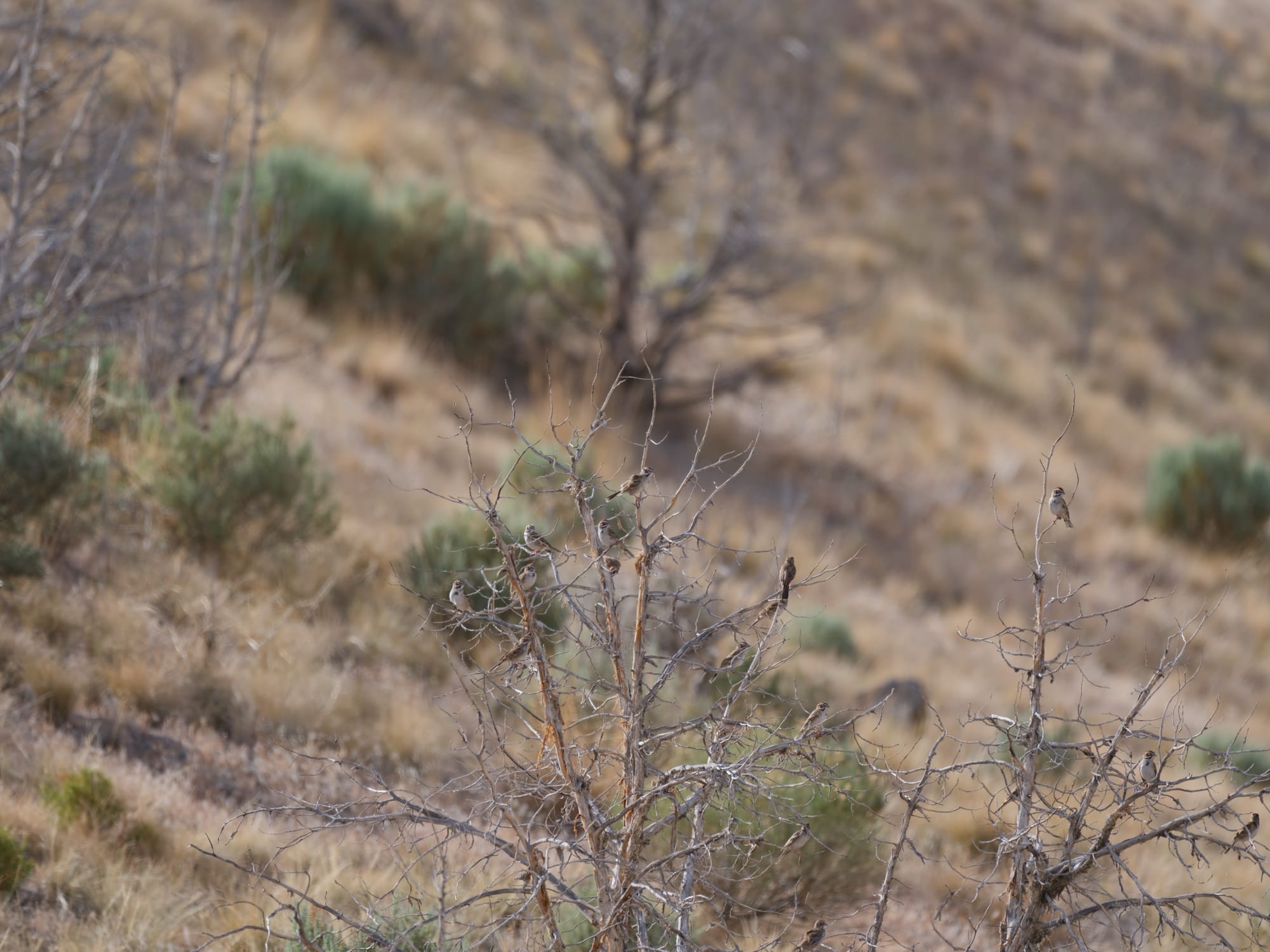
I was able to observe one on the ground near us feeding. It was carefully eyeing small seeds on the ground to pick at. At times it would reach out to a short small blond seed-head. Investigating afterward what I learned is that it is called Desert Madwort. It is an invasive/introduced plant from Europe and Asia.
Plucking a plant from the ground and rolling its small seed head between my fingers, the result was pale discs not unlike a rondel shield, two of which clasp a single brown seed slightly larger than a grain of sand. Wetting my fingertip, I gathered a few there to taste. A nutty wheat-like taste. The flavor was nice but I cannot imagine the effort required to make a meal of them. The Lark Sparrow is much smaller, however, and more industrious; it moves up and down the canyon harvesting these small seeds and not doubt others.
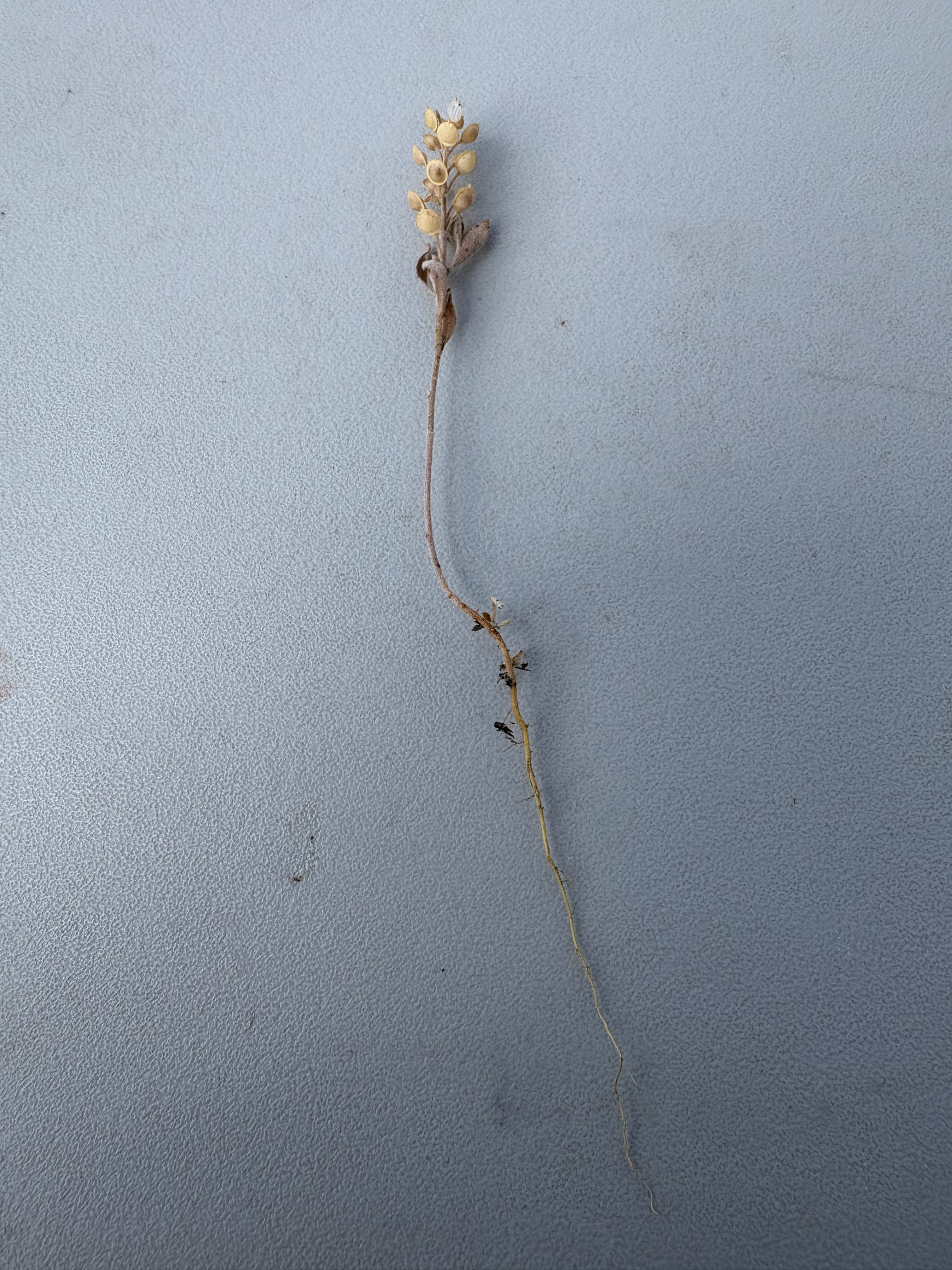
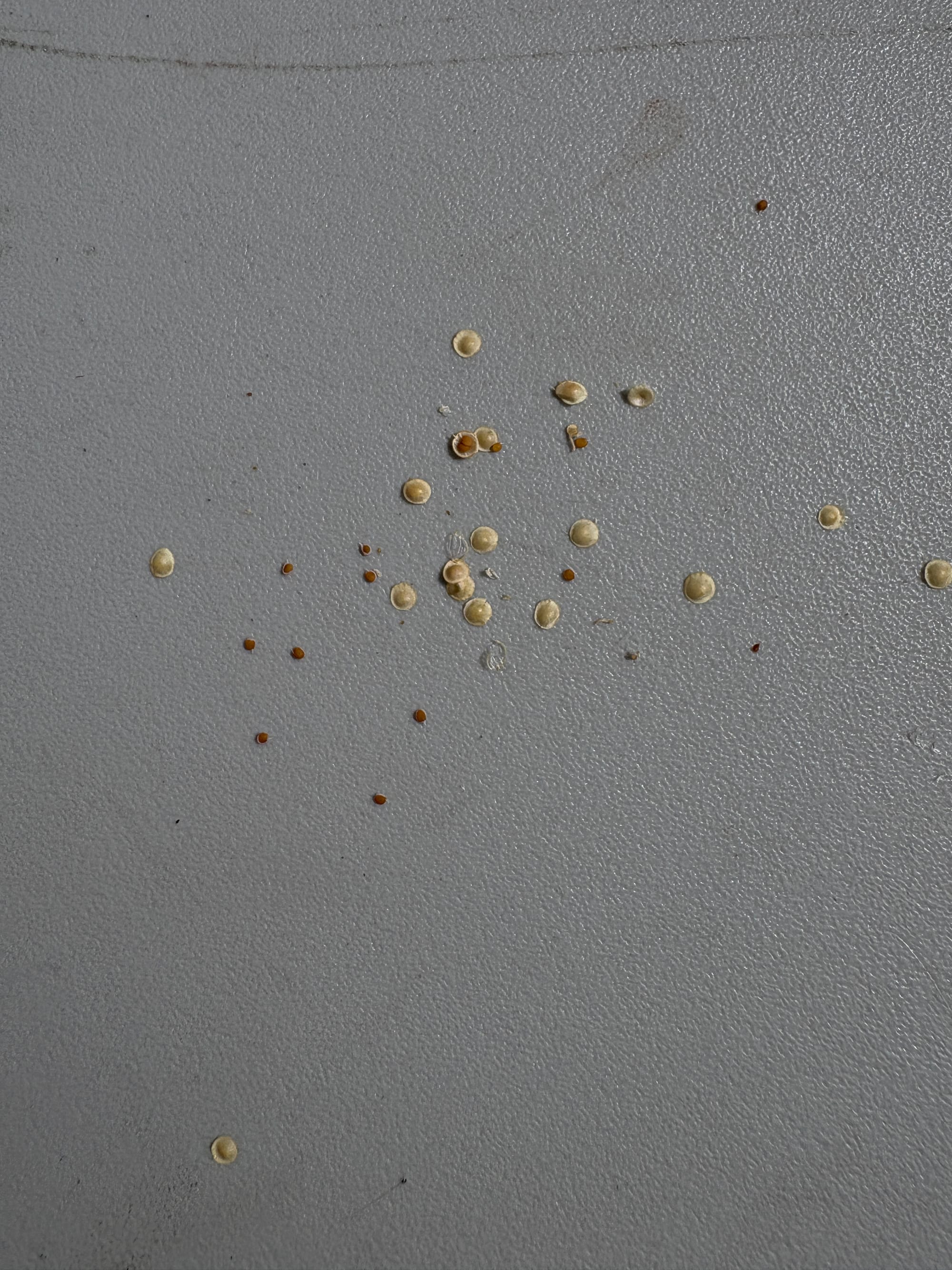
Desert Madwort
Mollie for her part has now become taken with watching their little antics. There is little for her to do in camp and she finds their quick motions engaging. Laying in the sun alertly watching the small birds flit about from dead juniper to sage to the ground.
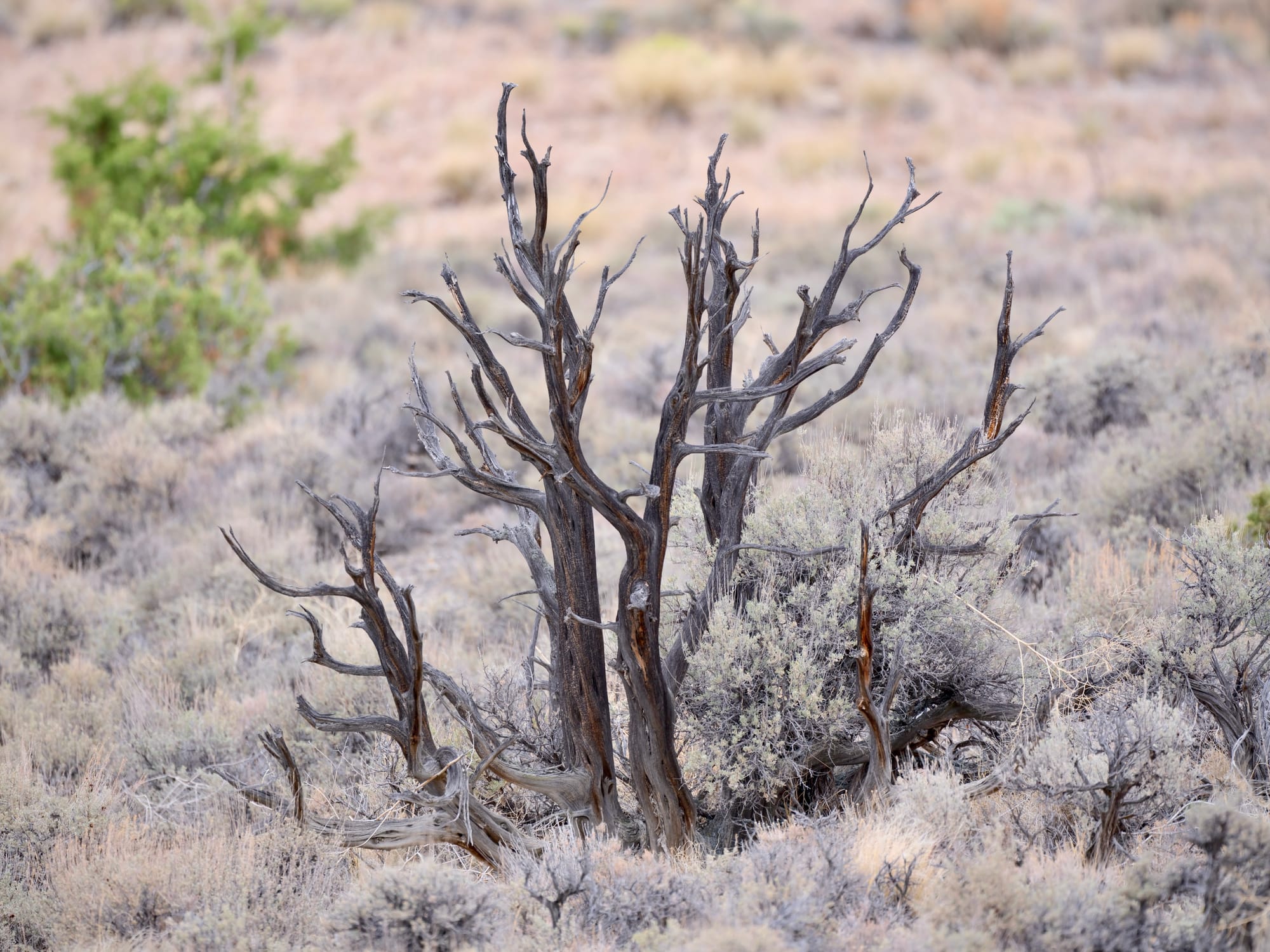
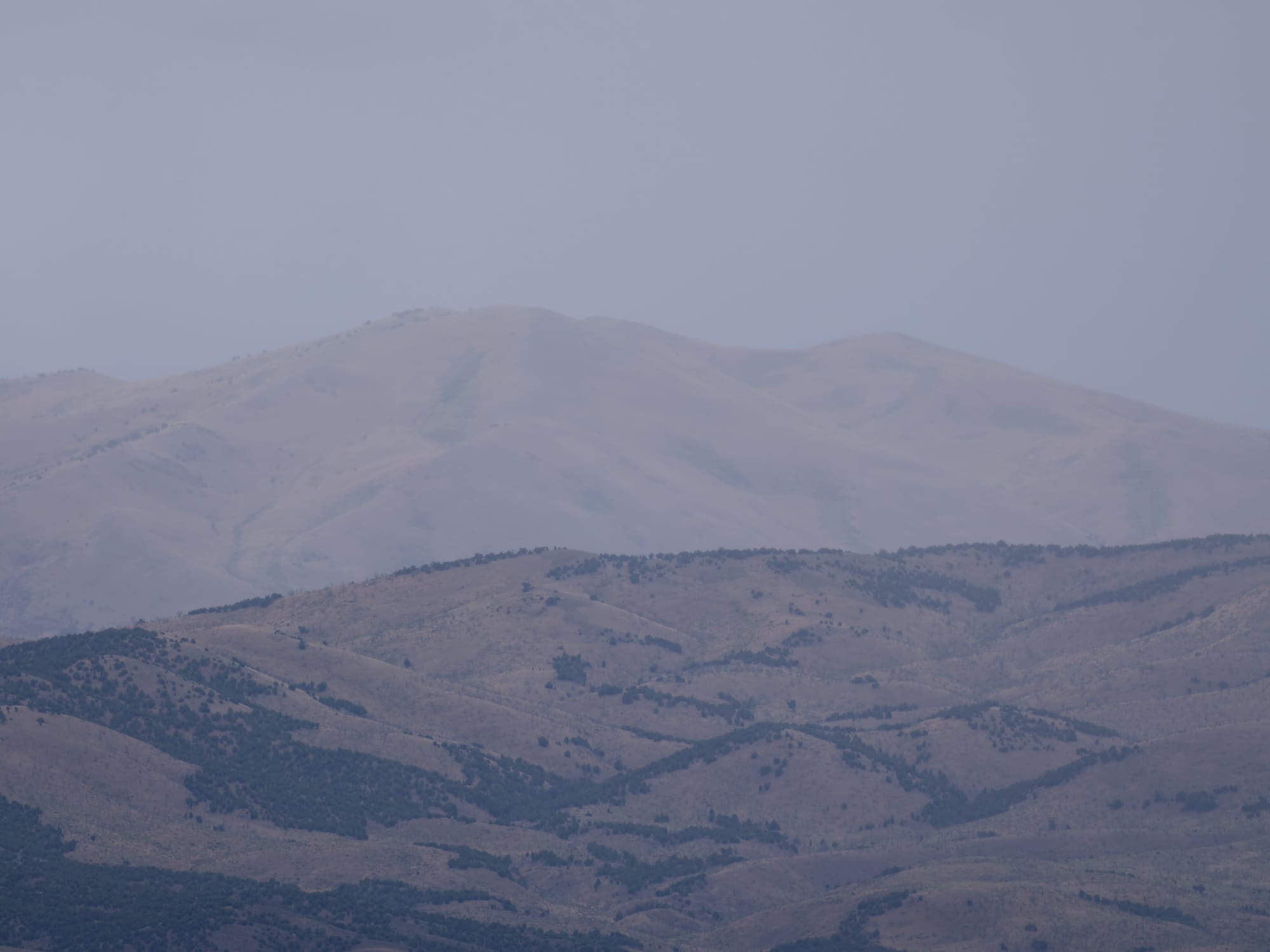
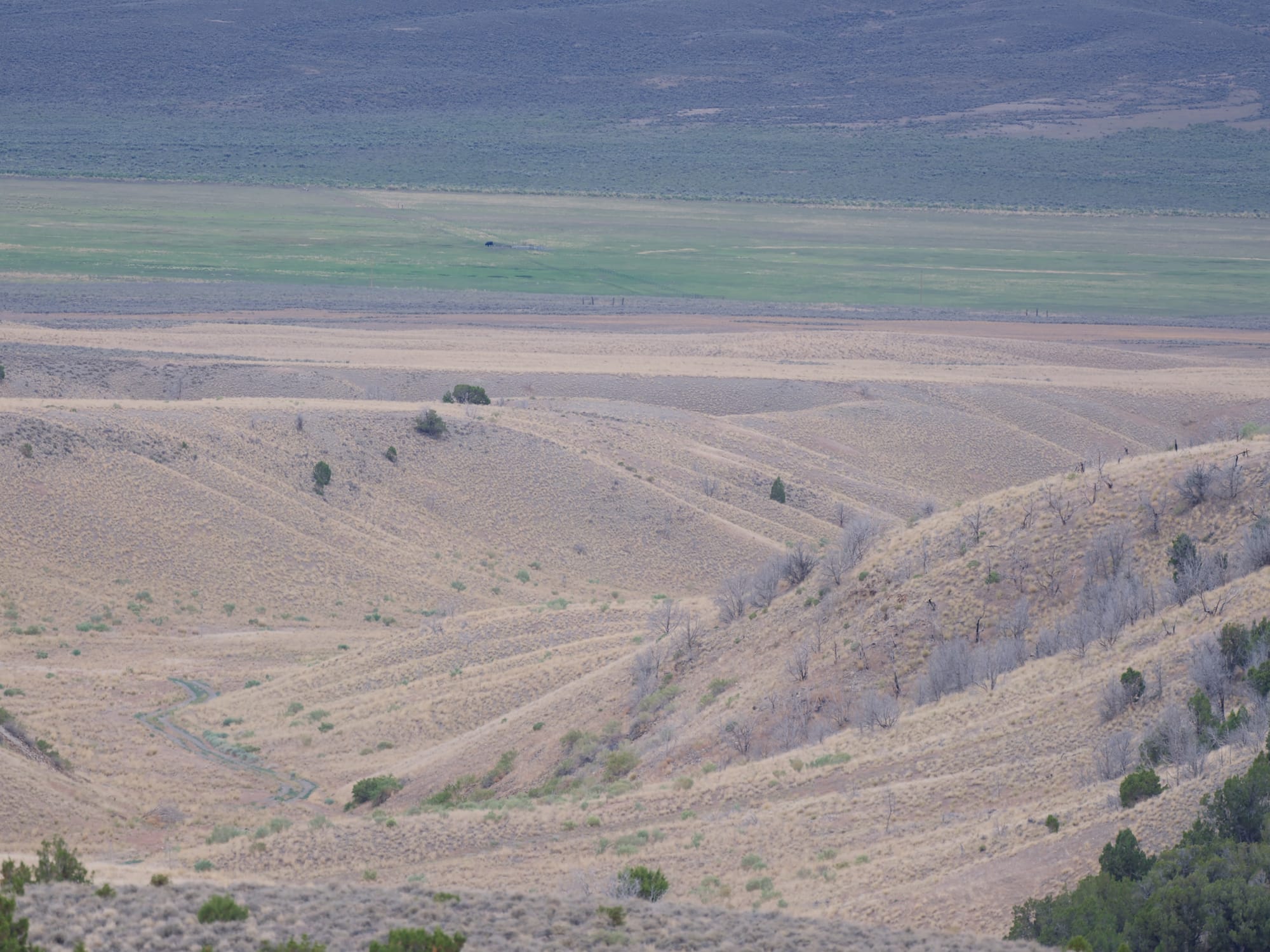
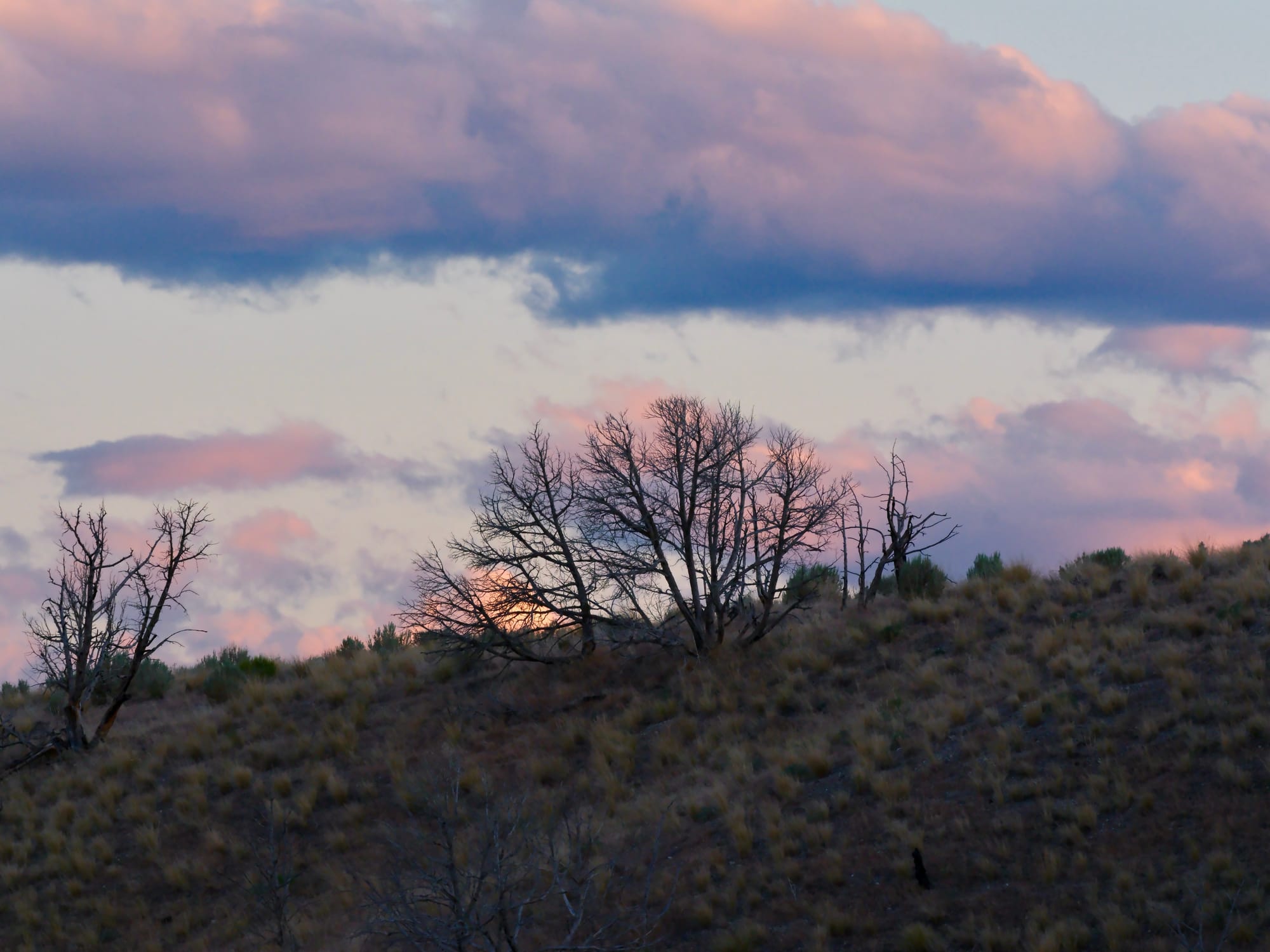
No Place in Particular.
There is a kind of charm to this sort of ordinary country. It is on nobody’s bucket list and yet if you settle in for a couple of nights and dwell in the quiet, then the character of the place begins to reveal itself. The birds, for instance, become more apparent.
In addition to the antic of the Lark Sparrows there are the Loggerhead Shrikes. These birds, new to me, appear regularly around camp. It seems they are still feeding a young one and it gives off that raspy call of a young bird and flutters its wings. It appears fully fledged, and except for the call and behavior, looks the same as the adults. The adults sit perched atop a dead juniper for some time before moving on. They apparently hunt small rodents and other birds though looking at one it does not appear as if it was capable. The parents are very attentive.
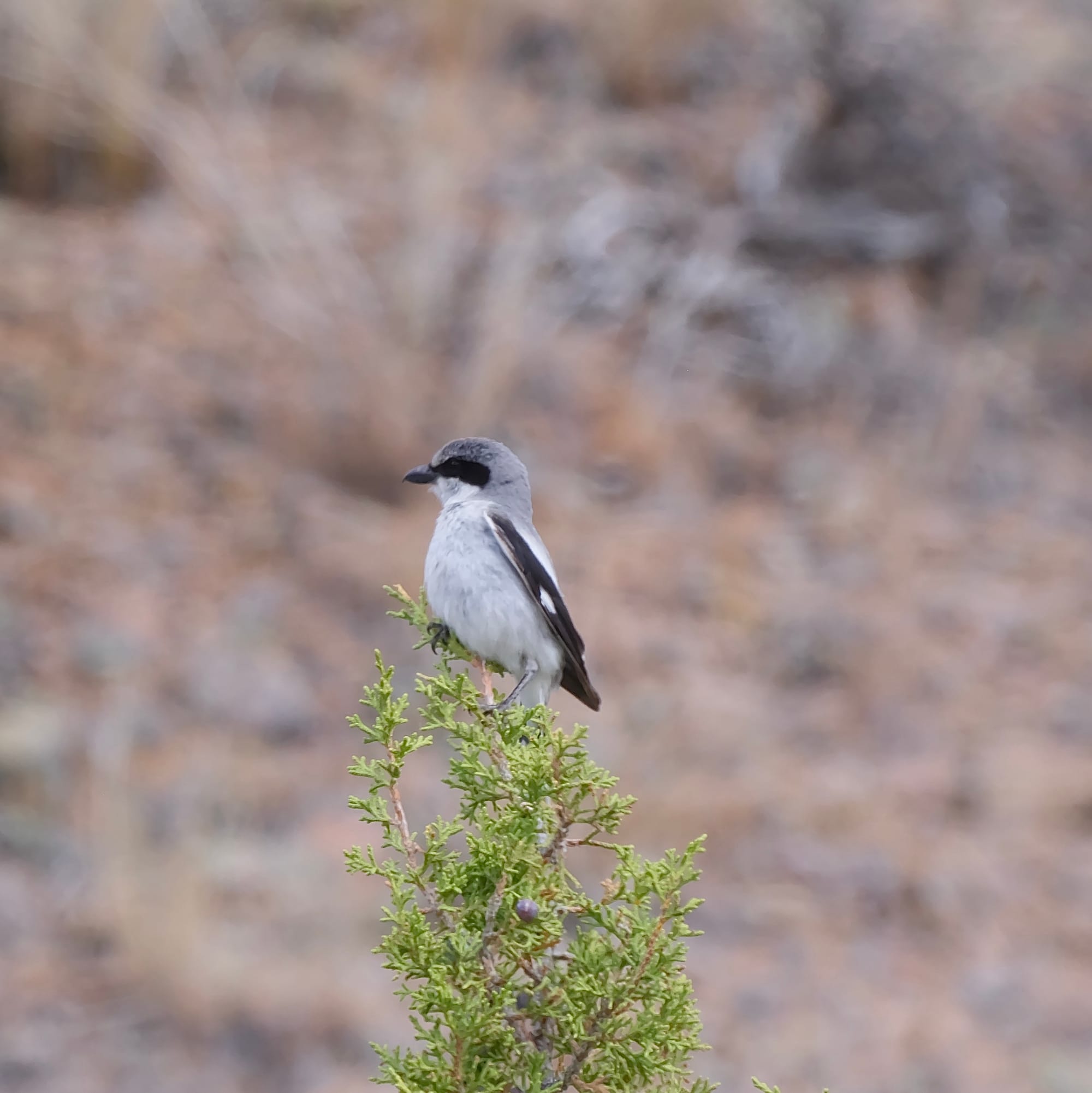
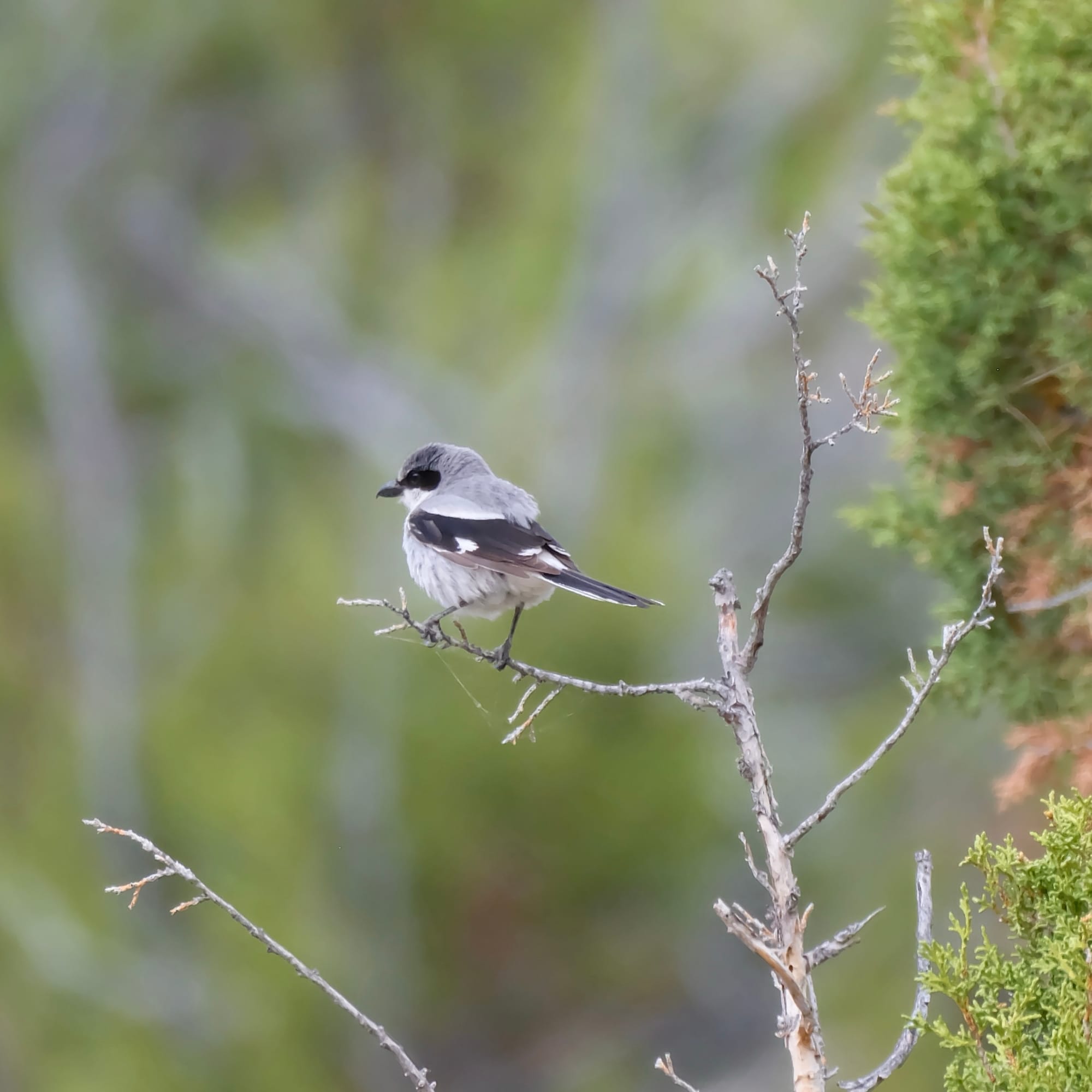
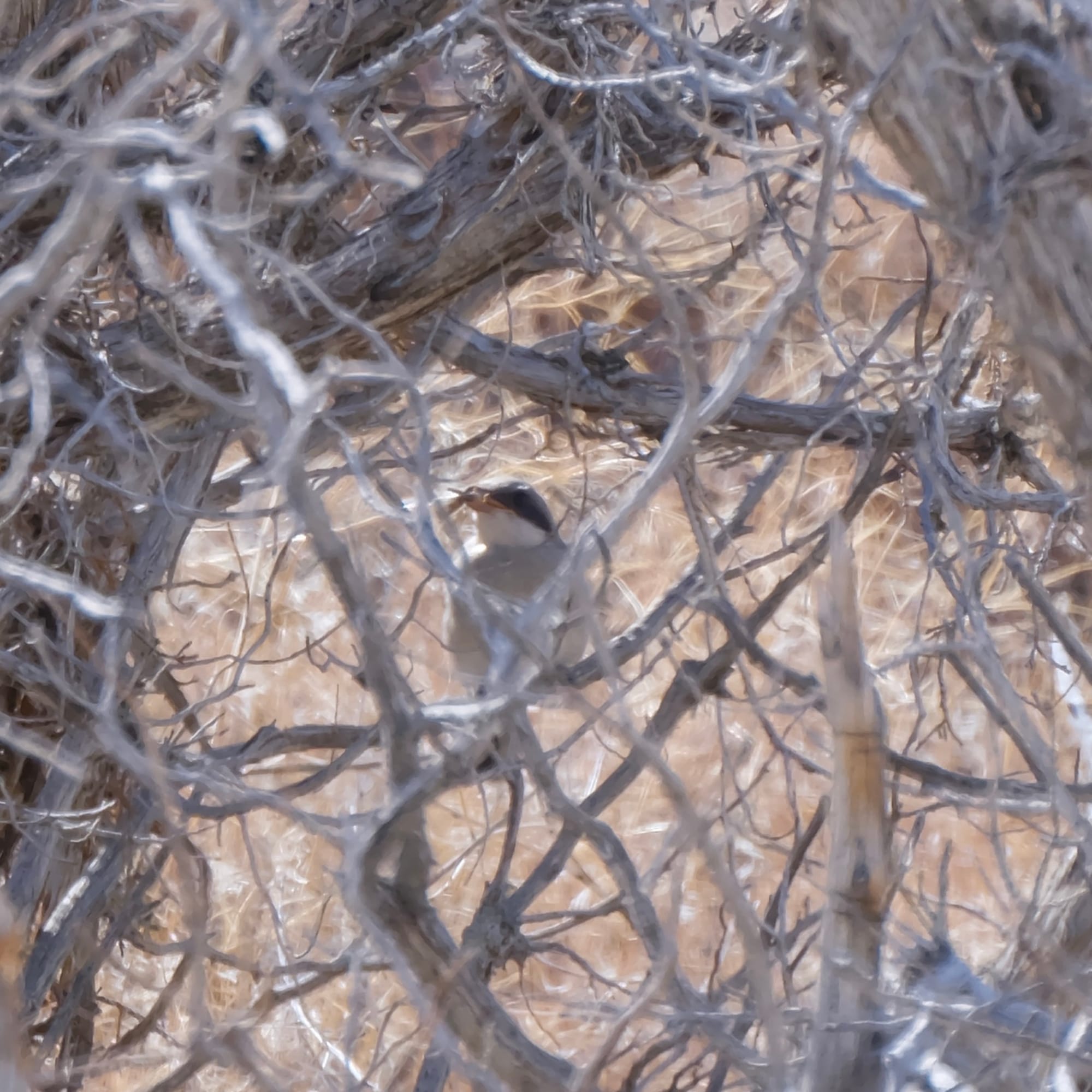
Loggerhead Shrike
A Northern Harrier swooped through the canyon cantering and gliding in the wind before diving into some juniper nearby and raising a ruckus with the other feathered residents. I watched it fly out a few seconds later and whatever it was after seems to have escaped. There is a marsh over on the Thousand Springs valley a couple of miles away; probably its regular haunts.
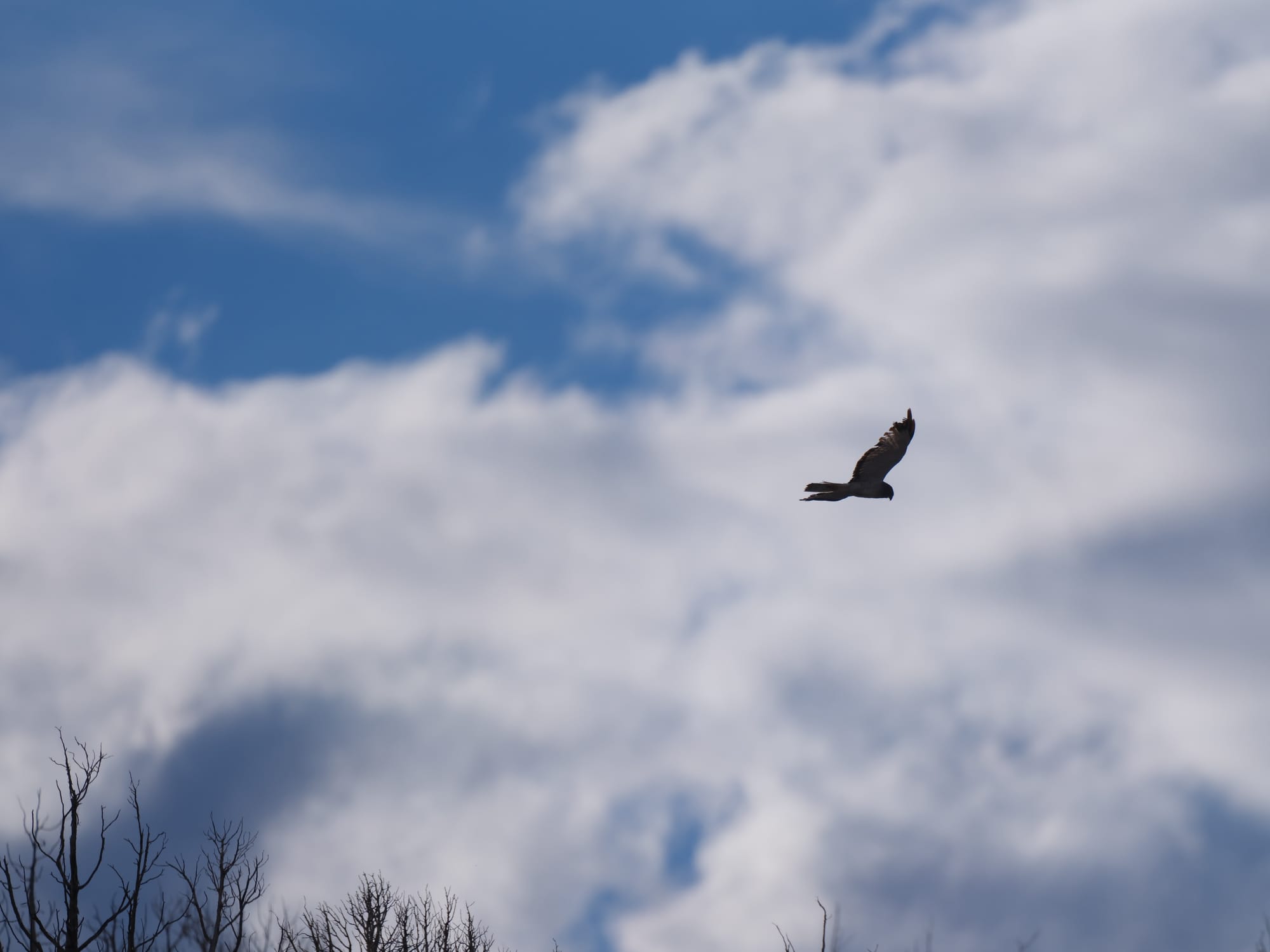
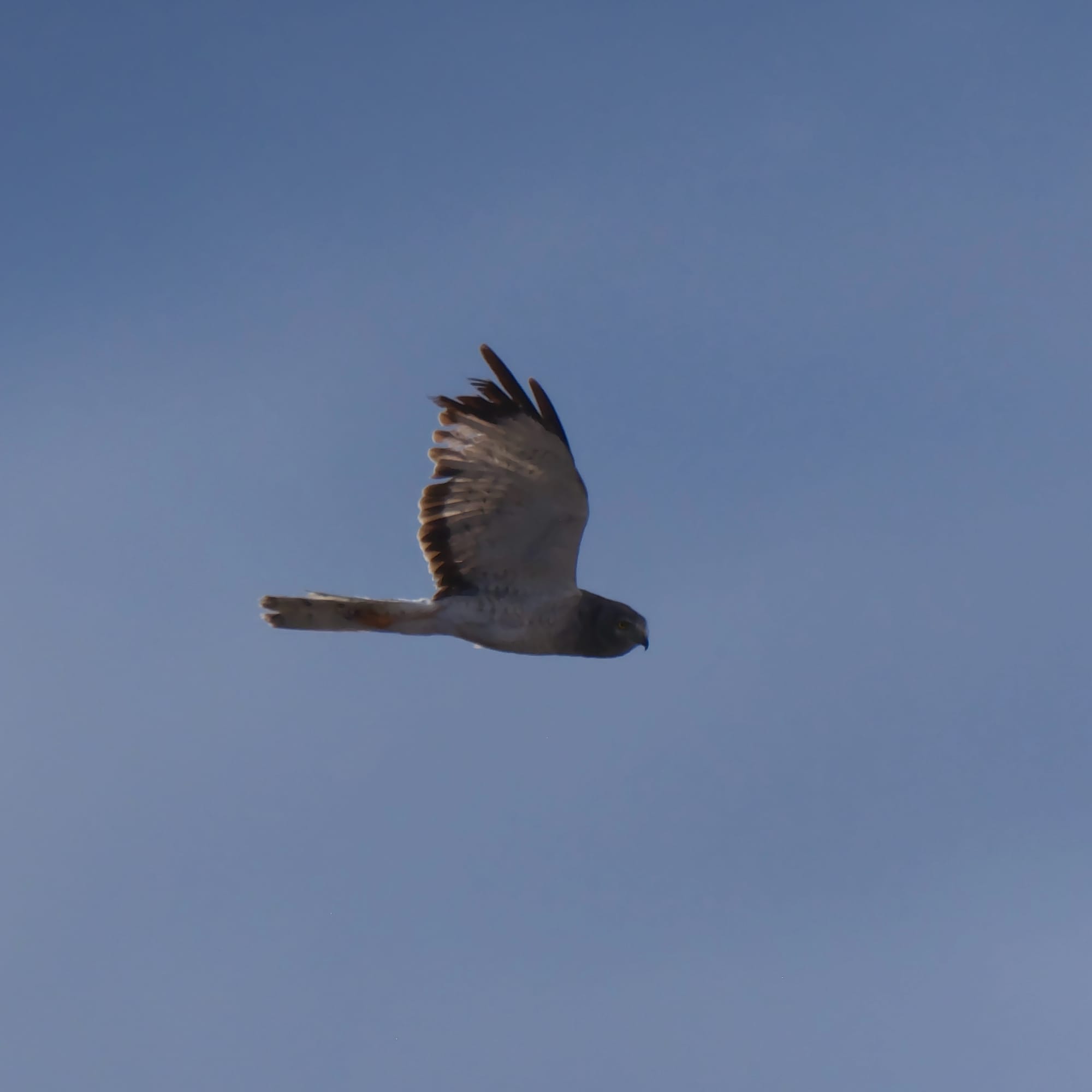
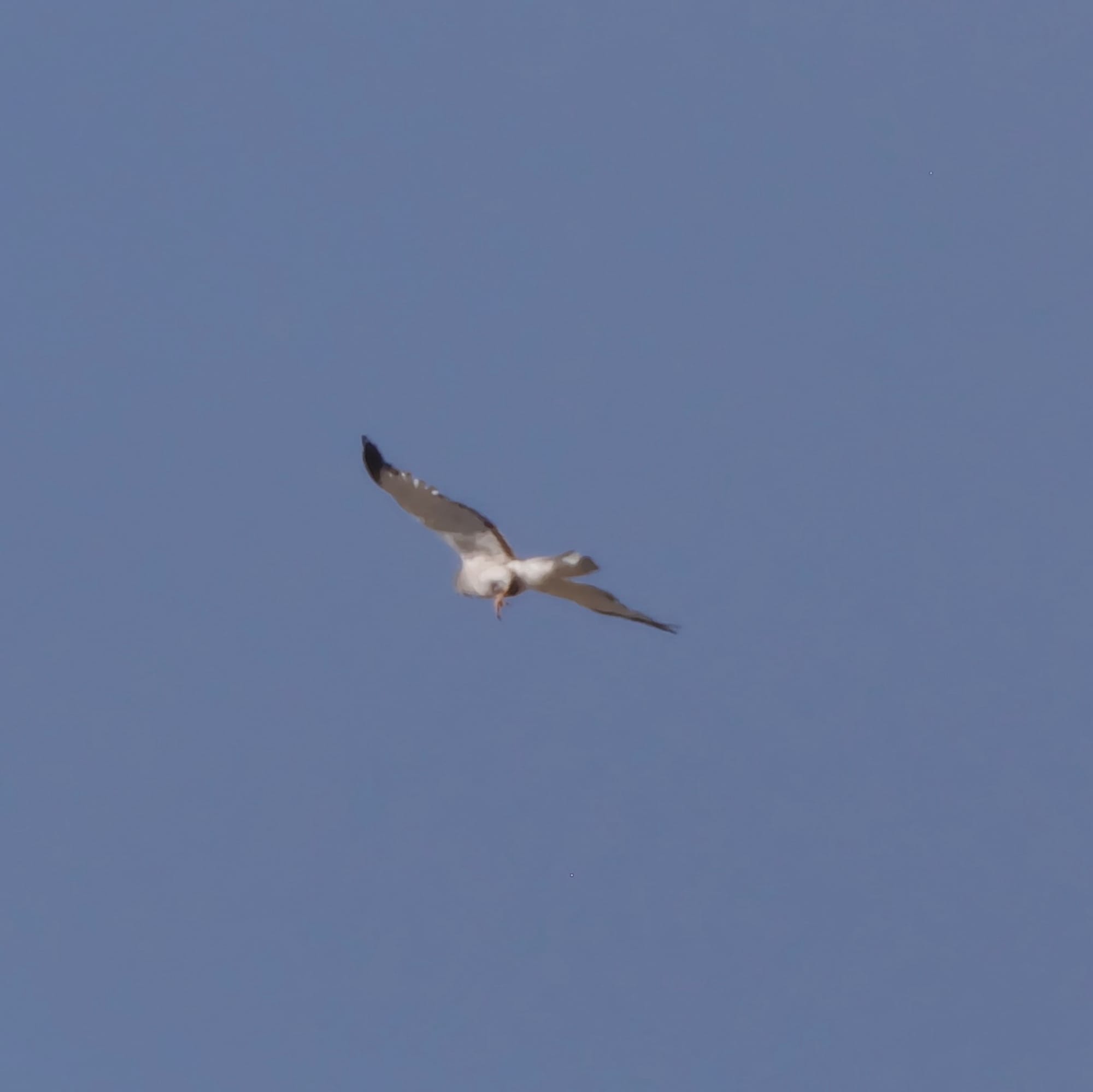
Northern Harrier
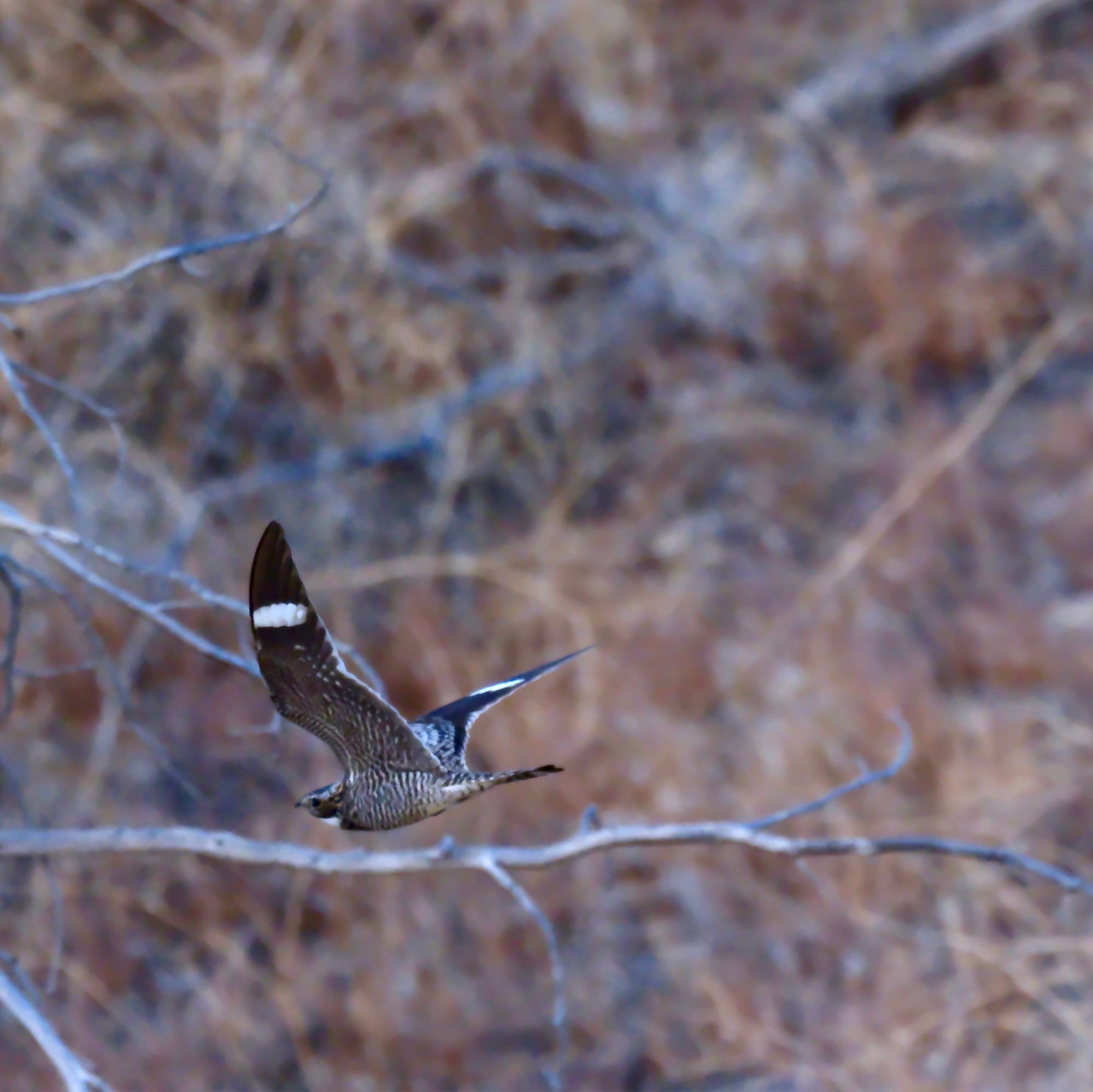
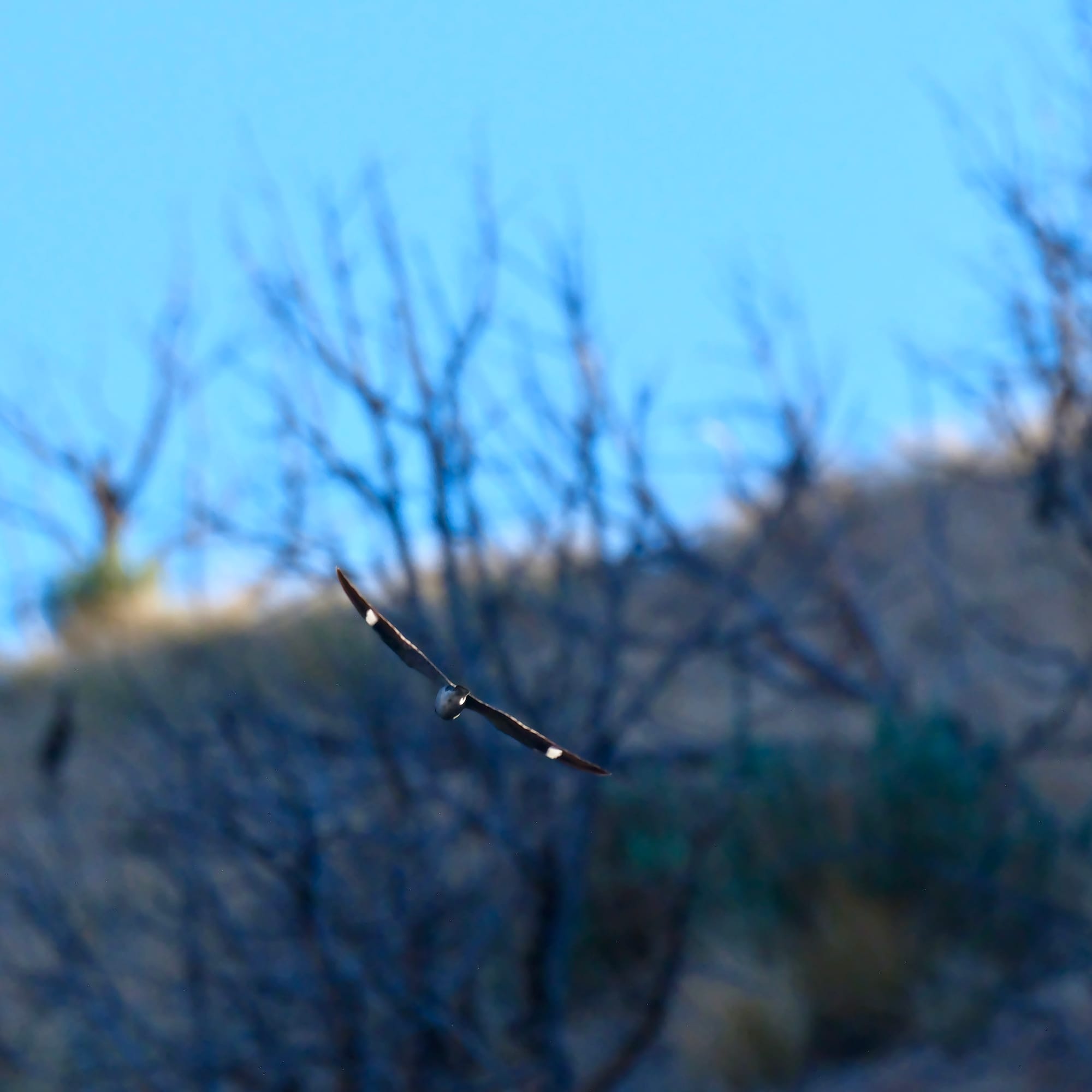
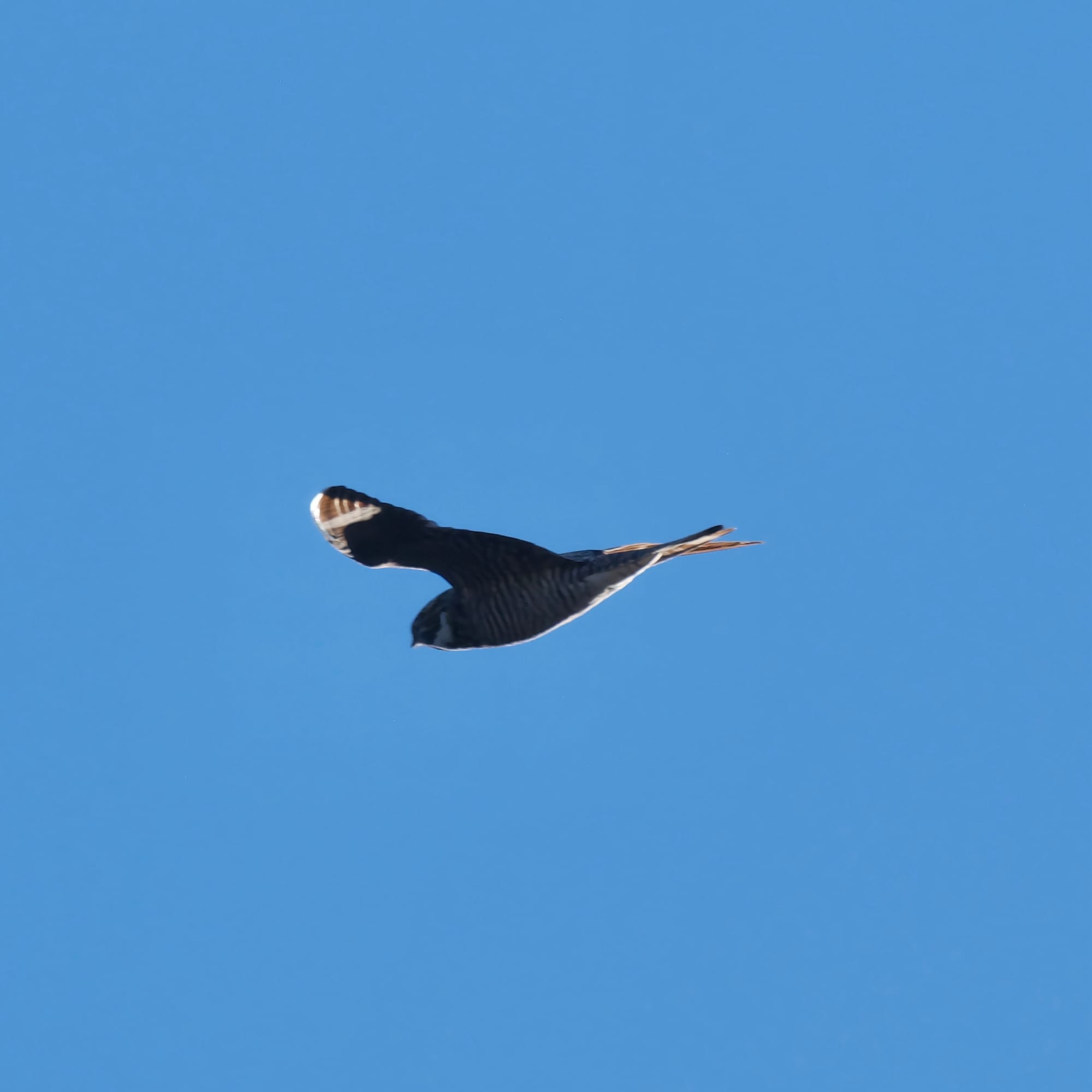
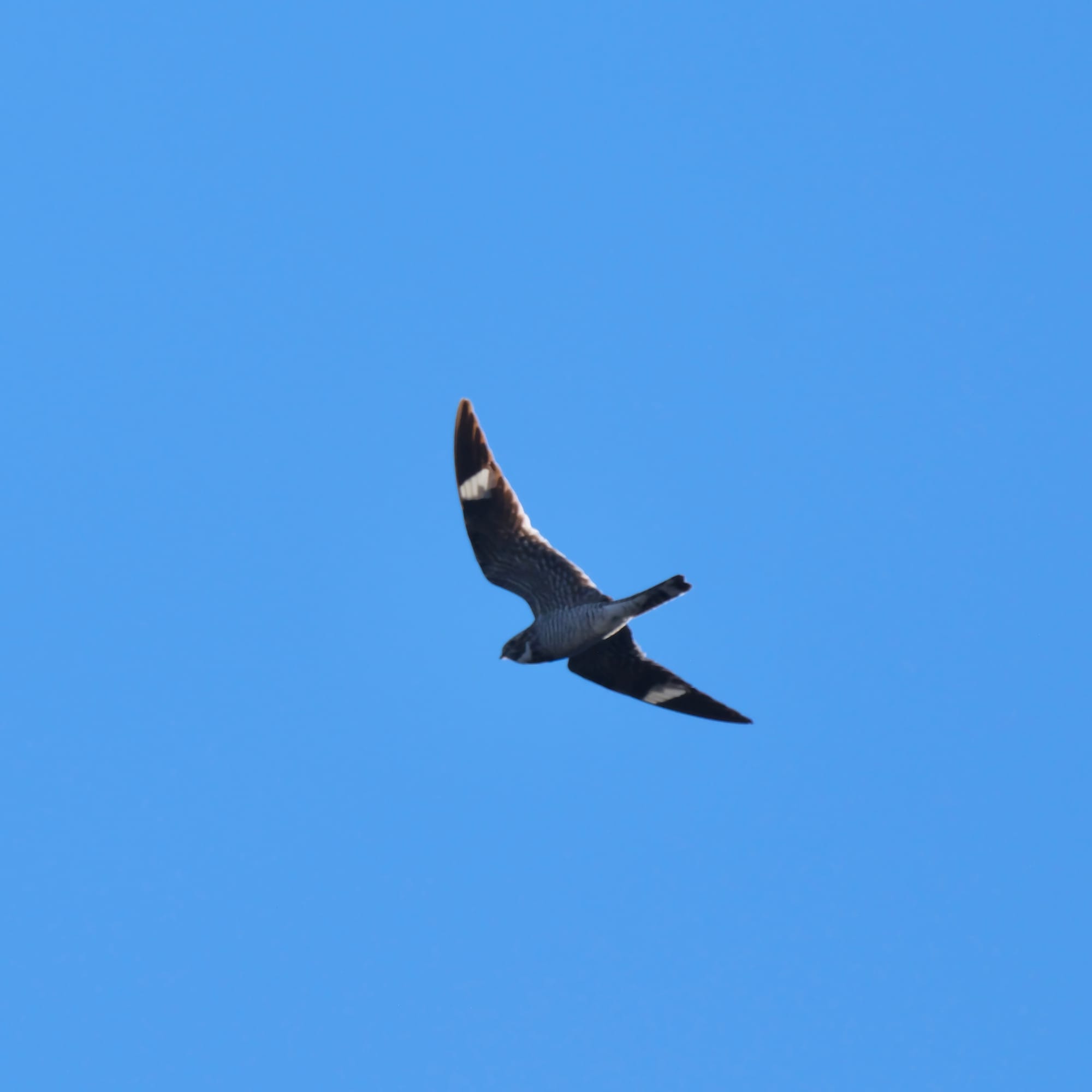
As the sun set I was witness to a circus of nighthawks the likes of which I have never seen. I am accustomed to seeing one or two with their characteristic buzzing call late into the twilight.
With the setting sun still illuminating the hills, I spied one and proceeded to try and photograph it. Quite a feat given their random and quick changes of direction. Soon however the one became two then three and then over they ridge poured, about twenty-five of them. I stopped photographing and just watched as the flew all around us for perhaps a minute. Their bright white wing patches flashing as they turned. During the after-dinner walk one continued to soar above us as we hiked over the ridge above camp.
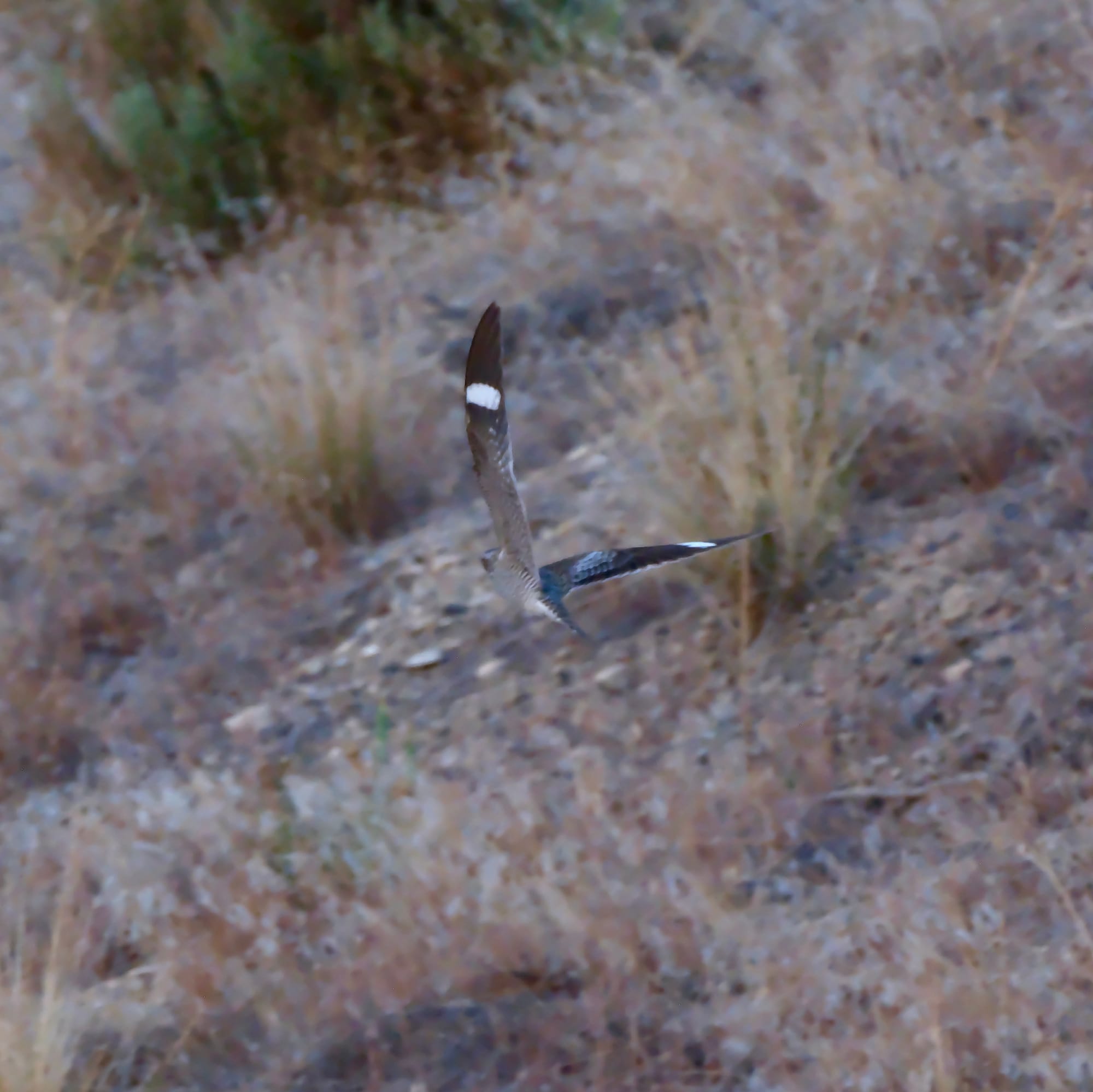
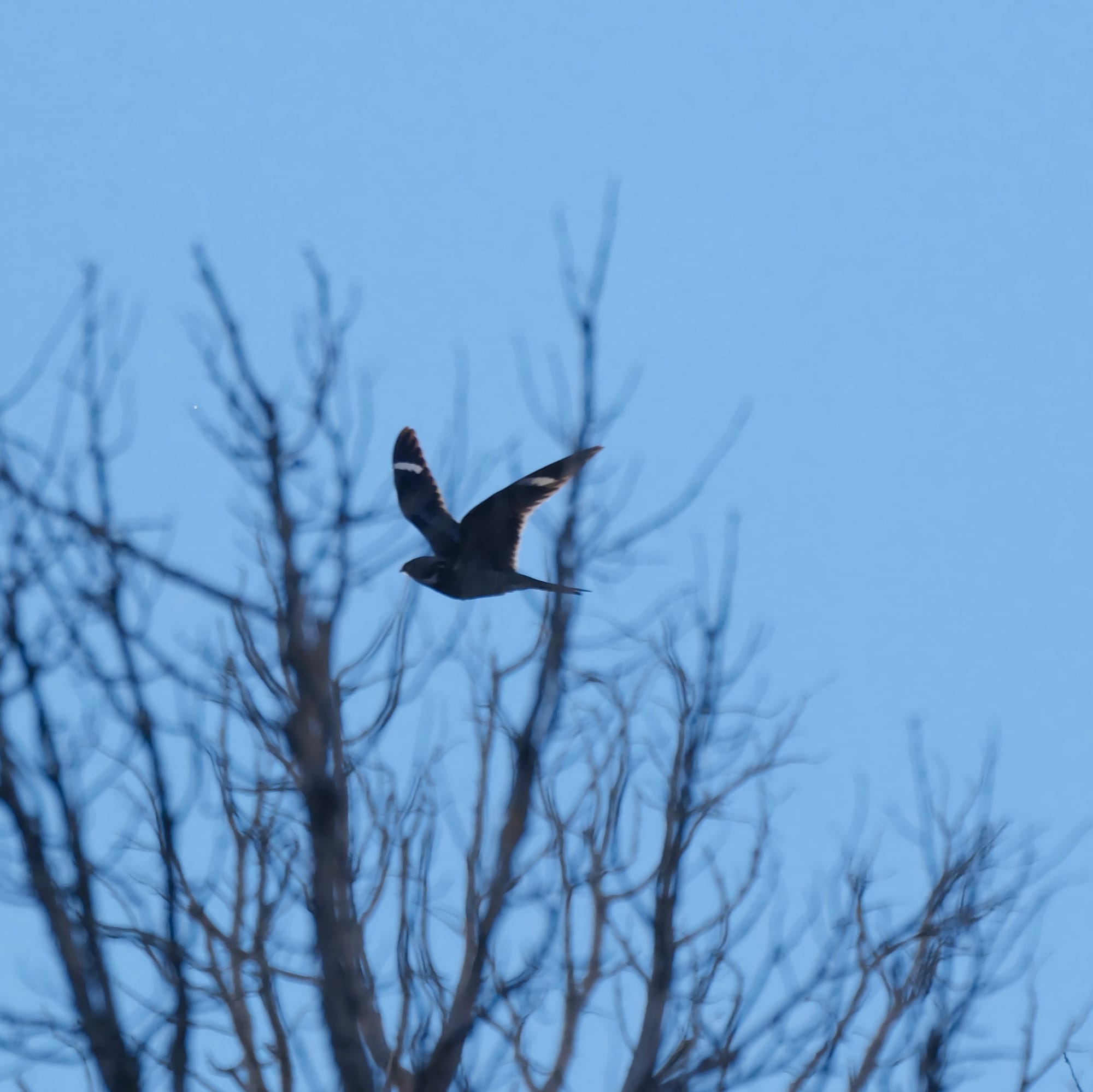
Nighthawk Invasion
As the sun settled further and I resume writing, the Lark Sparrows are back to serenade us before moving on down the canyon. The clouds have gone orange and pink and lavender before finally clearing to a dark blue sky. The breeze still breathes through camp and sets the juniper to whispering on the hillside above. The dog is tired and sleeps at my feet and aside from the wind there is no other sound. No road noise, no planes, no voices and even the bird call has silenced.
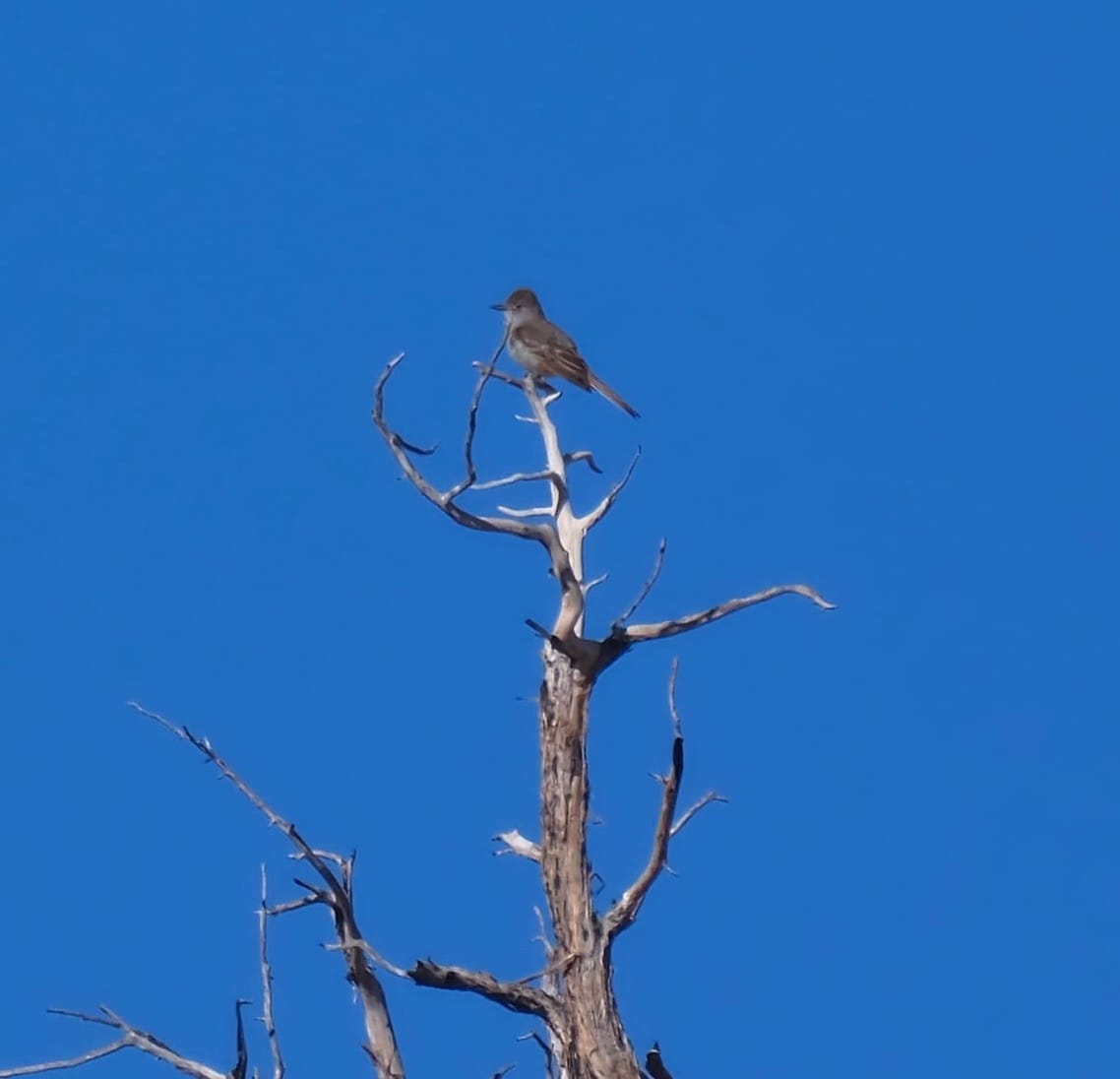
The next day Mollie and I head out for another ridge and contour walk, upstream on the eastern side this time. Much of the same, but different, outcroppings, some ravens, and an ash-throated flycatcher. We stumbled onto the track of a side-by-side driven over the grass. We followed this for a while before heading to the top of the ridge. One does wonder about the correctness of driving cross country like this. One track likely to encourage another until it becomes a new road.
We turned around above the same water tank, again it had become hot and the lack of shade due to the fire was taking a toll on Mollie. We made over to the road but Mollie indicated she wanted to checkout the fiberglass water tank again. So I agreed and we went over. I looked in and was surprised; the rabbit bones were gone! A mystery. Looking on top of a post revealed the spine however.
Also the side-by-side tracks had driven up to the tank as well. Now I was puzzled. Had it driven by camp early in the morning and we had missed hearing it while asleep? Had they moved the bones or was it the work of a wild animal. I had assumed a hawk had devoured the skull and left the spine on the top of the post where the deed occurred.
On the walk back to camp I looked until I confirmed that my foot prints from yesterday had indeed covered the side-by-side tracks. The bones had clearly been moved by an animal.
The world moves without our observation or permission. In places like this it is reassuring.
The next morning we planned to leave, but after breakfast and before packing, another short hike. This morning I wanted to see if we could find where the nighthawks roosted during the day. To photograph a sleeping nighthawk would seem impossible, but still I was intrigued. We hiked over the western ridge where a clump of live junipers could be seen. This is where the nighthawks emerged the night before in a big flock.
We got to the top of the ridge. I did not know what to look for. They roost in trees and on the ground during the day. The propsects more doomed as I look over the surrounding country.
Mollie found a rabbit and gave chase. Soon she flushed a nighthawk and it winged overhead in the morning sky. Clearly my hunch was correct. We moved down into the next juniper laden vale and then I could hear the strange wing whirr noise they make.
Highthawk call from Merlin
They were down there amongst the junipers. More than one as the sounds changed position. I looked carefully but could not sight any, not really surprising. I didn’t care to disturb them any longer so we walked back to camp, packed up and left. The rest of the drive I would periodically see a nighthawk on the wing. Strange as I thought of them only as creatures of the evening skies.
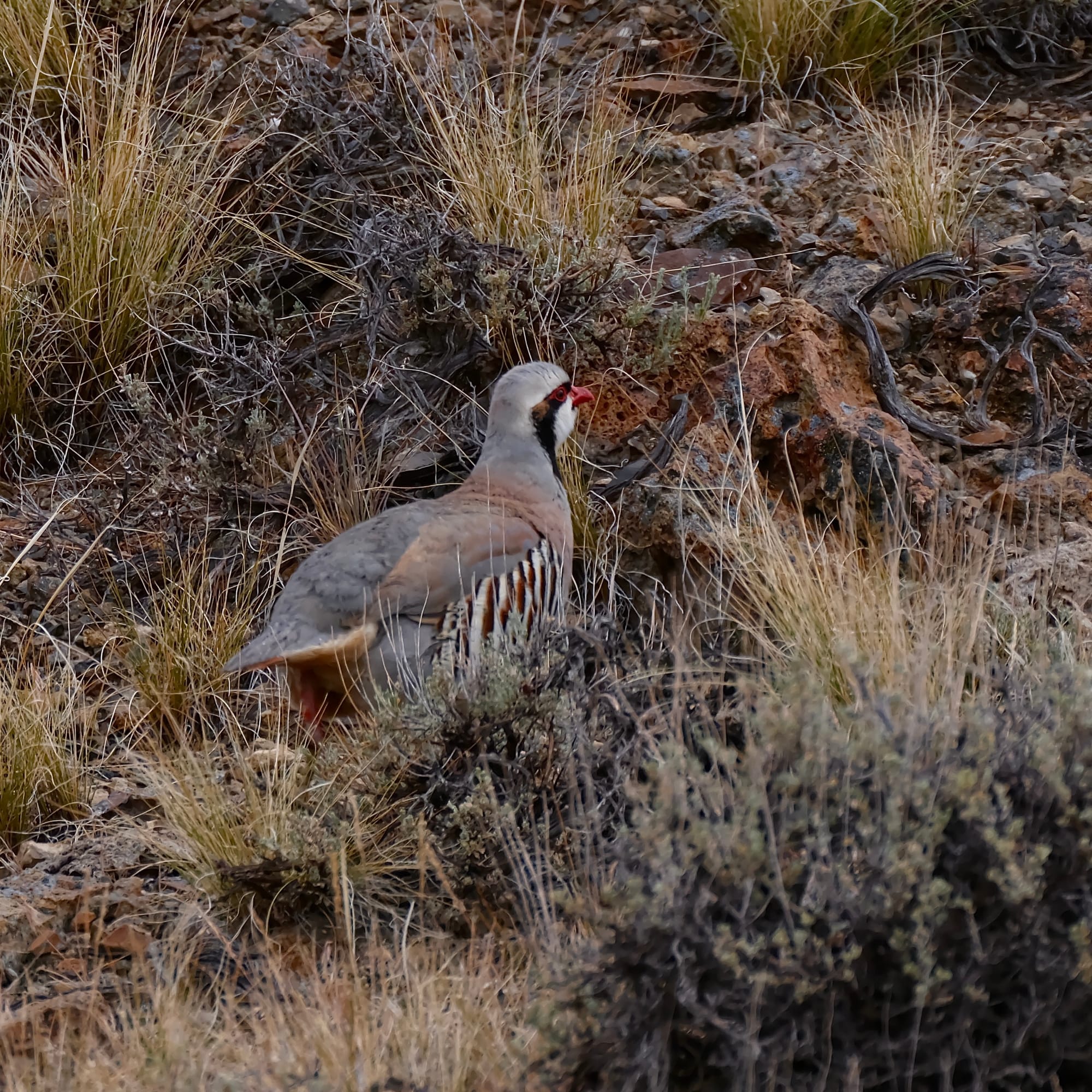
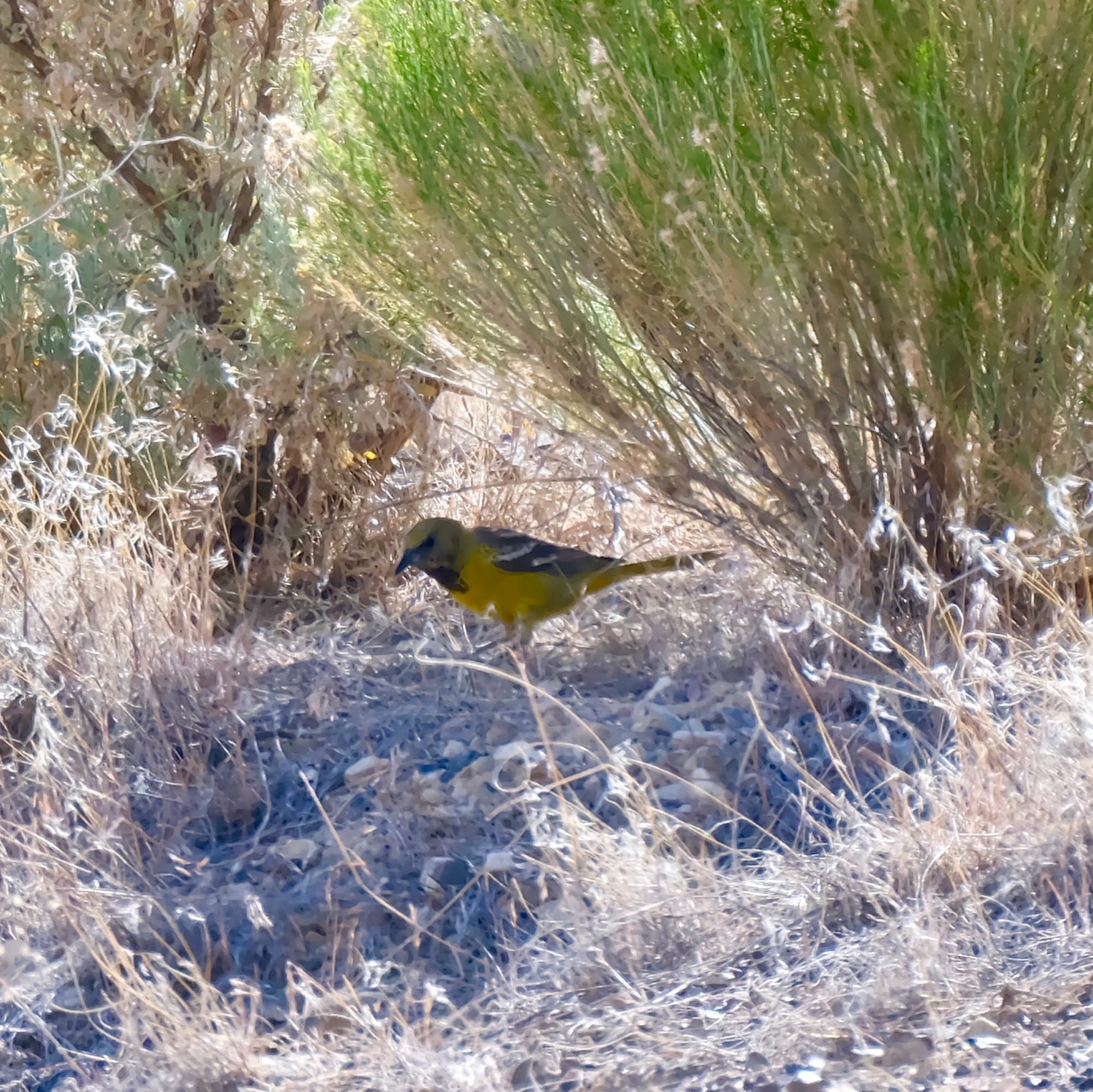
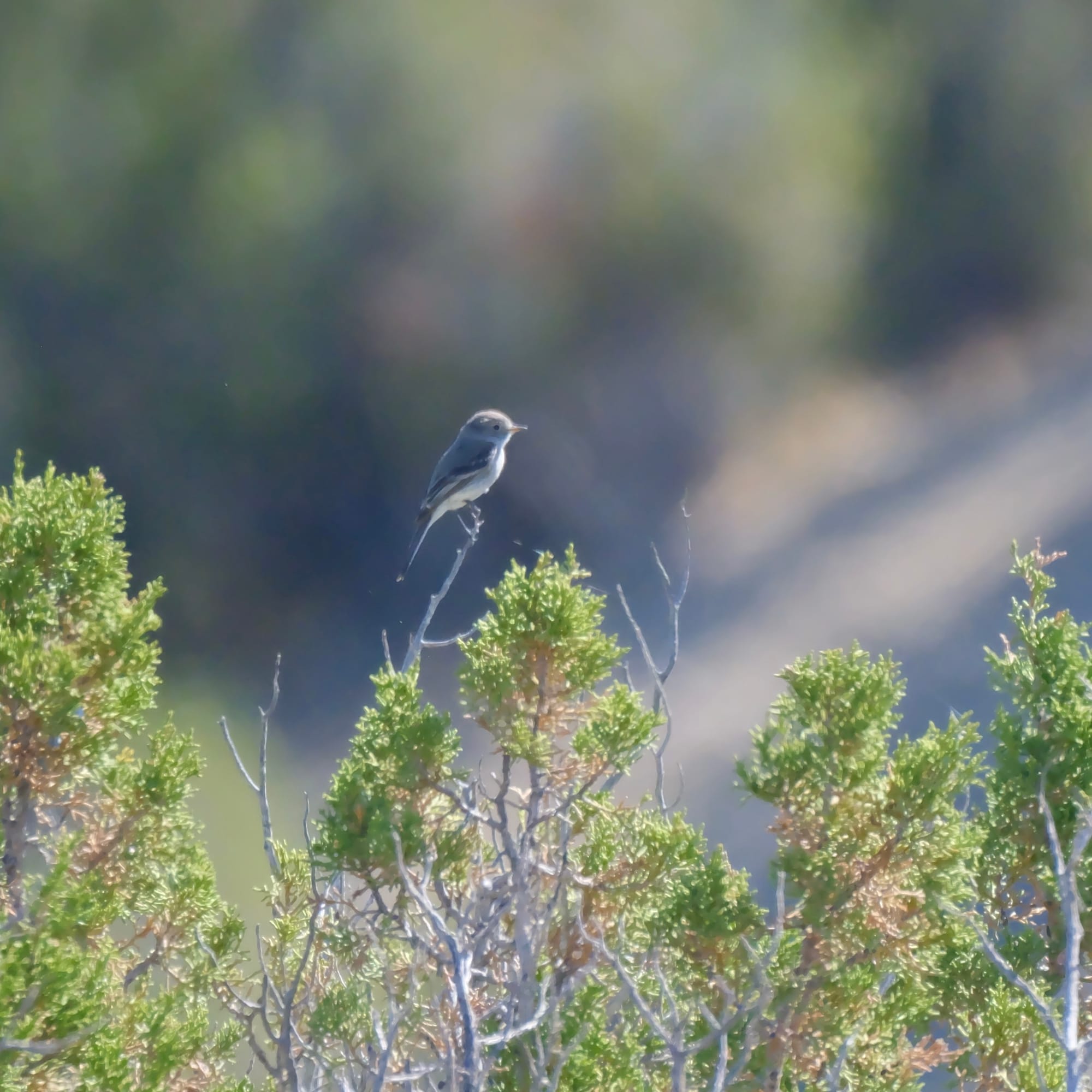
Chukar, Bullock’s Oriole. Gray Flycatcher