Potholes
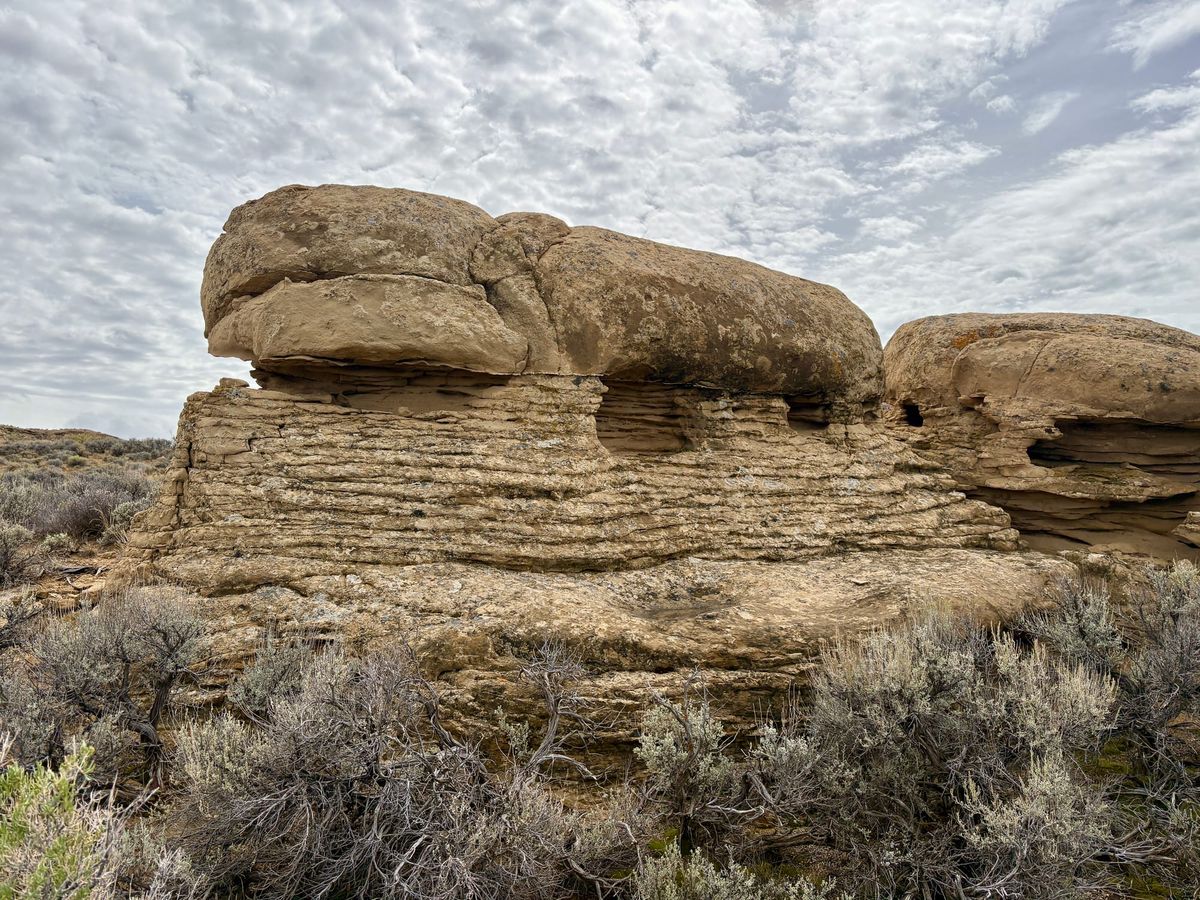
Spend anytime in the arid west walking over slick rock sandstone and stone prominences and you see them. Most of thetime they are dry. If you are shot of water they can be lifesavers as they hold water for days after a storm has passed.
Potholes are relatively common. And I had always assumed they were formed by water dissolving the bonds of the stone and wind scouring the reslting sand and dust. Indeed I asked Claude ai how they were formed and it came back with a similar description.
Desert potholes (also called tinajas, weathering pits, or gnammas) form mostly through slow chemical and biological weathering, not through grinding. The process feeds on itself:
- A small depression collects water. It starts with a slight low spot on bare rock, often along a crack or a weaker patch of sandstone.
- Standing water dissolves the cement. Sandstone is sand grains held together by a natural cement, often calcite. Rain and snowmelt that pool in the hollow slowly dissolve that cement. Microbes, algae, and lichens in the water and in crusts on the rock make the water more acidic and speed this up.
- Wet–dry and freeze–thaw cycles loosen grains. Repeated wetting and drying, salt crystals growing in pores, and ice expanding in winter all pry the weakened grains loose.
- Wind empties the pit. When the pothole dries out, wind blows away the loose sand and debris and exposes fresh rock for the next round.
- Positive feedback. A deeper pit holds water longer, which means more dissolving and more weathering, so it deepens faster. Many end up with flat bottoms and overhanging, undercut walls. Some grow large enough to merge with their neighbors or cut an outlet notch where they overflow.
I was on a short walk in southern Wyoming not long after some rain had blown through. Some puddles stood in the muddy clay and the dog I and went for a short ’leg-stretcher’ up over some low stony bluffs in the sage. A steady wind blew out of the southeast as some remnant of the recent storms.
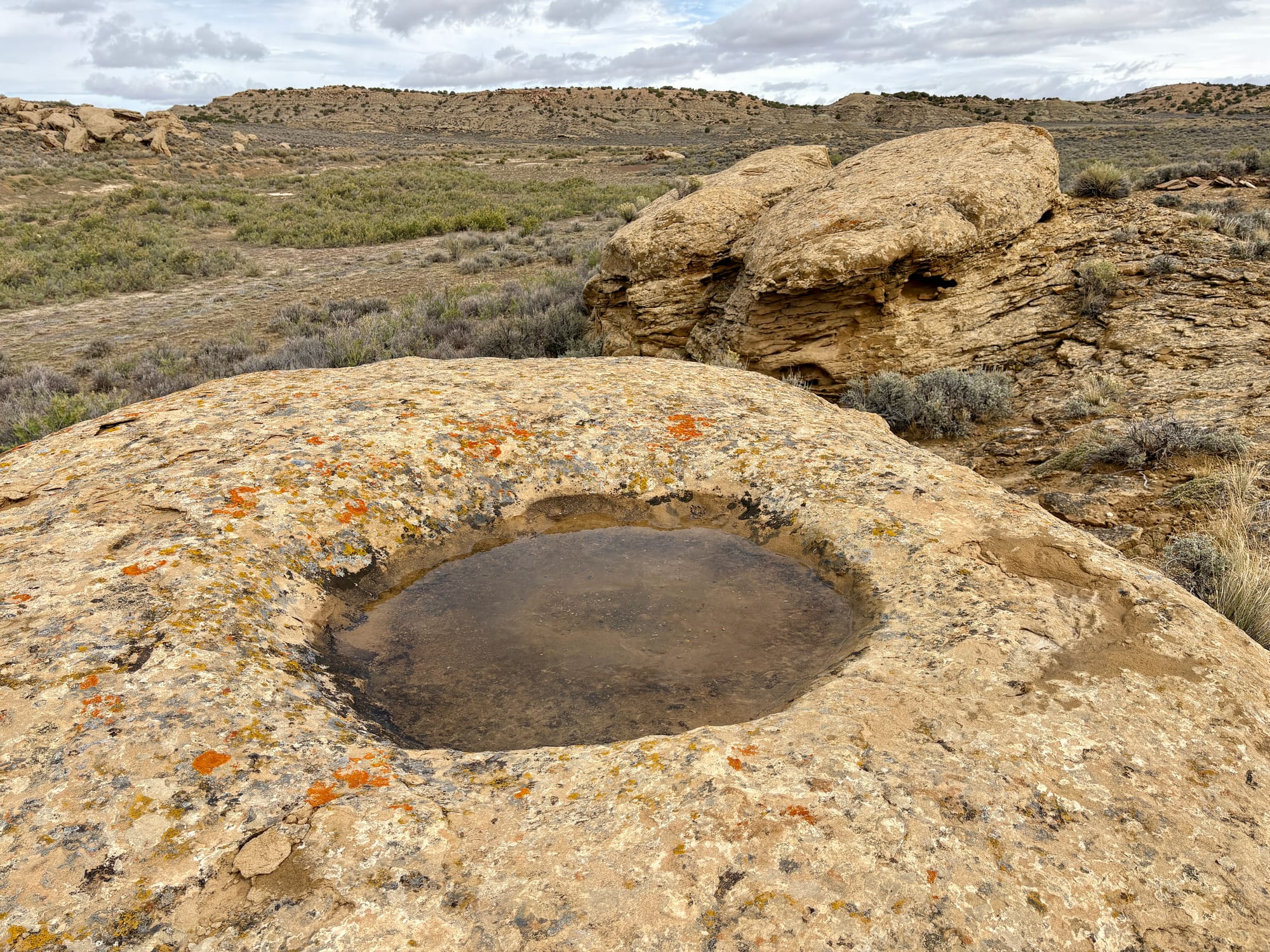
A pothole in southern Wyoming
We climbed to the top of a rocky ridge and found some potholes, still full of water. Mollie as always a lover of ‘wild water’ took a drink as I imagine coyotes must do.
In one deeper pothole I observed however that the wind was pushing the water around. At times rather violently like in a bathtub. Watching this it occurred to me I was seeing another mechanism for the erosion of potholes. At times the wind would slosh the water violently. This was for me kind of surprising, I suppose as I hadn’t really experienced them this way. We tend to think of these processes as invisible and so slow as to not have much pace on human timescales. This clearly wasn’t the case.
The video below shows what was happening but by the time I decided to video it the wind had relented somewhat so it does not portray the rocking of the water I had seen a few minuted earlier (as evidenced by the high water mark of wet stone).
It becomes easier to imagine how this constand sloshing of water in the wind provides a vigorous mechnical action to erode the sandstone. Once dry the wind then drives the loose sand out of the hole.
I am certain I am not the first to observe this, however it is always pleasing to notice something unlearned.
Wind driven water sloshing in a pothole.