Santa Nino de Atocha
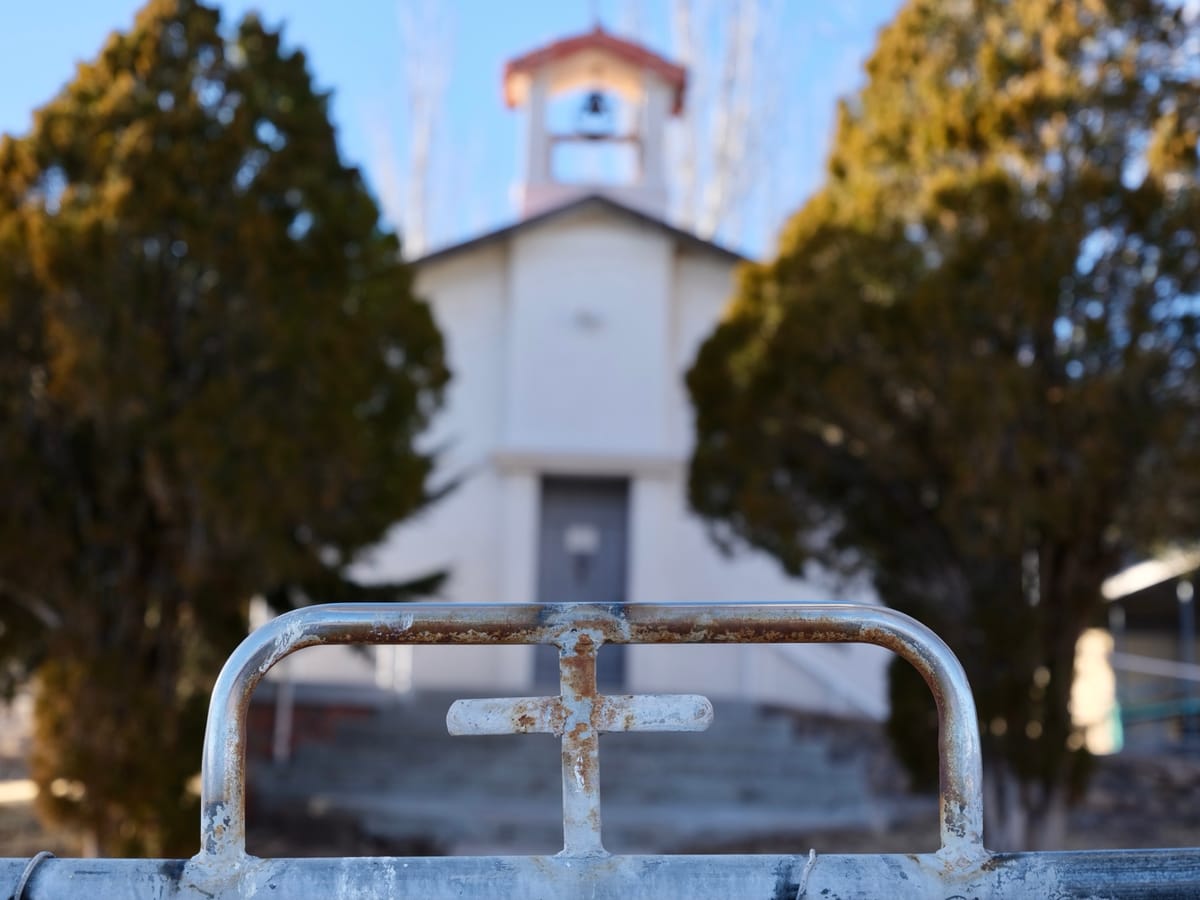
It is in perhaps New Mexico where the intensity of Catholic belief beats strongest. I am not a believer but is hard not to be moved by the passion of the faith exhibited here. I have always sense some of the Spanish darkness lurking beneath a more playful and exuberant local surface.
Perhaps because it remained part of Spain for a very long time. That it was bypassed by much of the early American history of the western expansion. Where the Pacific Coast got so much attention and early American settlement.
Santa Fe is distinguished as being the oldest state Capital in the US and the oldest city west of the Mississippi. The road-side shrines to family killed in accidents remain some of the most elaborate. The state chose to be called New Mexico not an accident I assume. The state stays culturally connected with Mexico.
(These are merely my thoughts and I have no intend to inflict any hurt.)
It was against this backdrop that we stumbled onto a small remote chapel. It seems as a kind of anachronism as there is no conurbation nearby. A chapel in the country feels more like Greece to me.
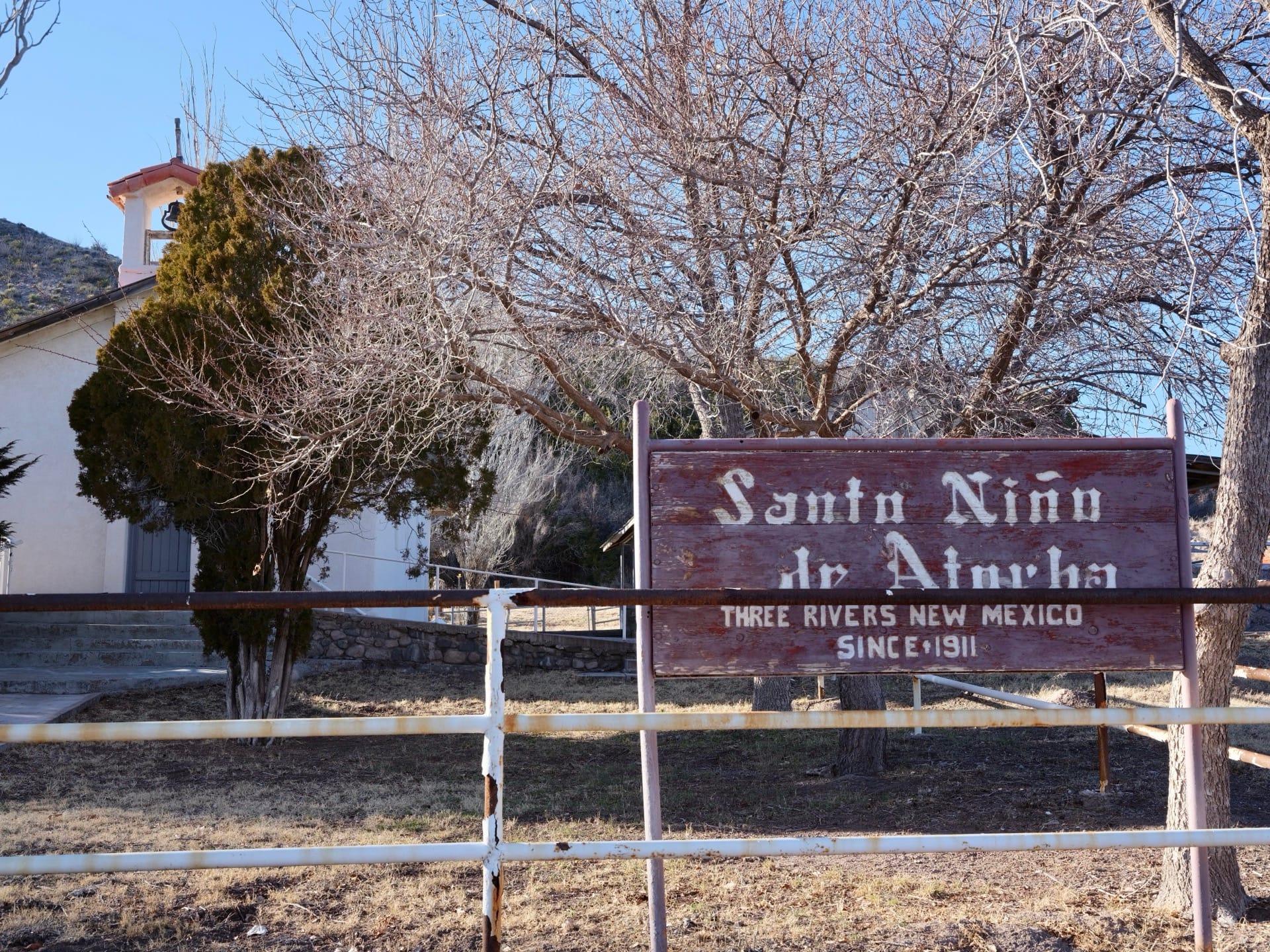
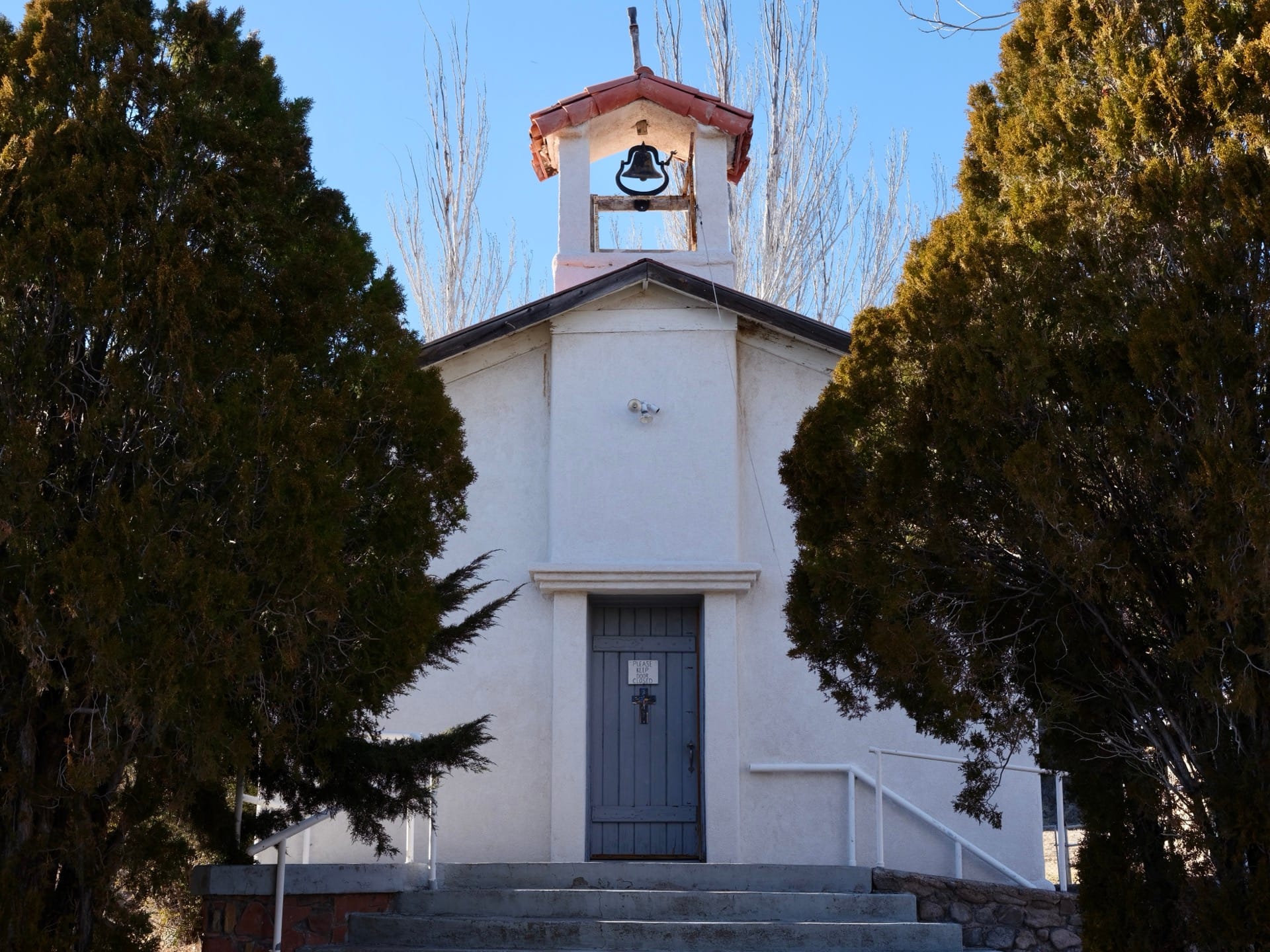
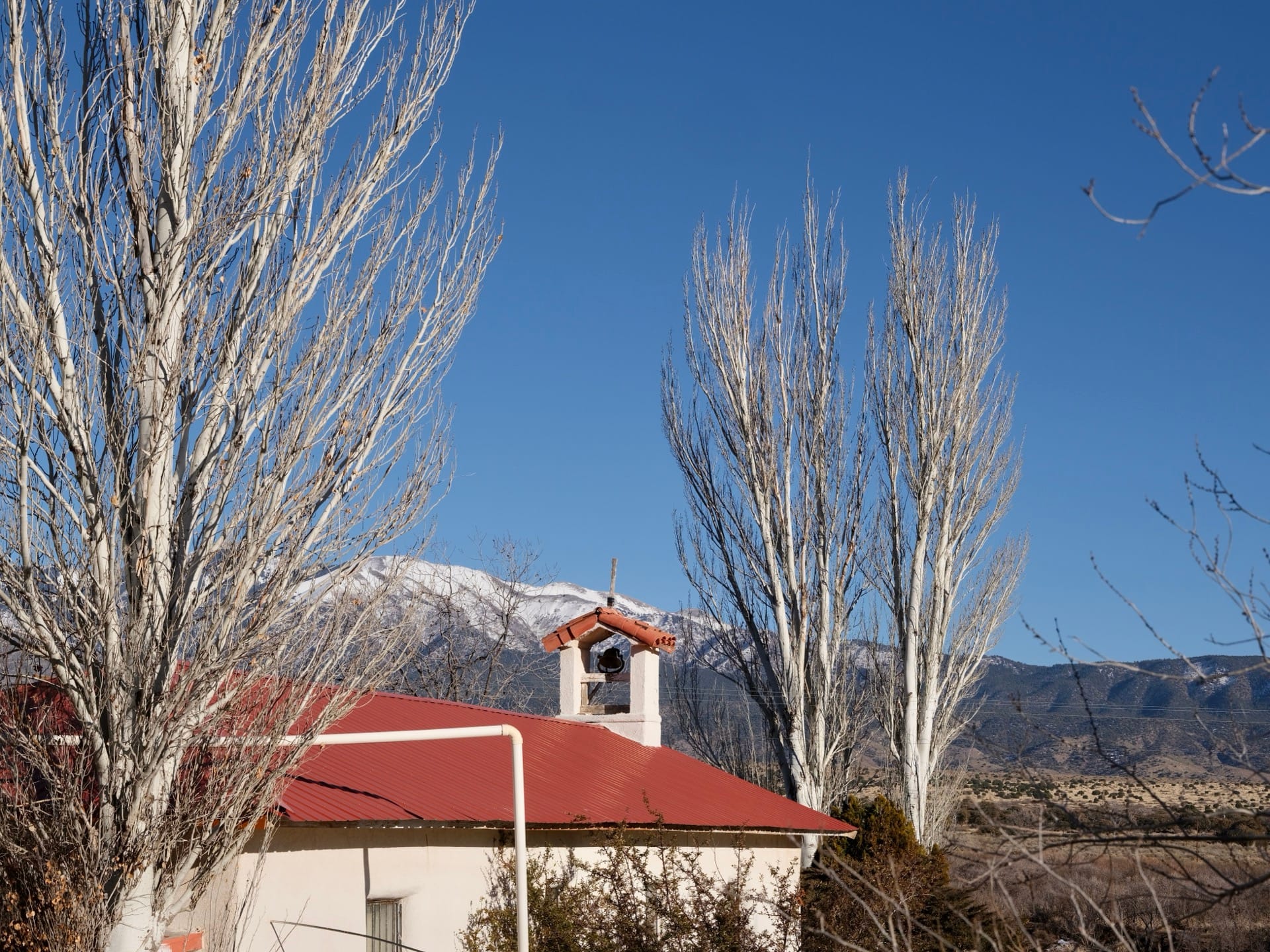
Santa Nino de Atocha
It is in farming and ranching country near Three Rivers New Mexico. An area that a hundred years ago supported a larger, though it would seem still small, population. The major rancher here was a man by the name of Albert Fall. A successful lawyer and politician he made his way to head the Department of the Interior under Warren Harding and was eventually convicted of accepting a bribe from an oil company executive to allow no-bid drilling on public land. This became known as the Tea Pot Dome scandal (1922). Named after one of the areas of land being leased for drilling.
Built in 1911 next to a spring, it is evident the chapel is still loved and used today. The grounds show a story of age and love and also celebration. A large covered outdoor patio held celebrations. An elaborate barbecue setup clearly to cater to larger crowds. The cemetery has contemporary graves replete with all kinds of touching mementos to inform you what kind of person is buried there.
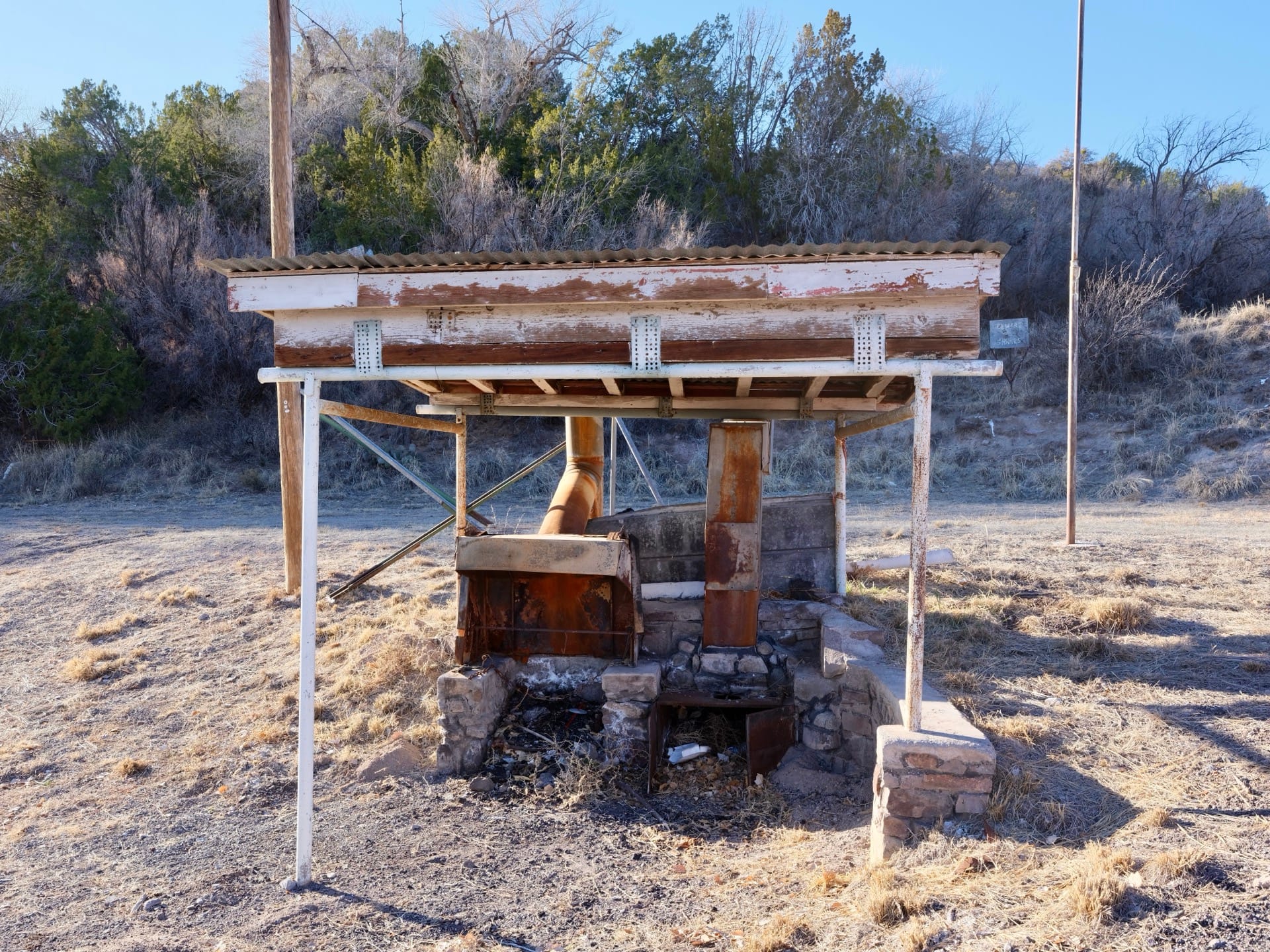
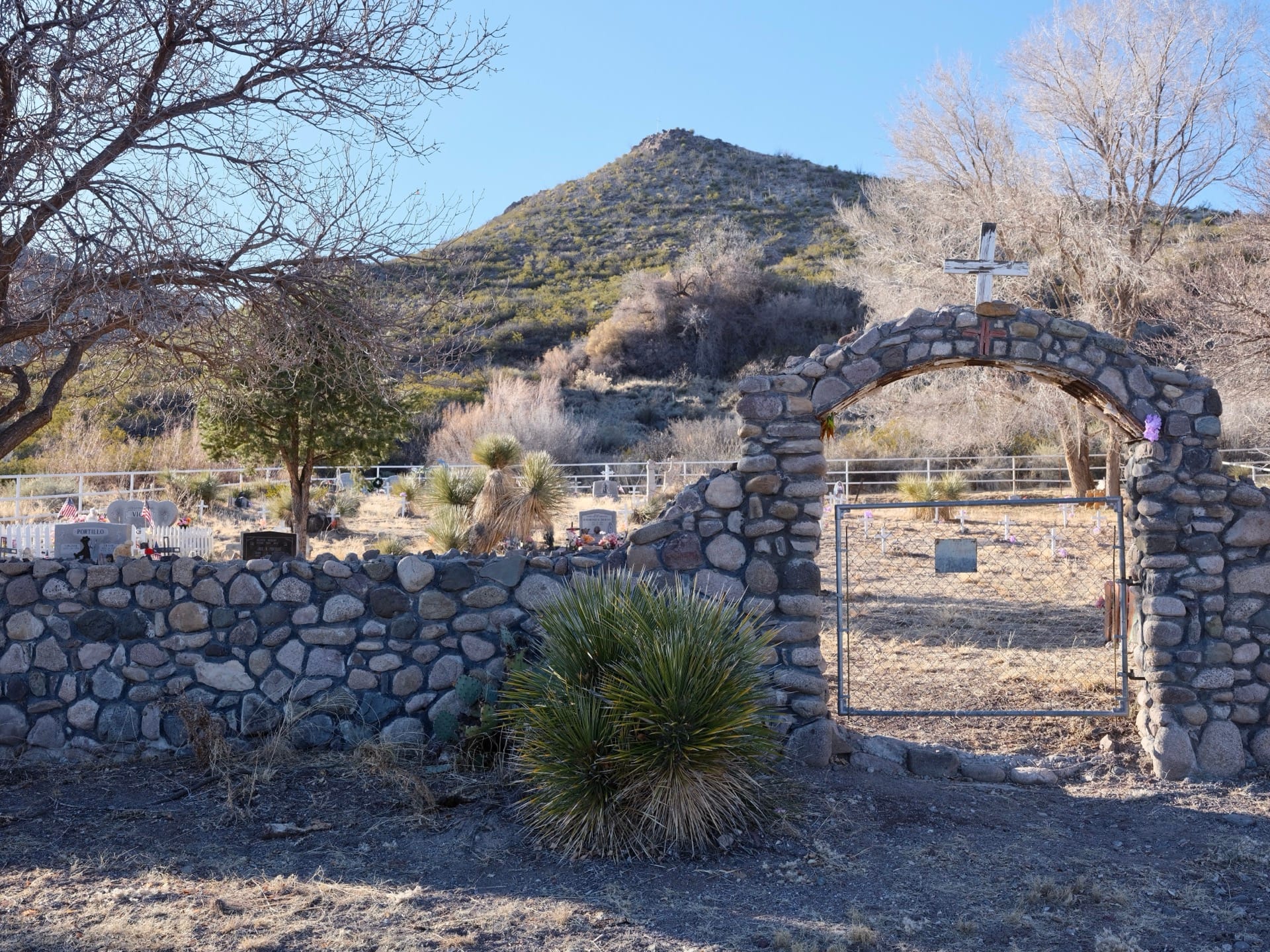
Dilapidated but elaborate barbecue. Cemetery entrance.
Inside the chapel is a raucous, brightly colored display of saints and statuary and crosses all under the rough-hewn beamed ceiling. Everything carried with it a feeling of personal care, love, and devotion.
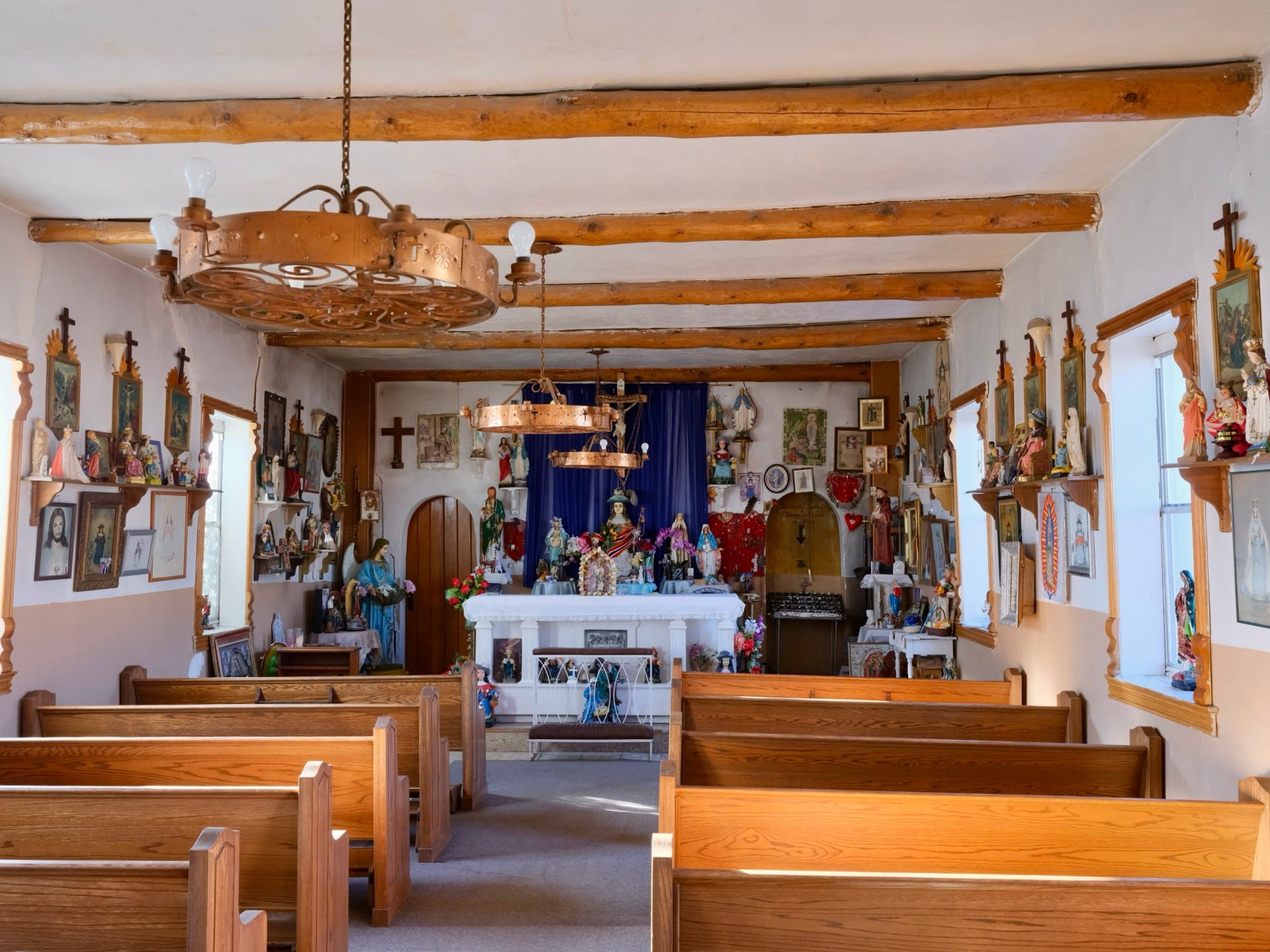
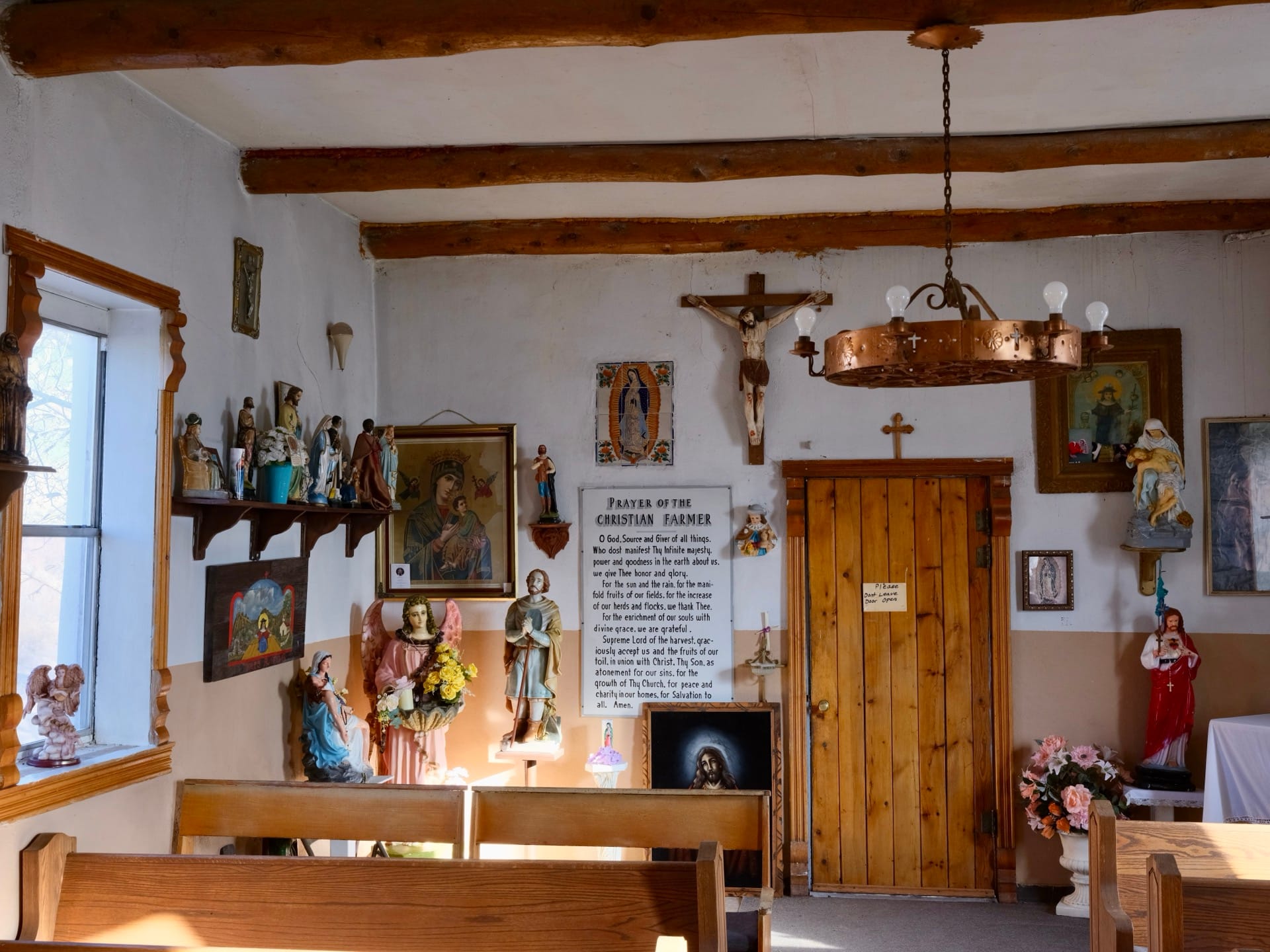
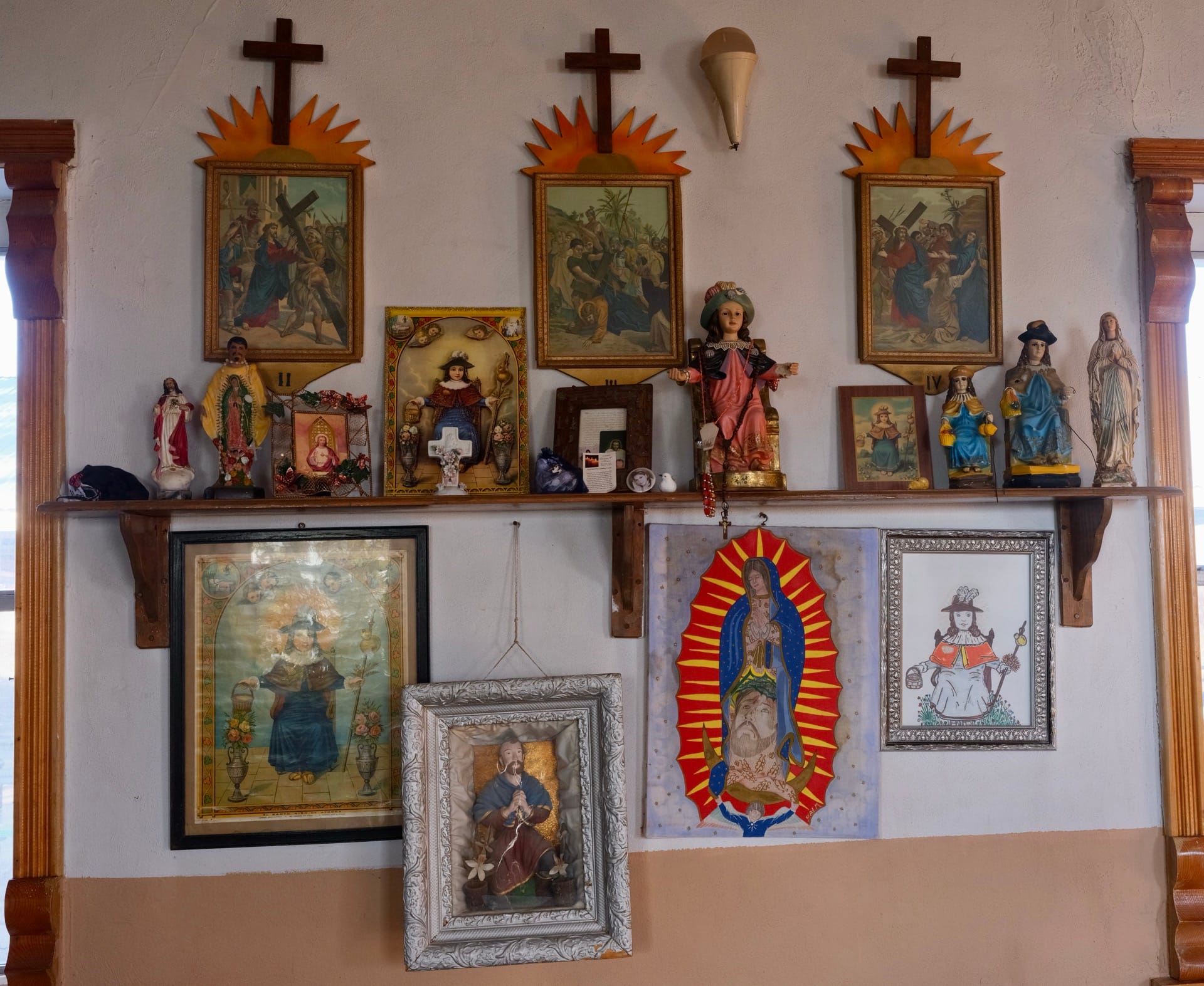
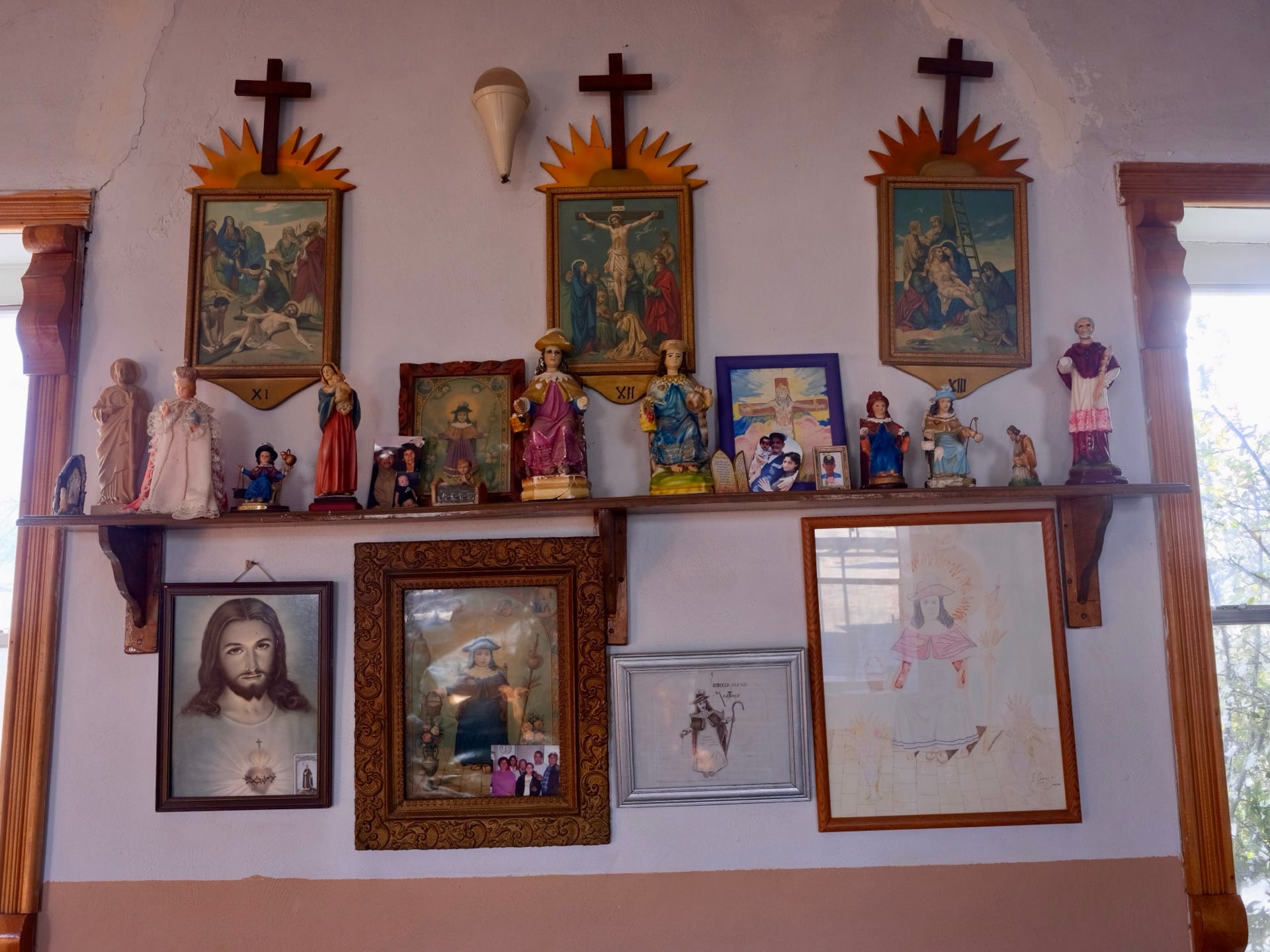
The chapel is dedicated to Santa Nino de Atocha or the Holy Infant of Atocha. The devotion began in 13th century Spain during occupation by the Moors. From Wikipedia…
The town of Atocha, now part of Madrid's Arganzuela district, was lost to the Muslims, and many Christians there were taken prisoners as spoils of war. The Christian prisoners were not fed by the jailers, but by family members who brought them food. According to pious legend, the caliph ordered that only children under the age of 12 were permitted to bring food. Conditions became increasingly difficult for those men without small children. The women of Atocha prayed before the statue of Our Lady of Atocha at a nearby parish, a title of the Blessed Virgin Mary, to ask her son Jesus for help.[2]
Reports soon began among the people of Atocha that an unknown child under the age of twelve and dressed in pilgrim's clothing had begun to bring food to childless prisoners at night. The women of the town returned to Our Lady of Atocha to thank the Virgin for her intercession and noticed that the shoes worn by the Infant Jesus were tattered and dusty. They replaced the shoes of the Infant Jesus, but these became worn again. The people of Atocha took this as a sign that it was the Infant Jesus who went out every night to help those in need.[2]
There is a hike to a nearby hilltop that takes in the stations of the cross before reaching the summit where a cross is located. We hiked this the next day. It is a strange and moving hike even for the unfaithful. The devotion and effort to construct this is admirable.
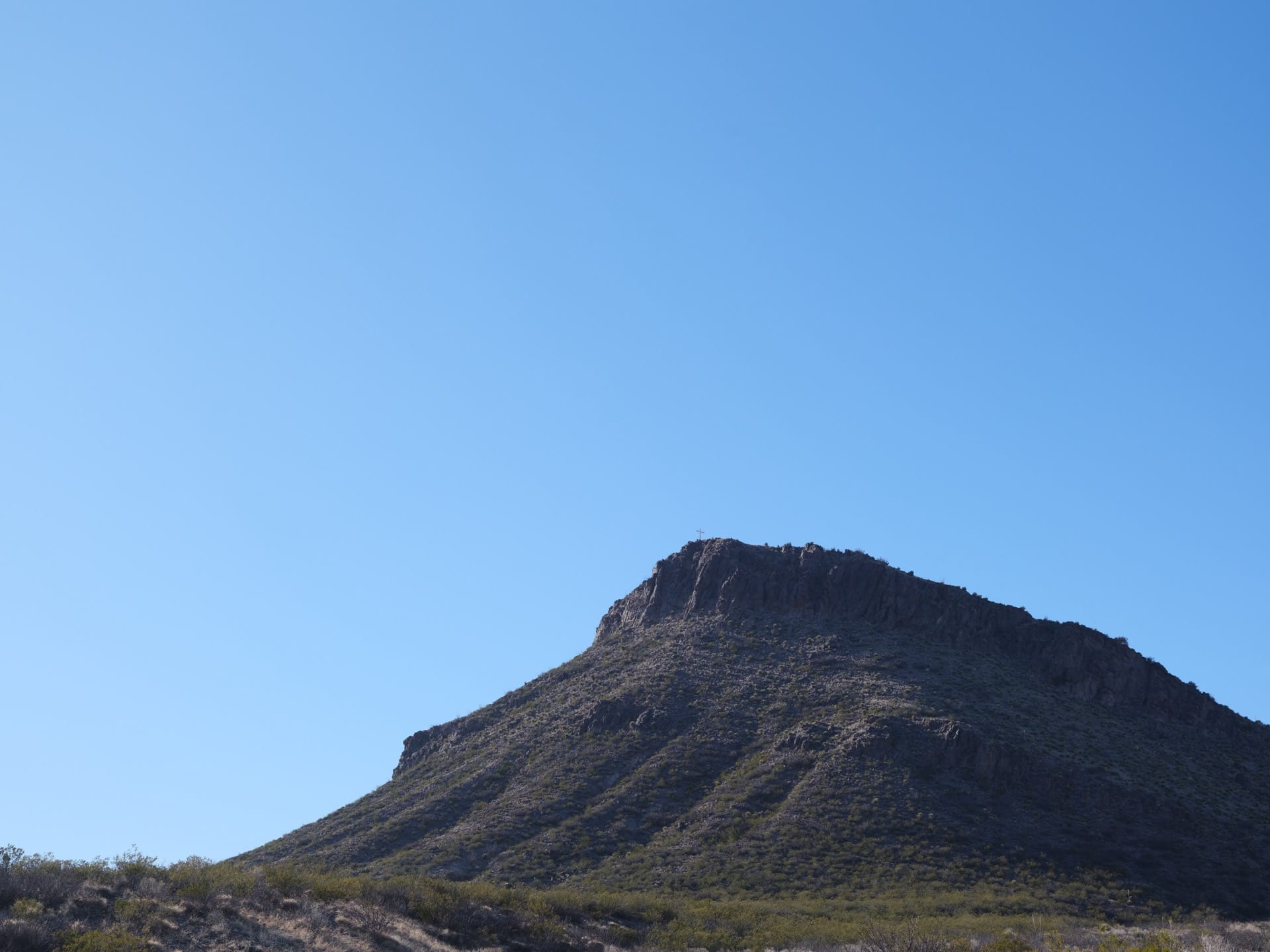
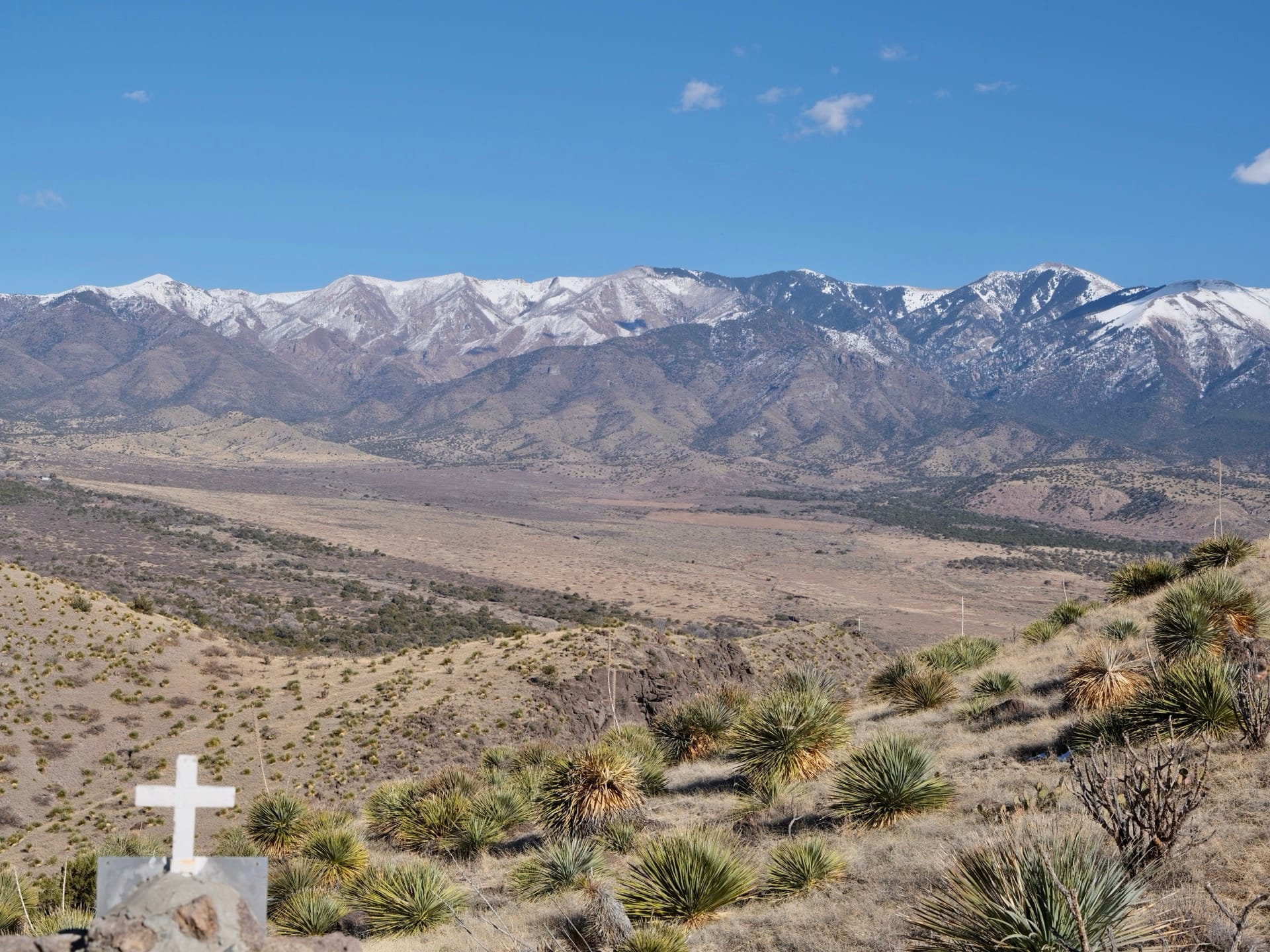
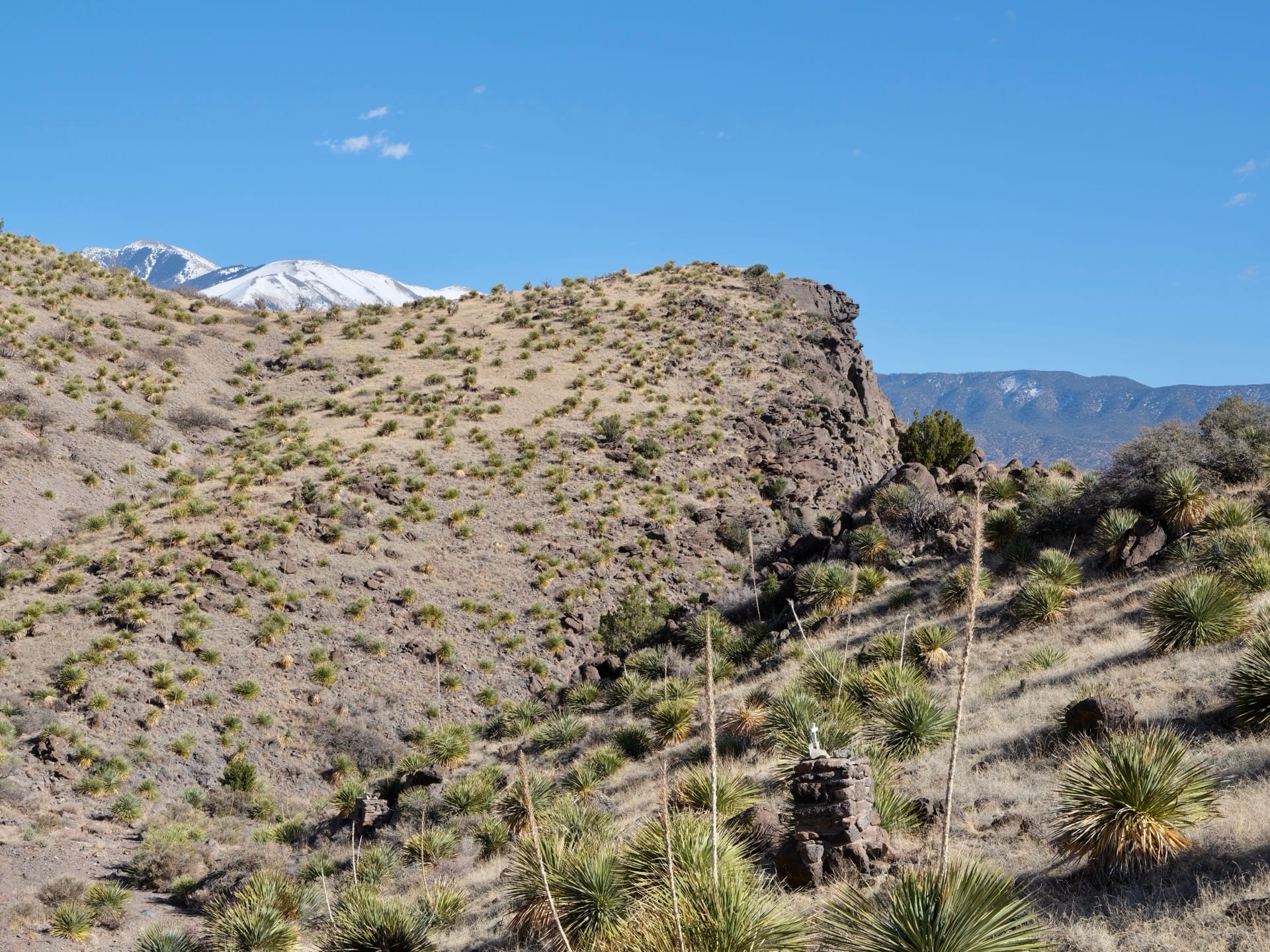
Left: The summit cross at end of hike (barely visible). Views from on the way up center and right.
It is less than two miles round trip and the chance to contemplate each station provides well-spaced rests. It would be punishingly hot in summer but today it was perfect. At the top is a huge cross about 20 feet tall, anchored with guy wires on the edge of the precipice. Offerings and memorials are seen all around. It looks to have been constructed in 1969 based on various engravings on the panels around the alter.
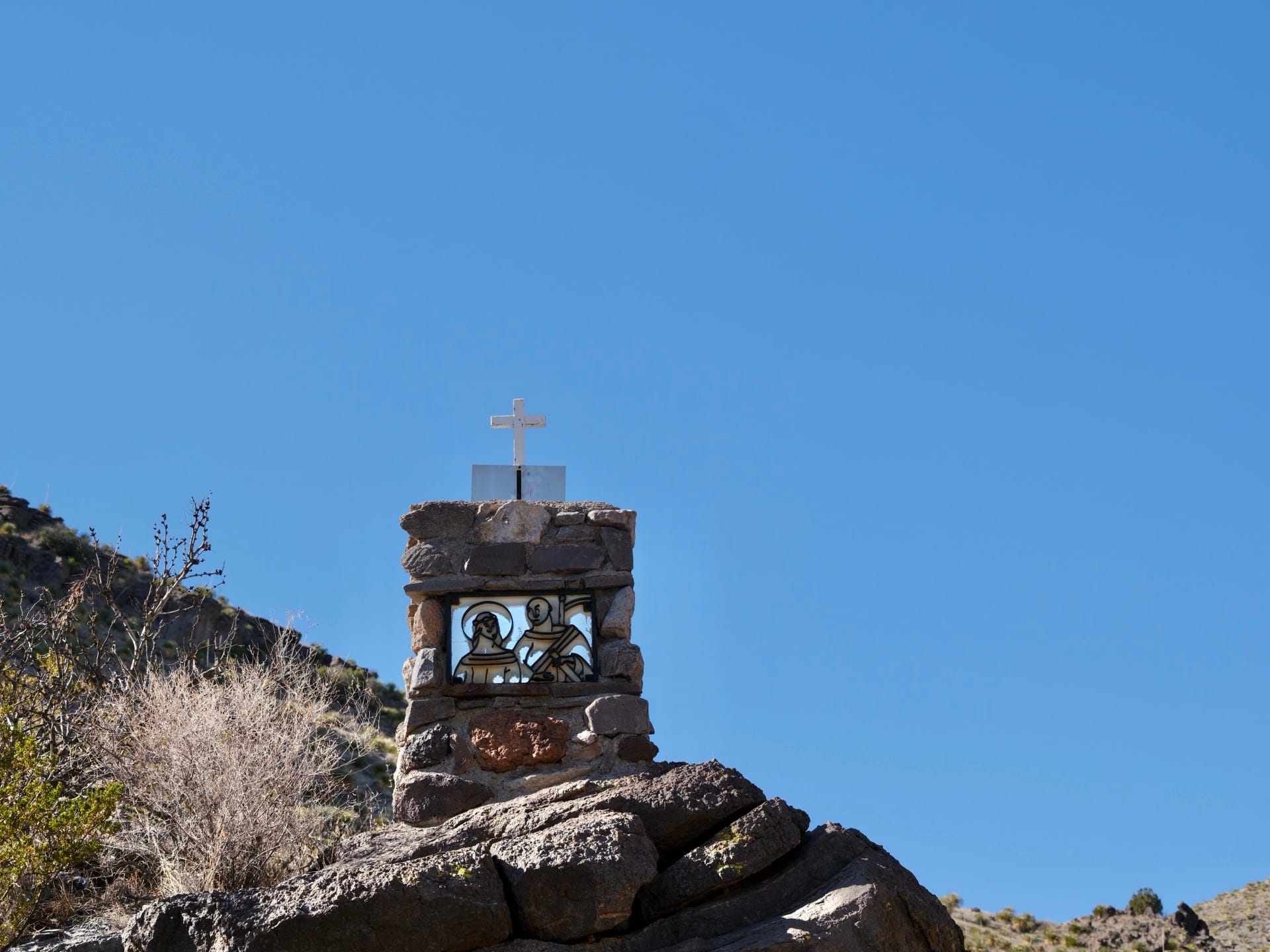
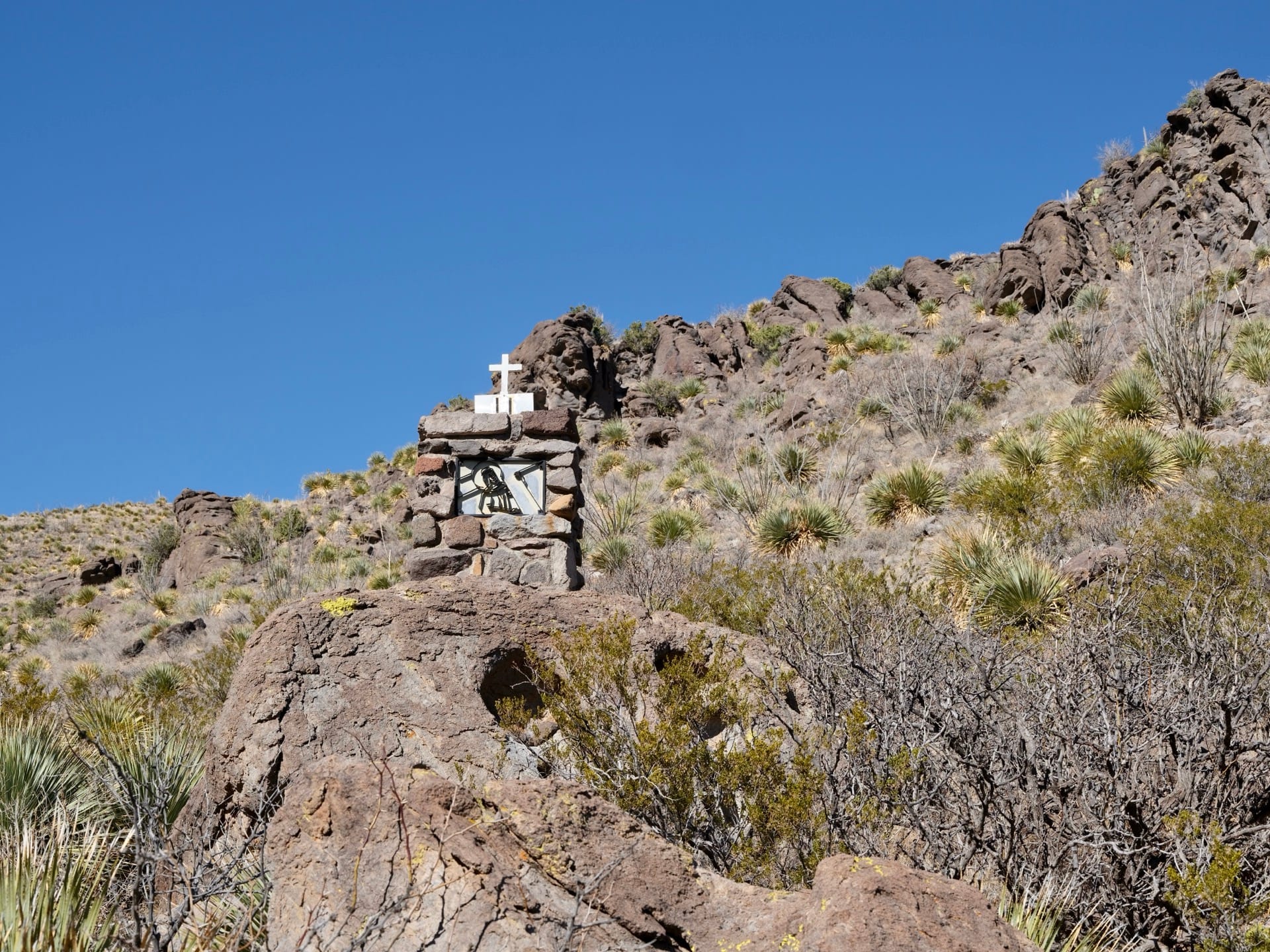
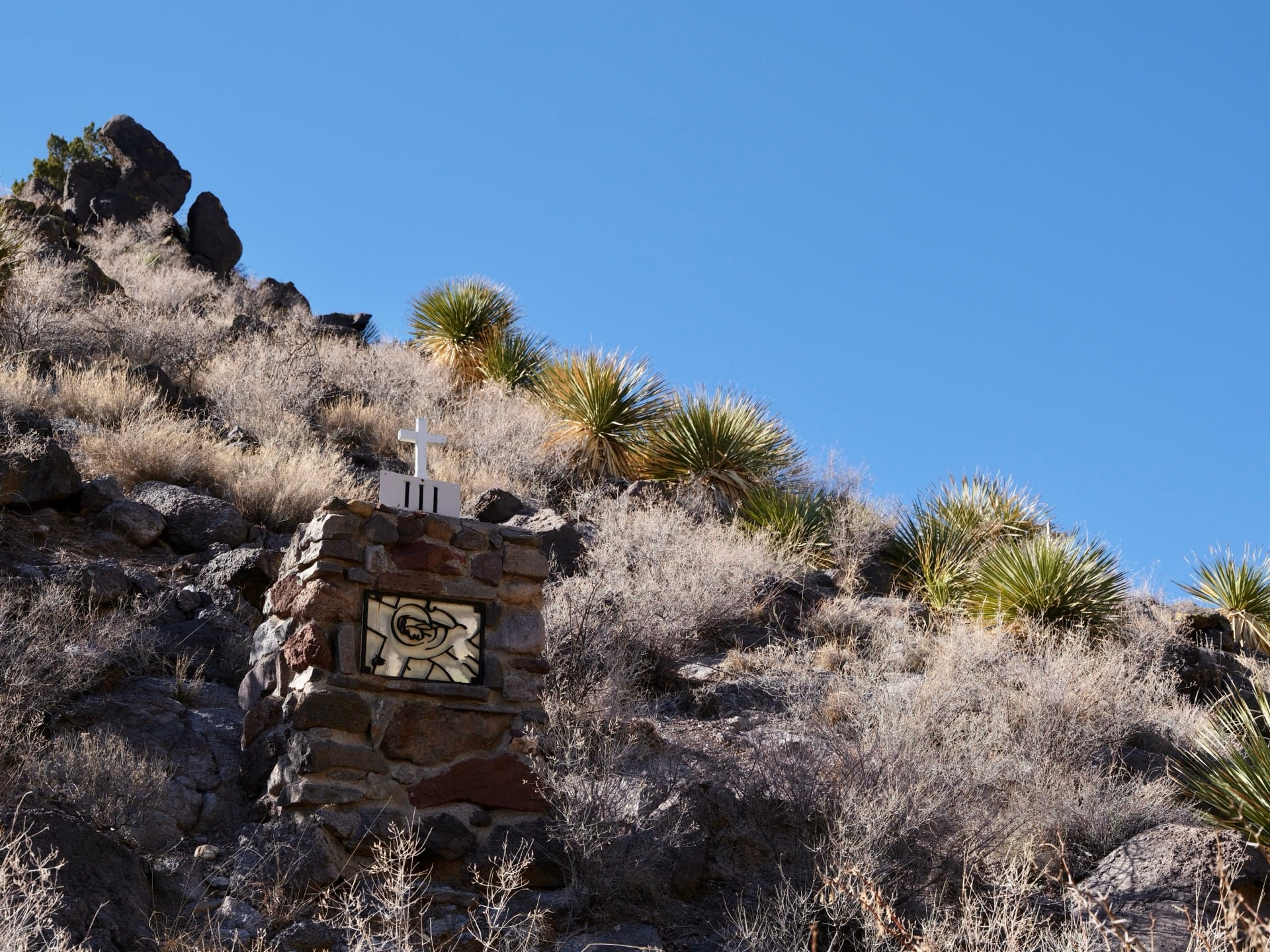
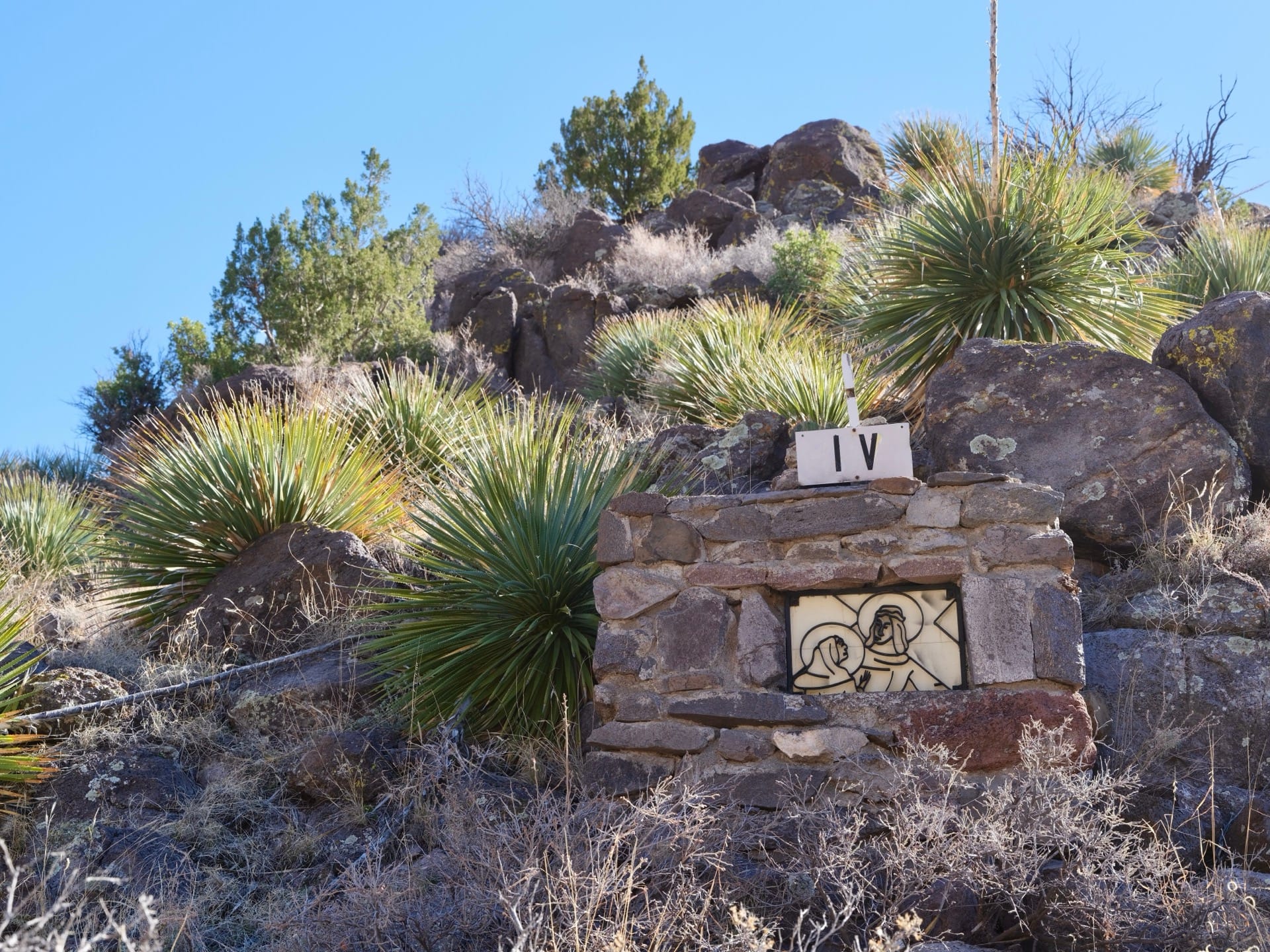
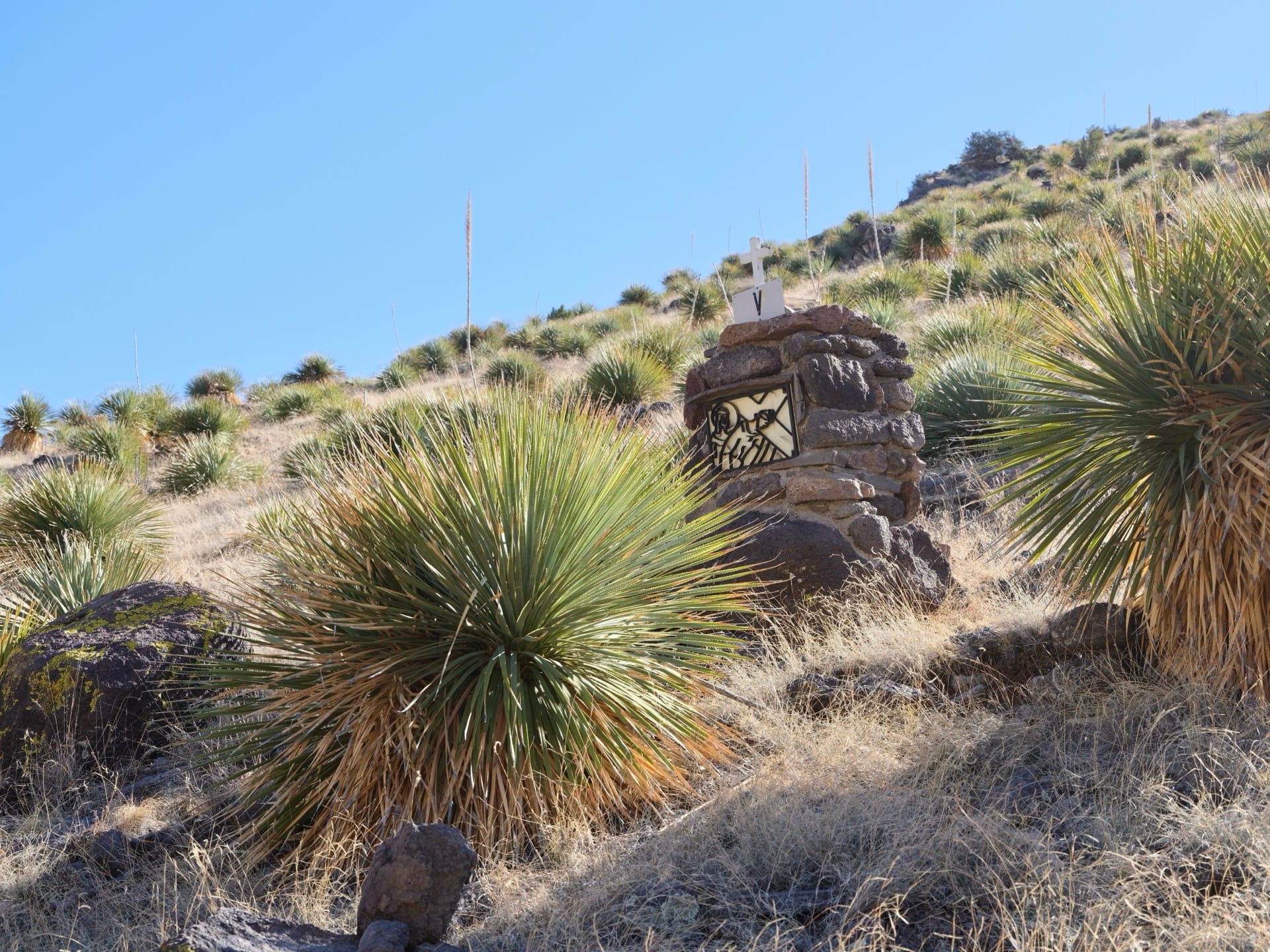
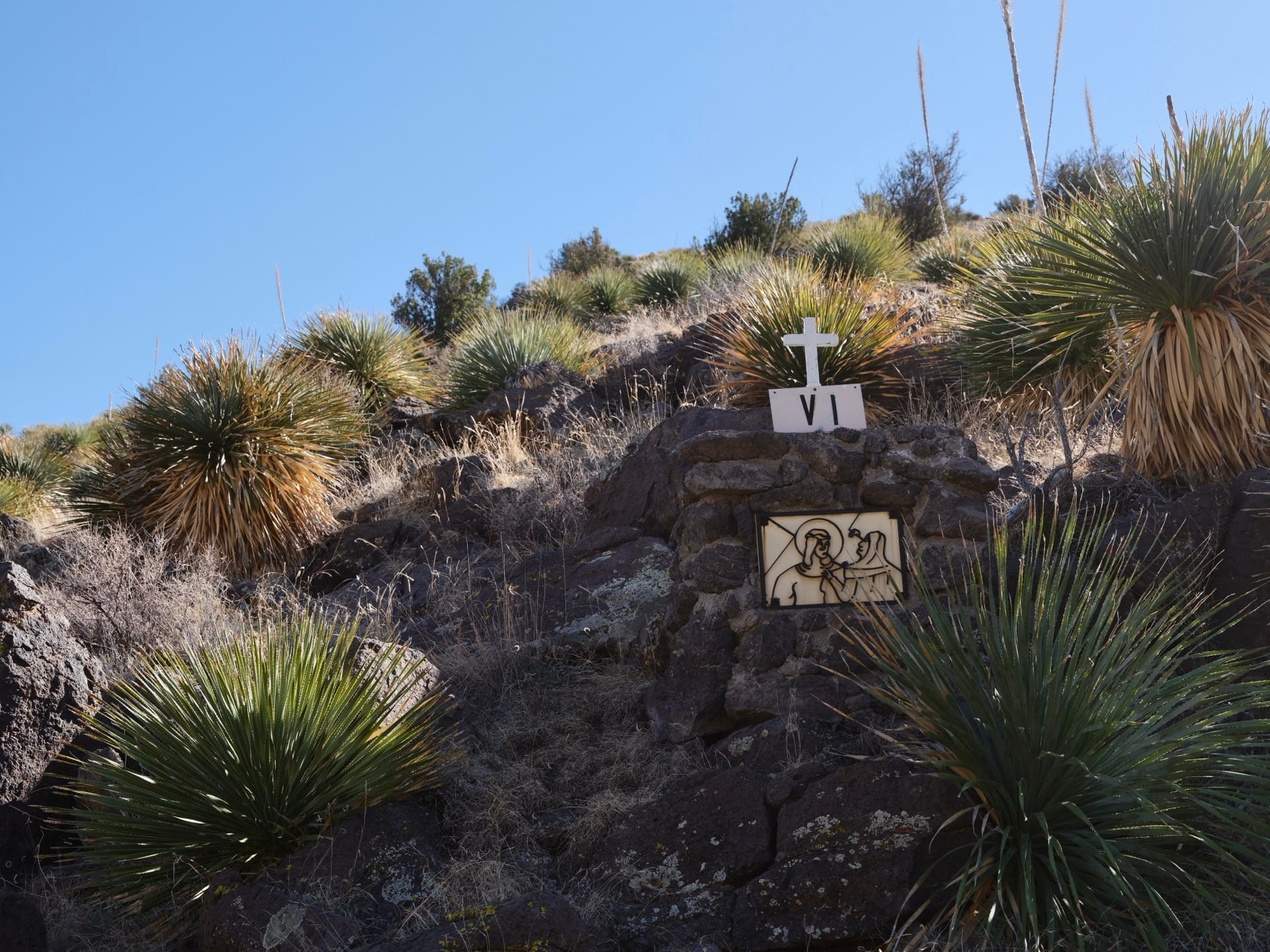
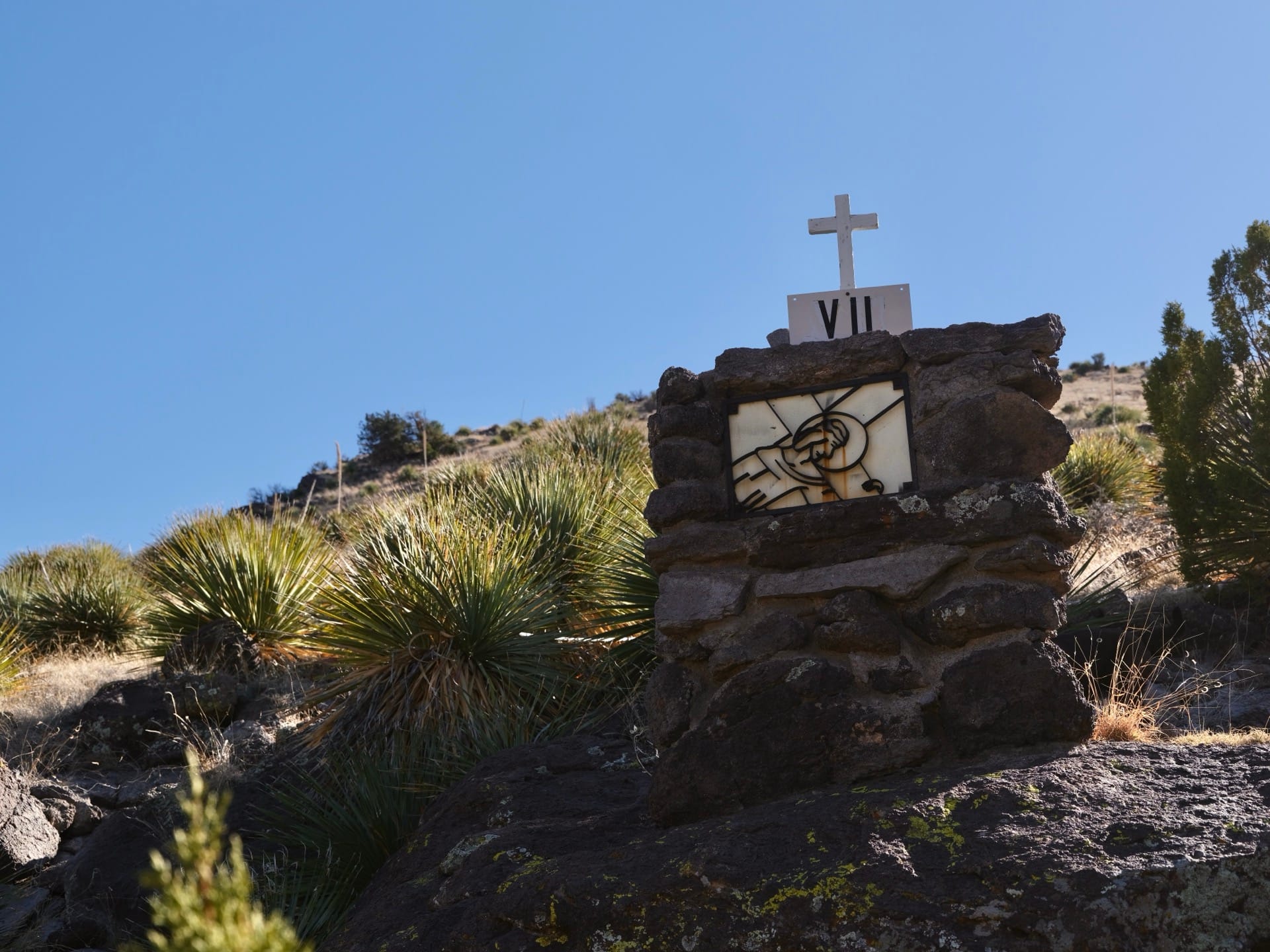
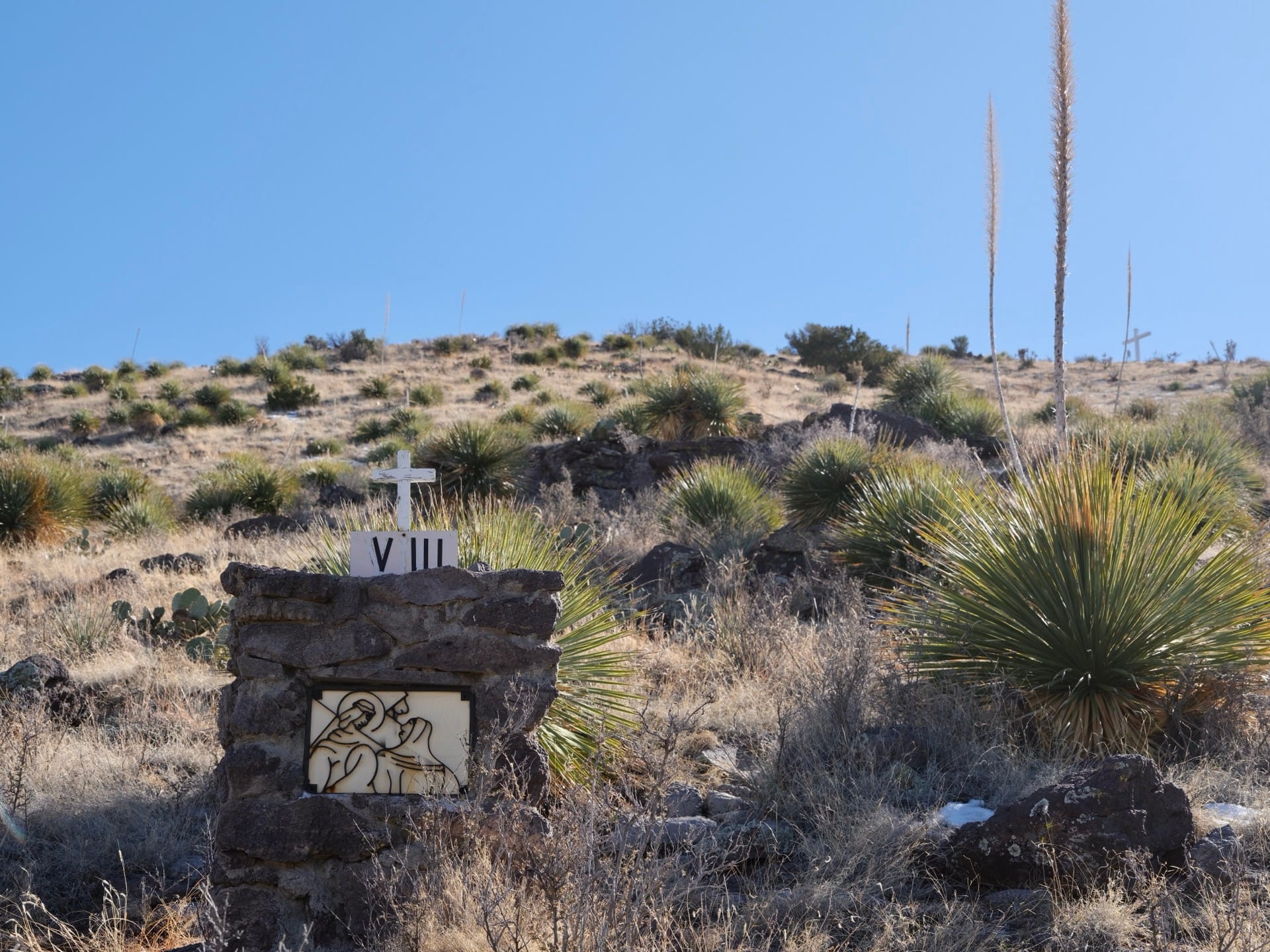
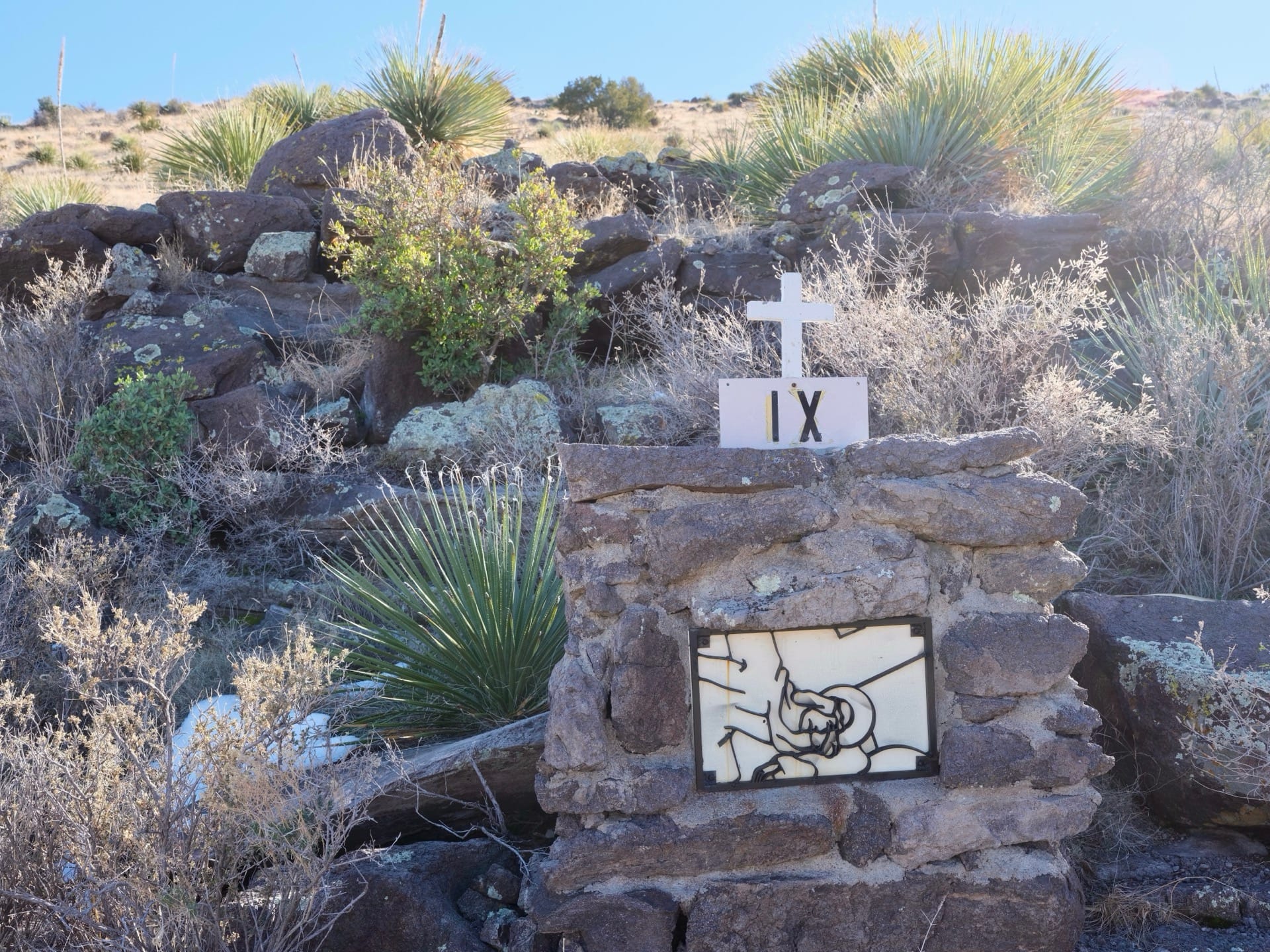
Stations of the cross 1-9.
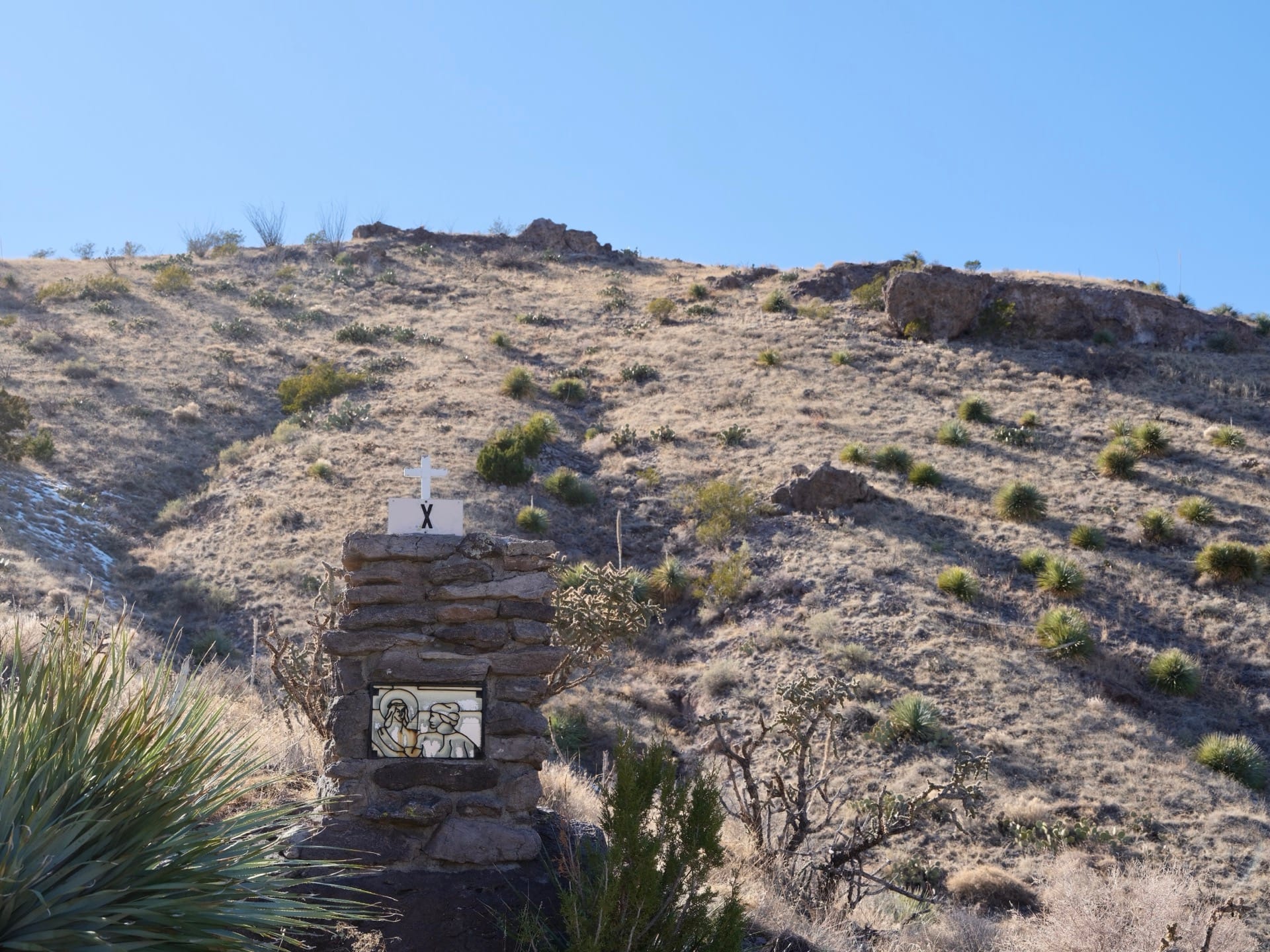
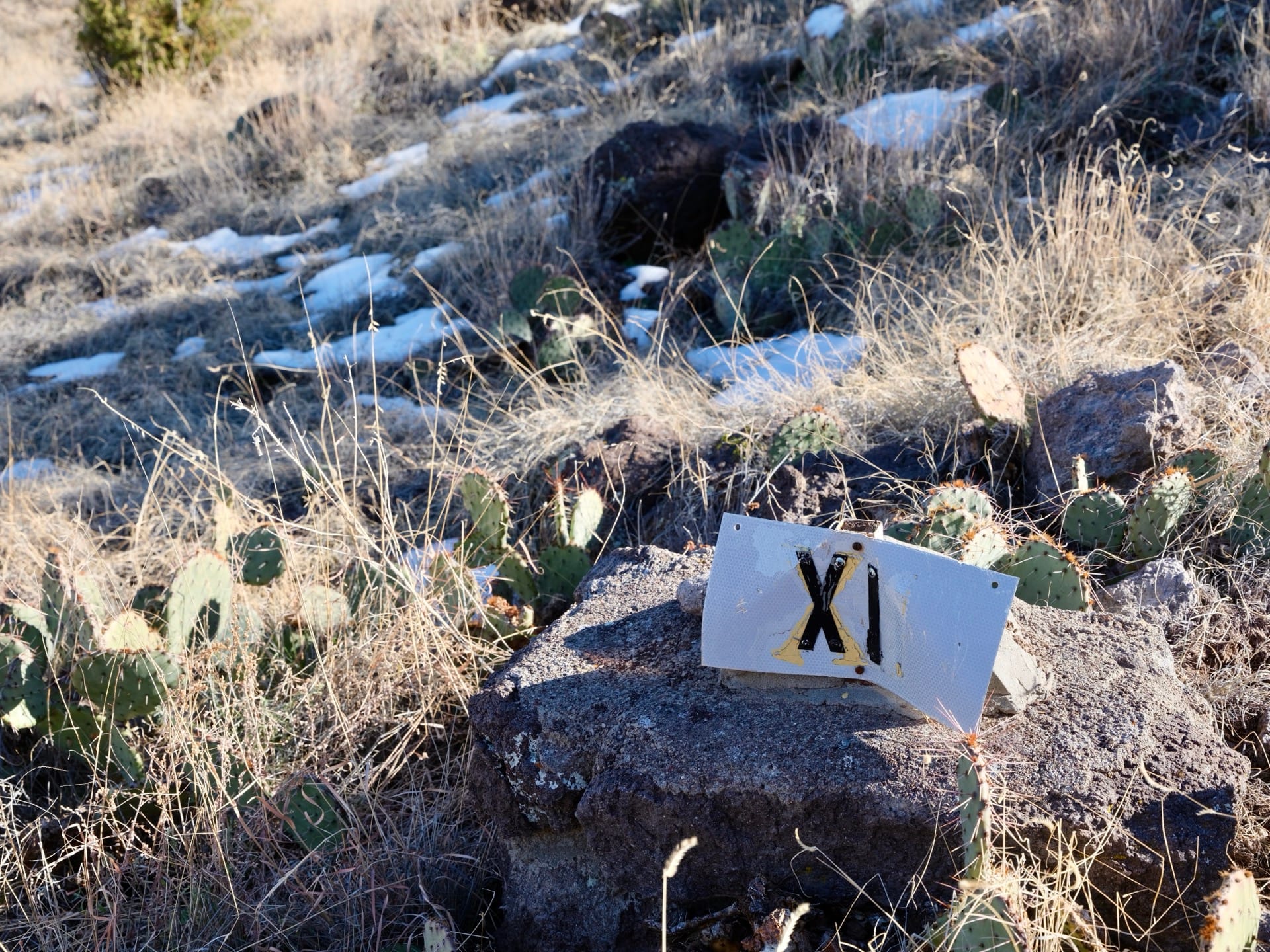
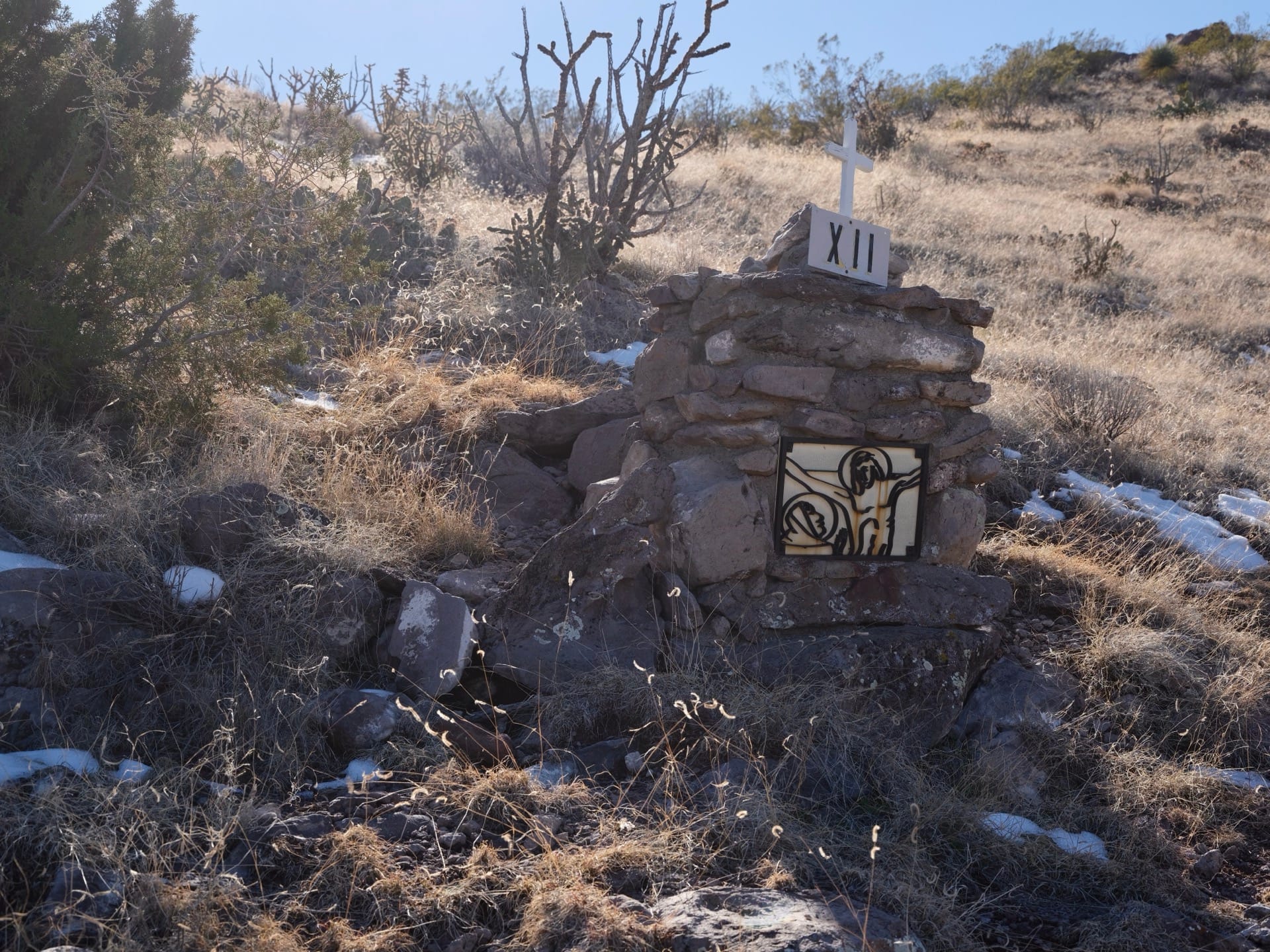
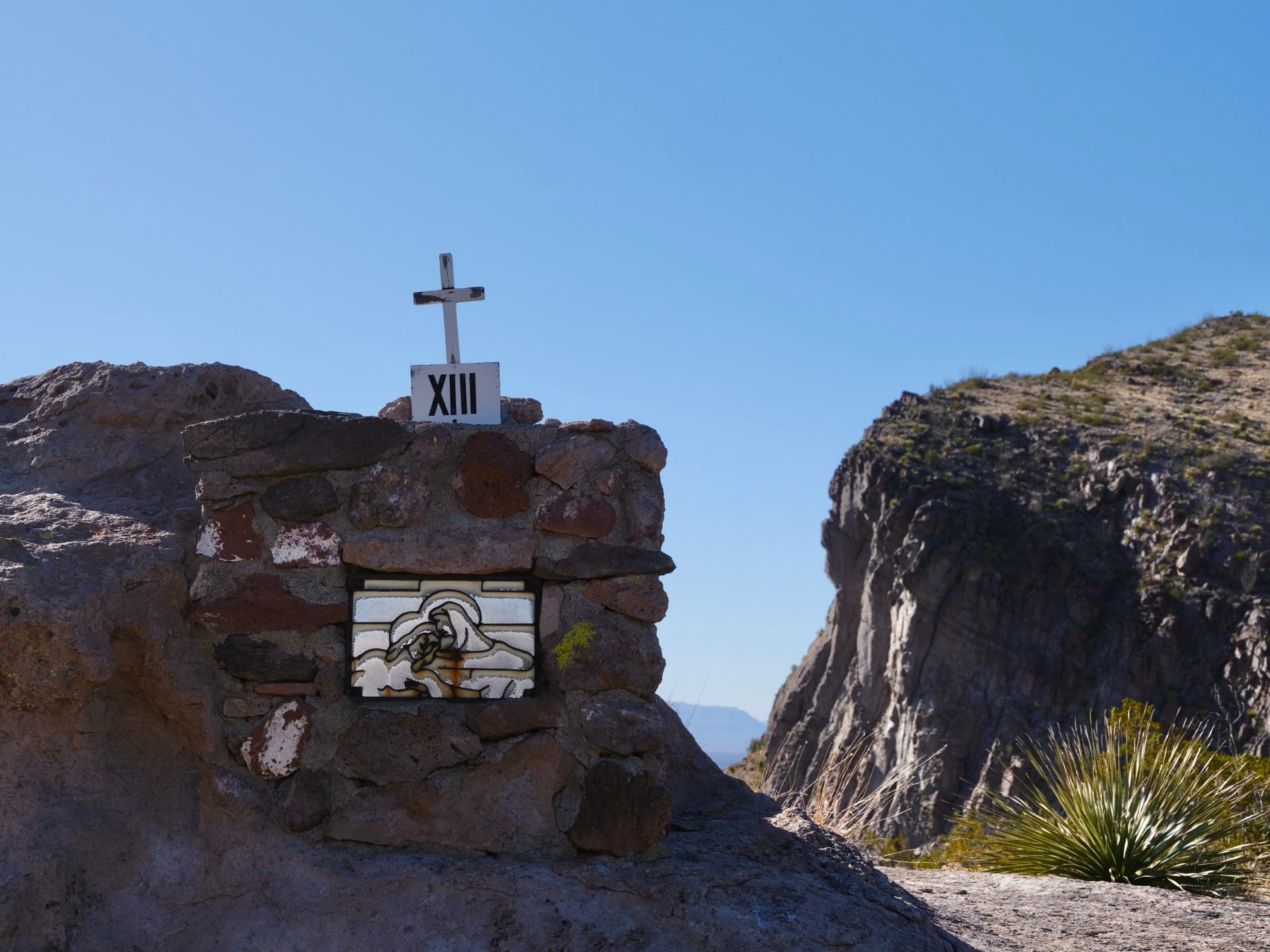
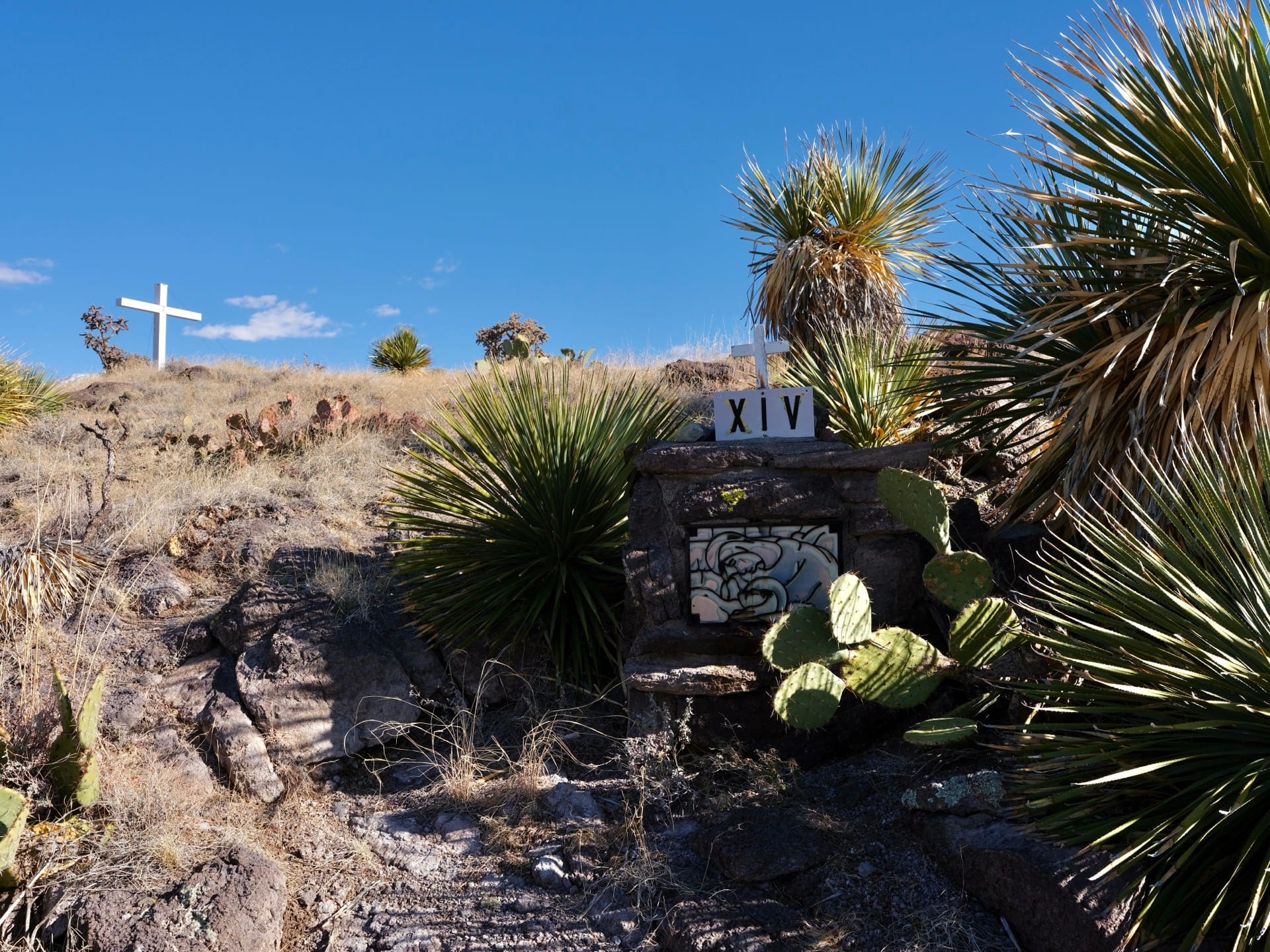
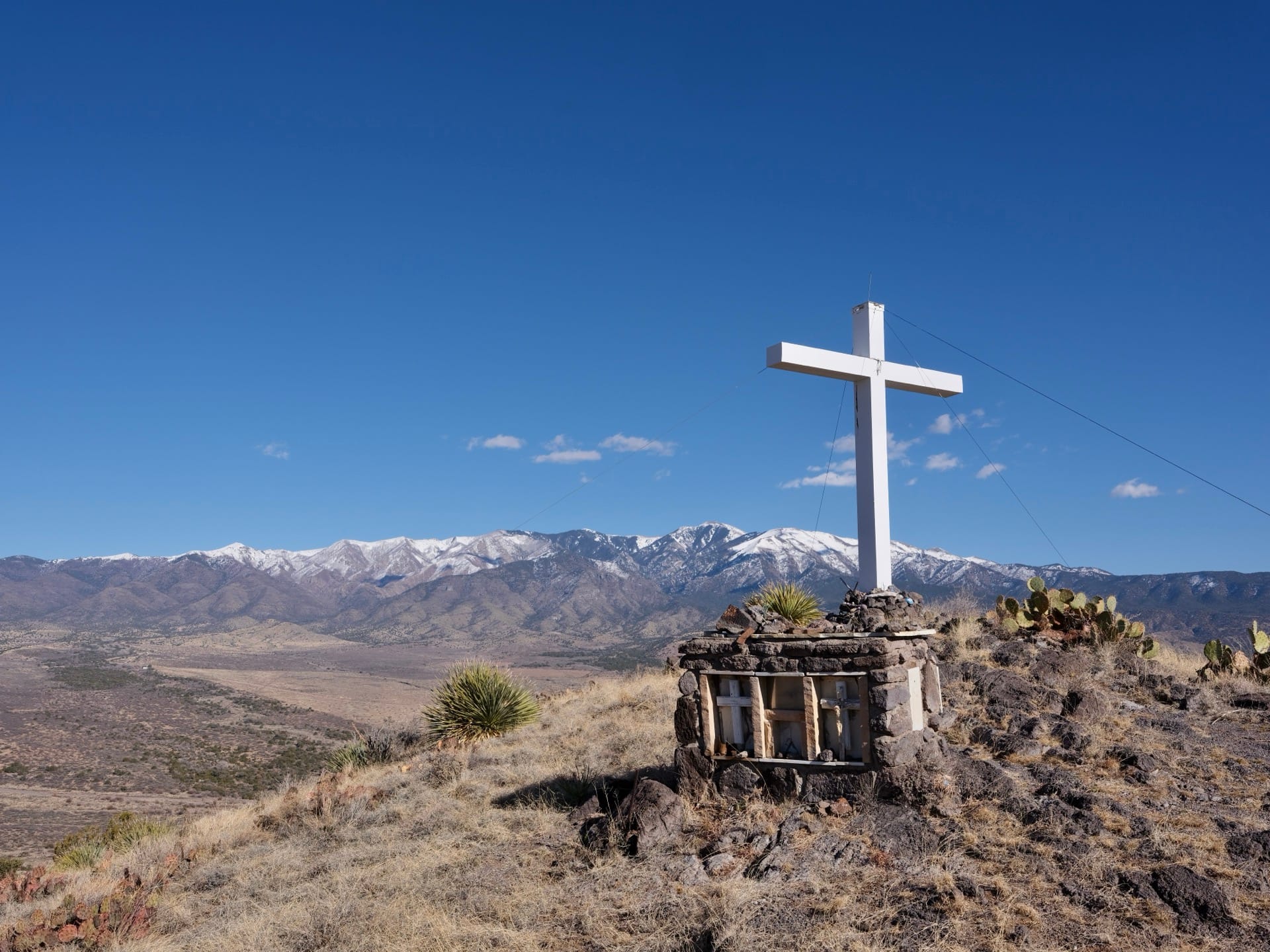
Stations of the cross 10-15. Note 11 has been destroyed. Final photo is the cross at the summit. About 20 feet tall.