Pilgrimage
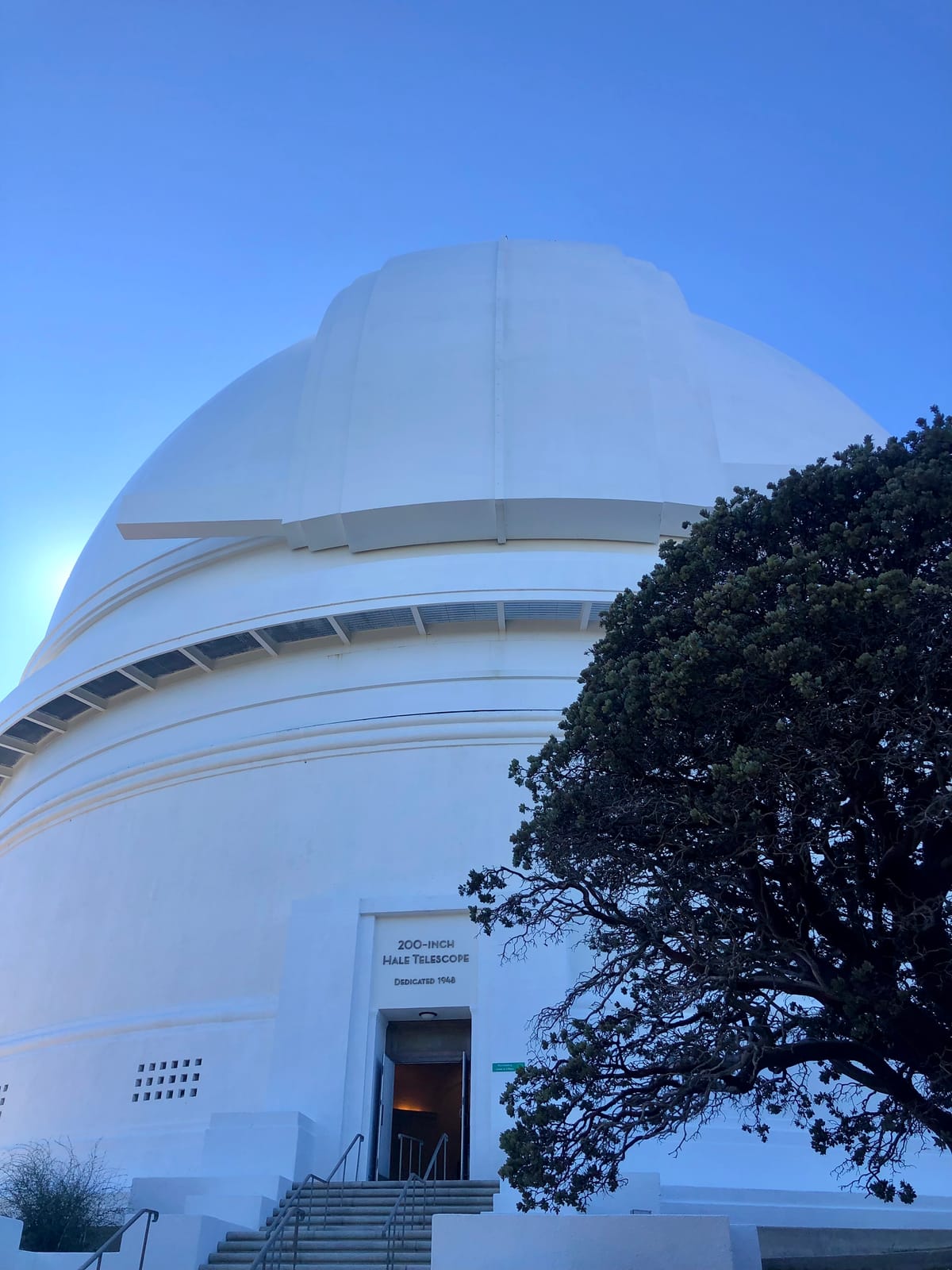
Today we drove up over the mountains and upon spying the white dome on the distant mountain decided to visit Palomar Observatory.
It is something of a mecca to anyone who appreciates science especially astronomy or the cosmos. I confess to being such a person having nerded out on books about astronomy as a kid and seeing photos of nebulae and clusters many times attributed to the 200-inch Hale telescope. For most of my childhood it stood as the largest telescope in the world.
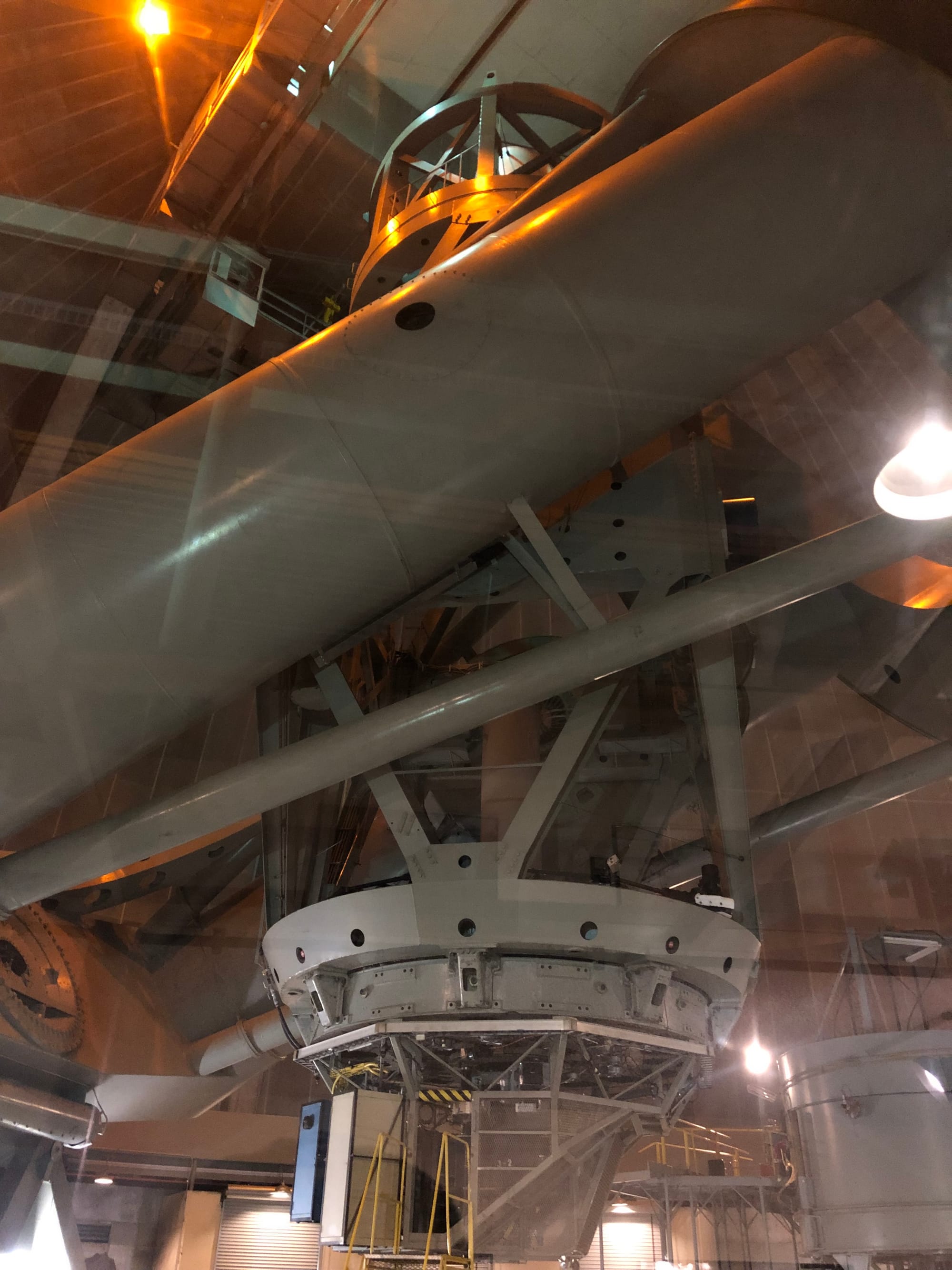
Built by Caltech and started in 1936 it waited until after the second world war to see first light. It was at the forefront of much research at the time. Initially recording images on film before being converted to CCD sensors. Today nobody sits in the focus chamber at the top of the telescope and everything is enabled for completely remote operation. They are still doing cutting edge research with this ancient instrument.
When I was at college getting my Computer Science degree I worked for an amateur astronomer whole built his own 16” Cassegrain telescope. He was working with Dr. Doug Hall at Vanderbilt University studying variable stars. That is stars that changed intensity over time. This involved regular accurate measurements of the brightness of subject stars. Dr Hall saw the potential of a cadre of committed amateurs as a means to gather the requisite data.
Over the years he patiently taught these amateurs how to build the photometers, collect and reduce the data.
With the help of a telescope builder, Ed Mannery from the University of Washington, an automated photometer was built to count the photons and move the necessary filters into place. I wrote the software on an 1 MHz Apple II computer with 64K bytes of RAM. Later I wrote the software to fully automate the observatory again on an Apple II computer. Type in the name of a star and the dome and telescope would swing into position such that the subject star was always in the viewfinder.
I wrote up my work and presented it at various astronomical symposium. It was great fun at 18 years of age to be meeting with various professional Astronomers and telescope and instrument builders. It later led to job offers at the VLA in Soccoro New Mexico and Kitt Peak in Arizona.
I suppose all of this personal history is by way of explanation that upon seeing Palomar Observatory and the great gleaming dome and grand telescope it housed I was left me feeling surprising emotional. The building itself is of unusual beauty. Gleaming pure titanium dioxide white it has a faintly art deco style to my eye. Compared to an age today where cost and functionality are paramount they created a temple to science. Men who took enough pride in their work to embellish it with beauty. They were convinced they were not just creating a scientific instrument but also a legacy.
We were not alone in this reverie, for on this remote mountaintop 50 miles from the Pacific Ocean and millions of inhabitants; among the few of us there, most were from elsewhere. Italy, Spain, China I could pick out. They had an excitement as well to be in the presence of a great icon of science the furtherment of man’s understandng of our place in the universe.
It also reconnected me to a lost past that I broke from to pursue a more lucrative commercial path. One that I may perhaps regret against the backdrop of the achievements of science. I believe also that here was a time when, despite the Great Depression and a world war, Americans valued and were still possessed of a competence and ambition it is hard to find today.
If you find yourself near San Diego and have any inkling of an interest in the history of science I encourage you to visit. The drive is beautiful. The views are spectacular and perhaps you too may be moved by wonder. Not a bad day out in this cynical age.