Indian Bread Rocks
So many meanings possible…I will explain…
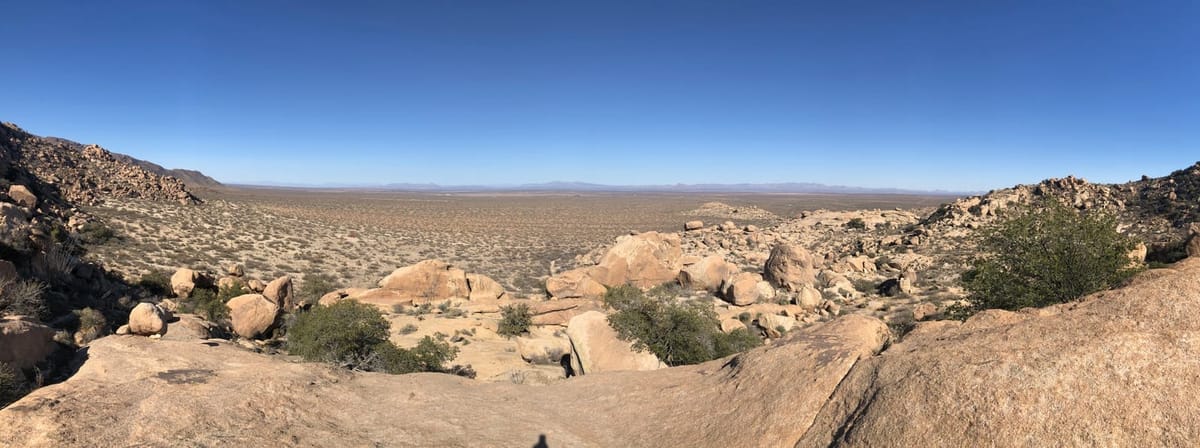
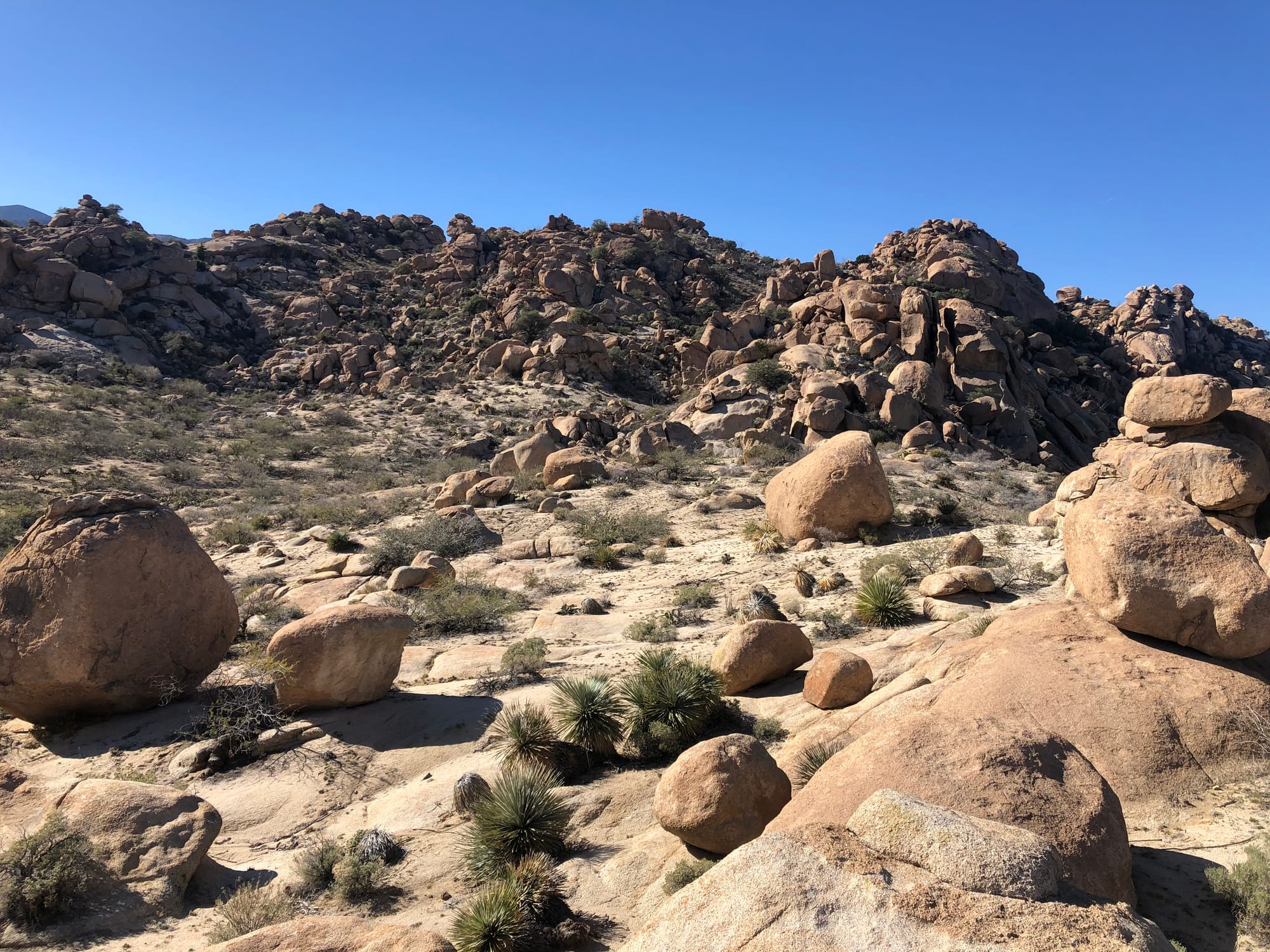
Here on the transition from the Sonoran to the Chihuahua deserts on the eastern side of the Dos Cabezos Mountains is a little area called Indian Bread Rocks. Our home for one night, it is tucked up against rounded granite boulder not unlike the ones found inmore popular Joshua Tree National Monument, though with yucca instead of Joshua trees. Across the valley floor I-10 rumbles on night and day with a continuous stream of truck and automobile traffic between El Paso and Tucson.
You get there after driving through the desperate town of Bowie (not even a General Dollar to brighten the commercial prospects) part of a string of desperate looking towns along the interstate, Wilcox, Bowie, San Simon Lordsburg (so hopeful, go figure), Deming. Along the way you are treated to the highway department’s own style of philosophy. We are reassured by the signs…
Dust Storms May Exist
Zero Visibility Possible
Bowie named for the nearby calvary fort where the military was stationed as they battled, massacred, and subjugated Cochise and Geronimo and their bands of warriors with families in tow.
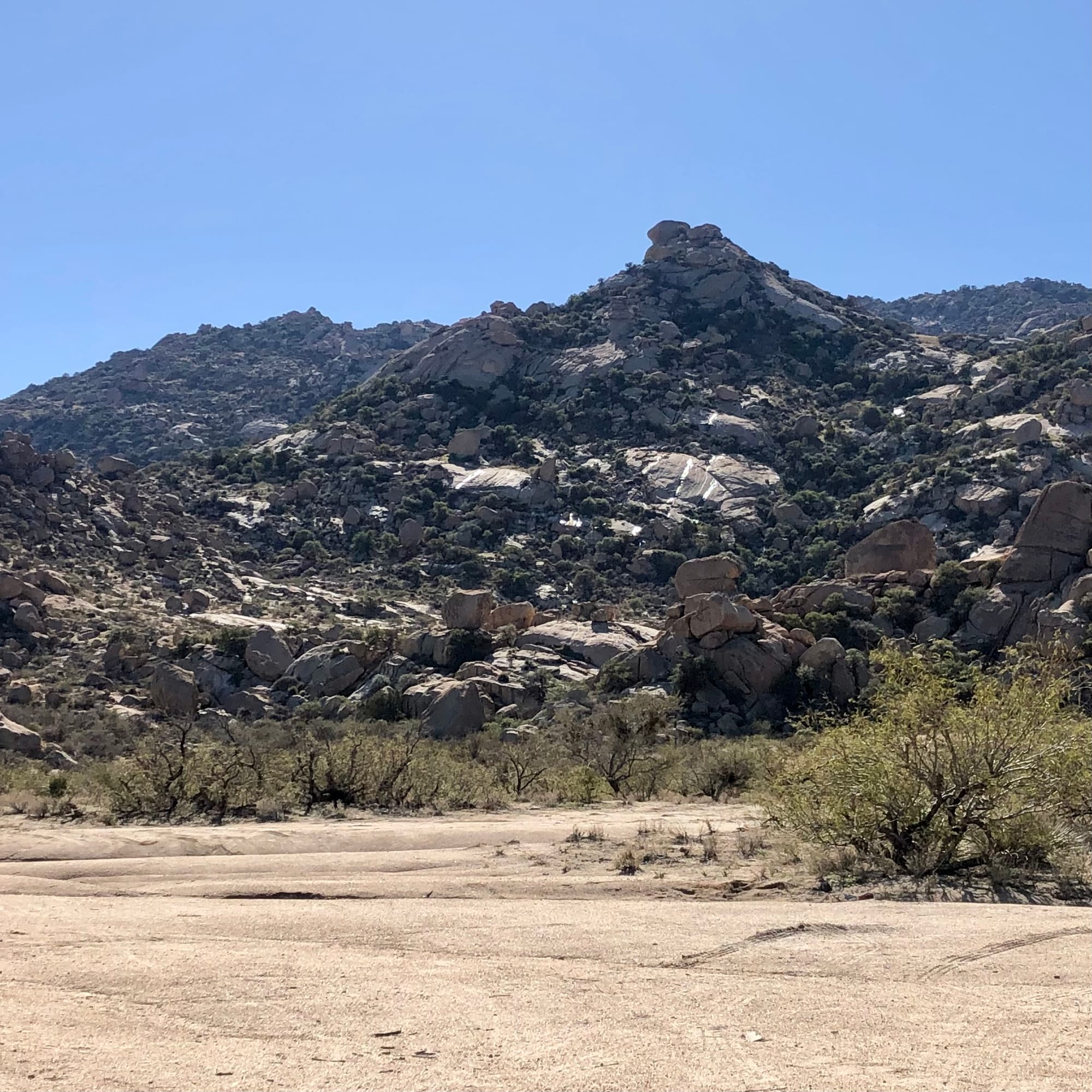
Here the smooth boulders weep and seep from recent rains. Sandy washes can still conjure small puddles in hoofprints. Raven, Mourning Dove, Cactus Wren, and Black-throated Sparrows supply the soundtrack over the background of a cool breeze and the rumbling of commerce in the distance.
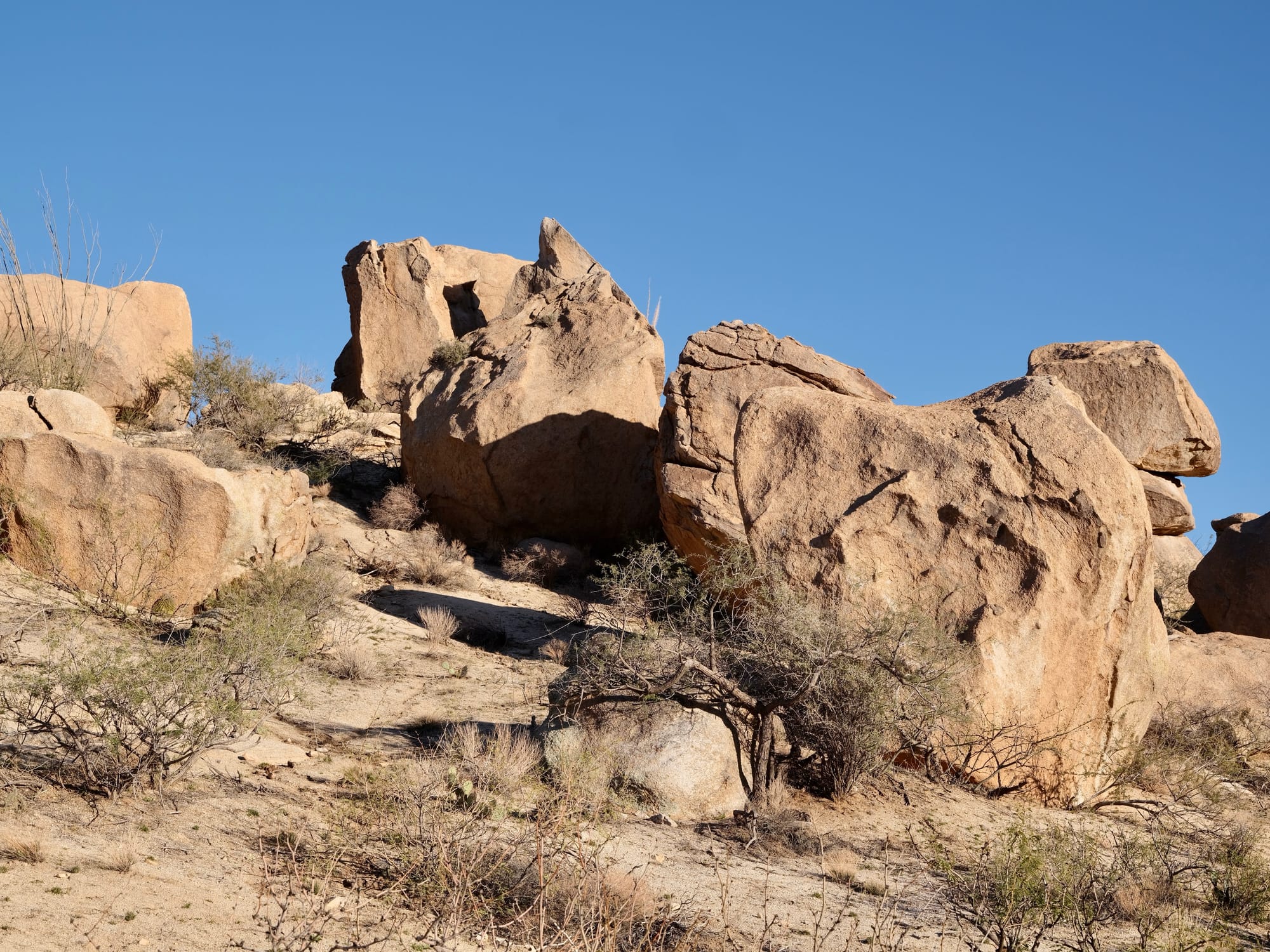
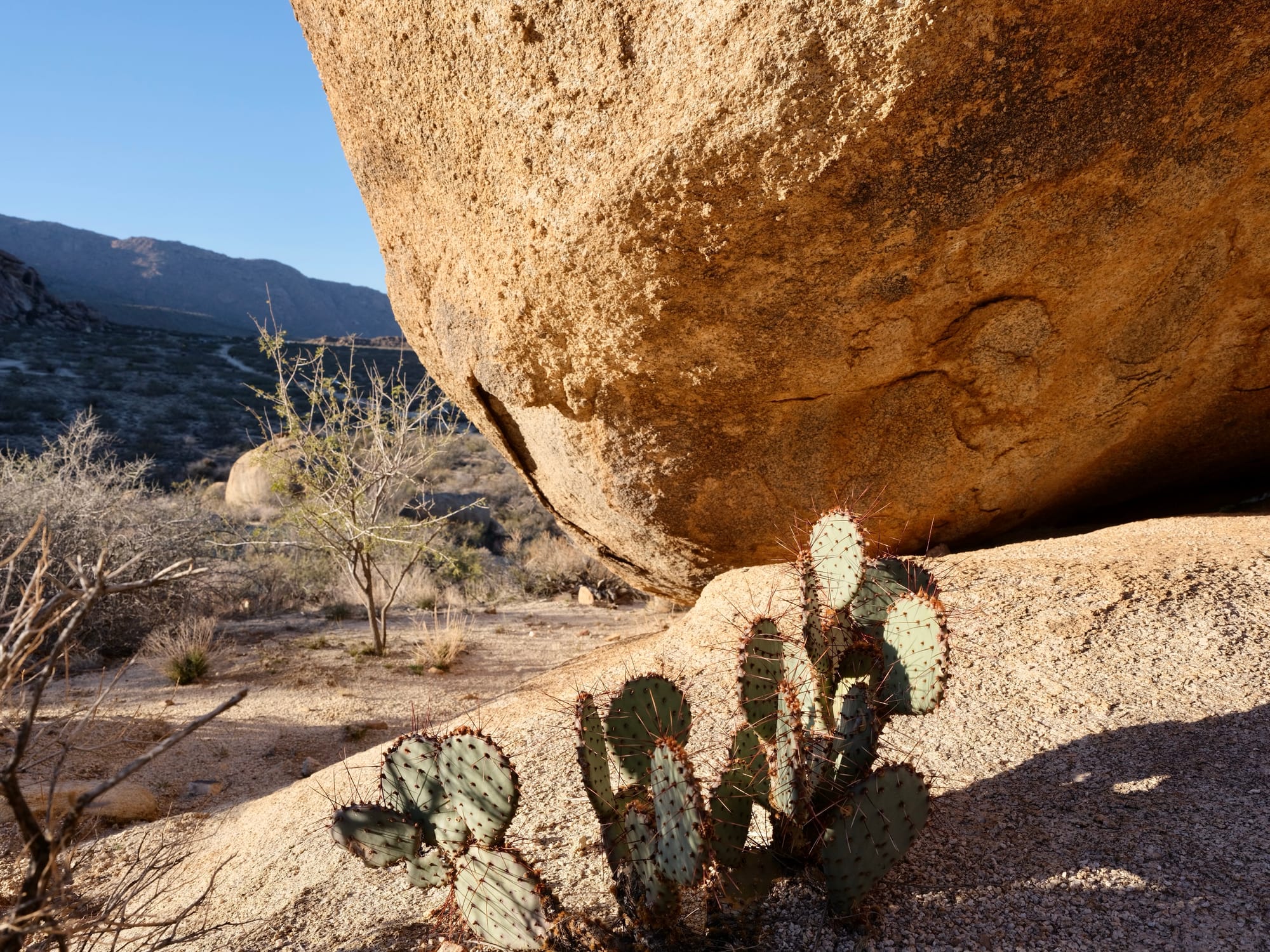
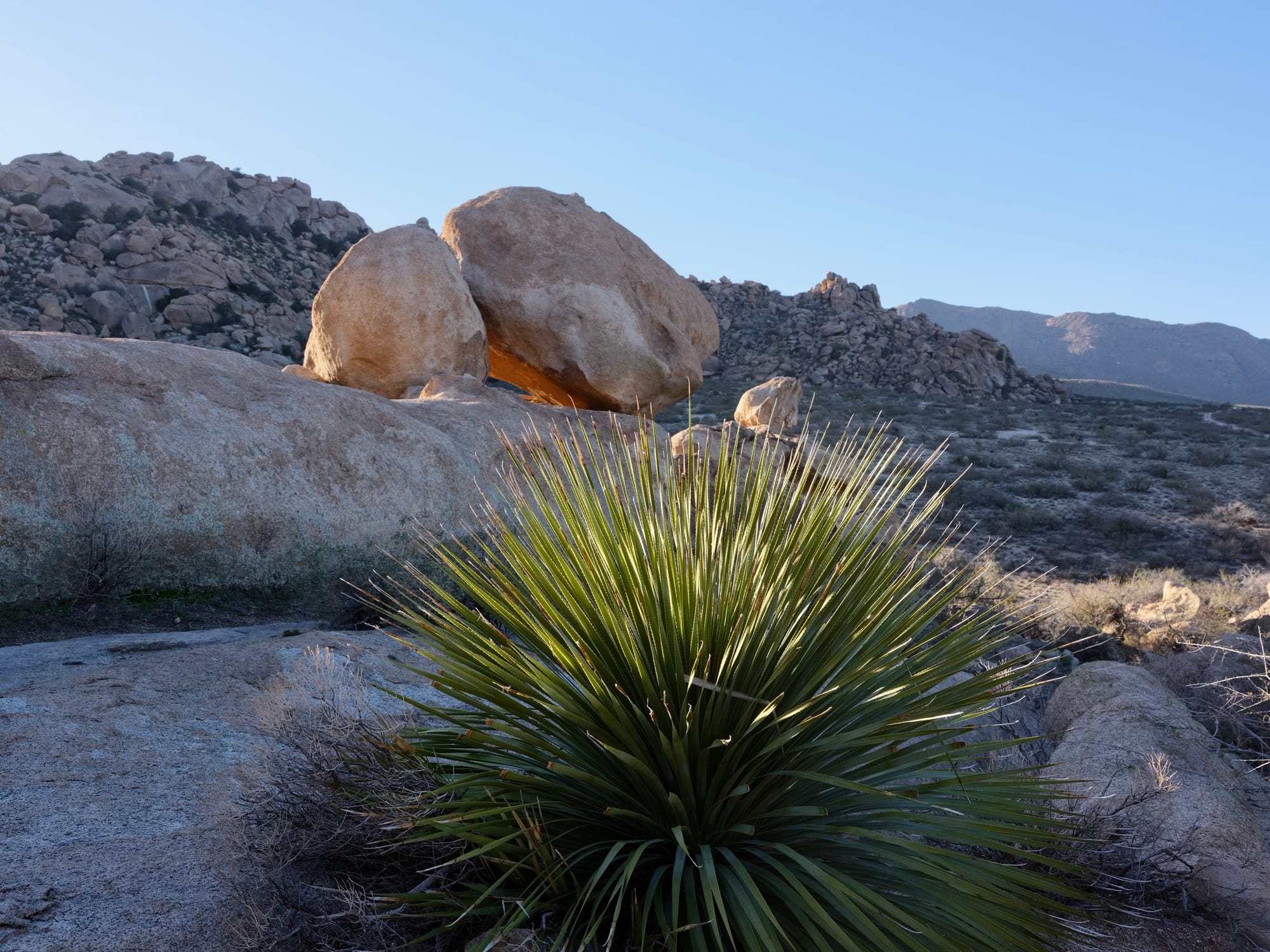
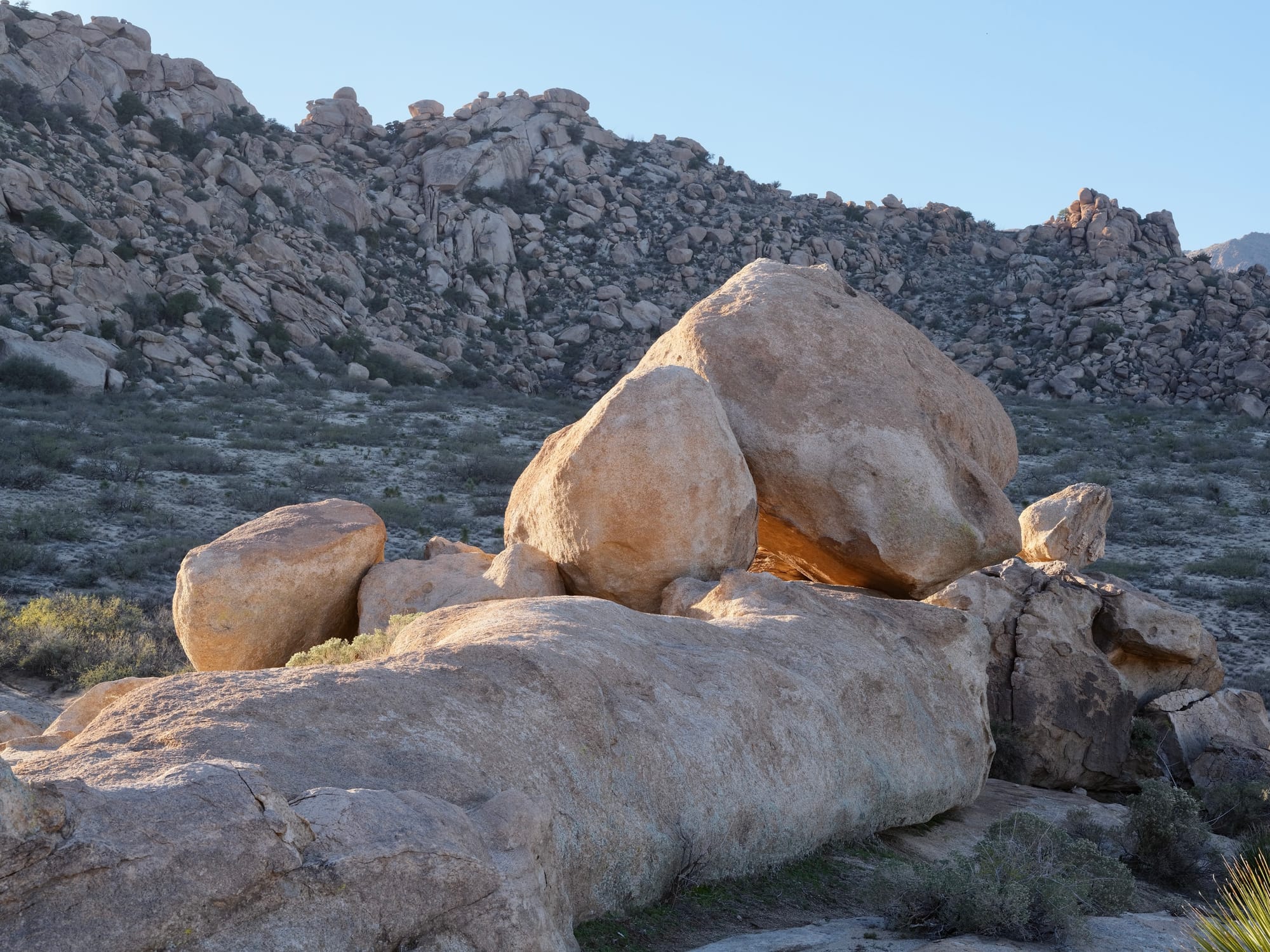
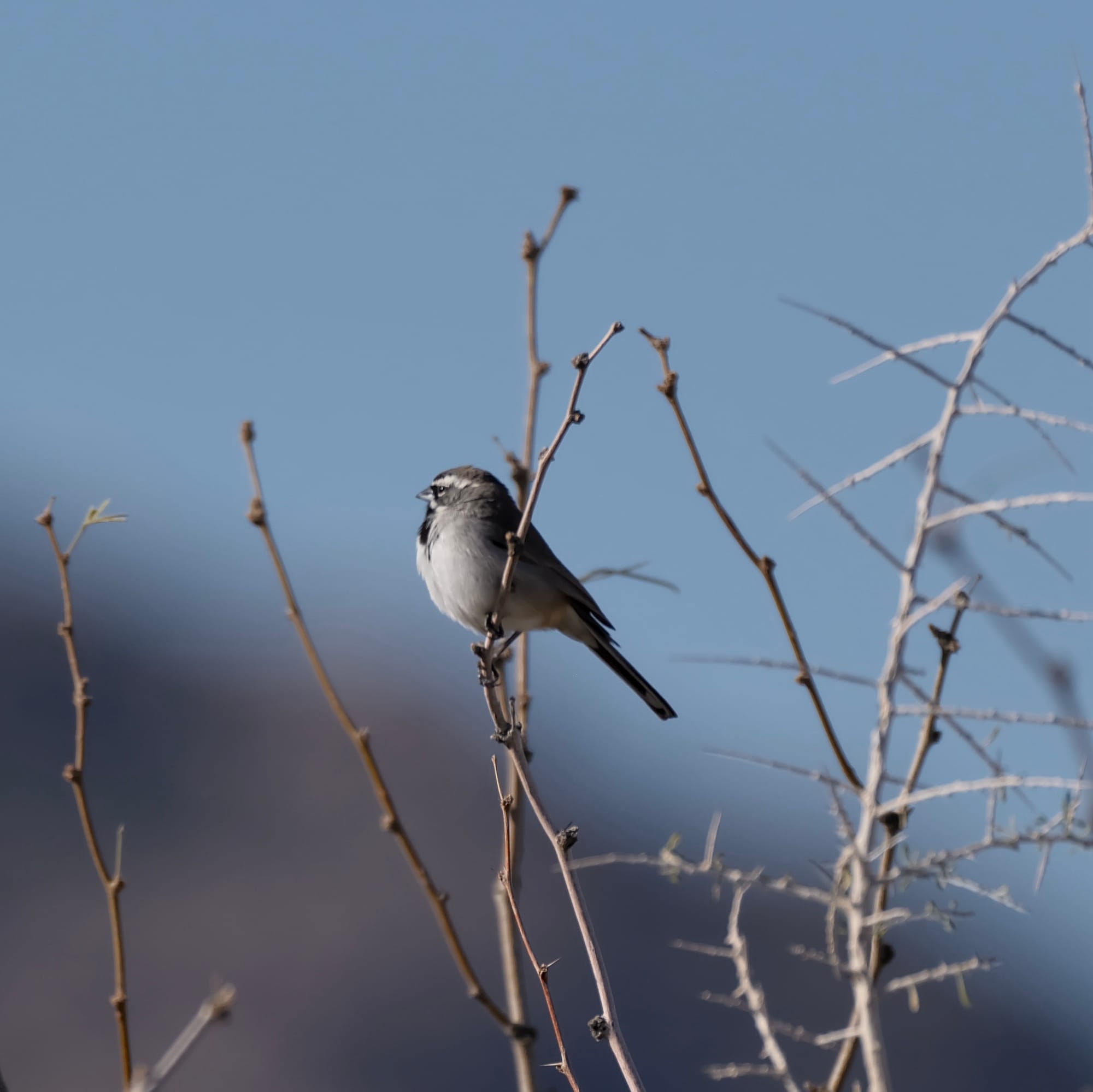
Black-throated Sparrow lower right.
If you hike the jumbled boulders and pull your clothing free of mesquite barbs you discover a few surprises. Tucked in the moist sun-shaded crevices are mosses and ferns.
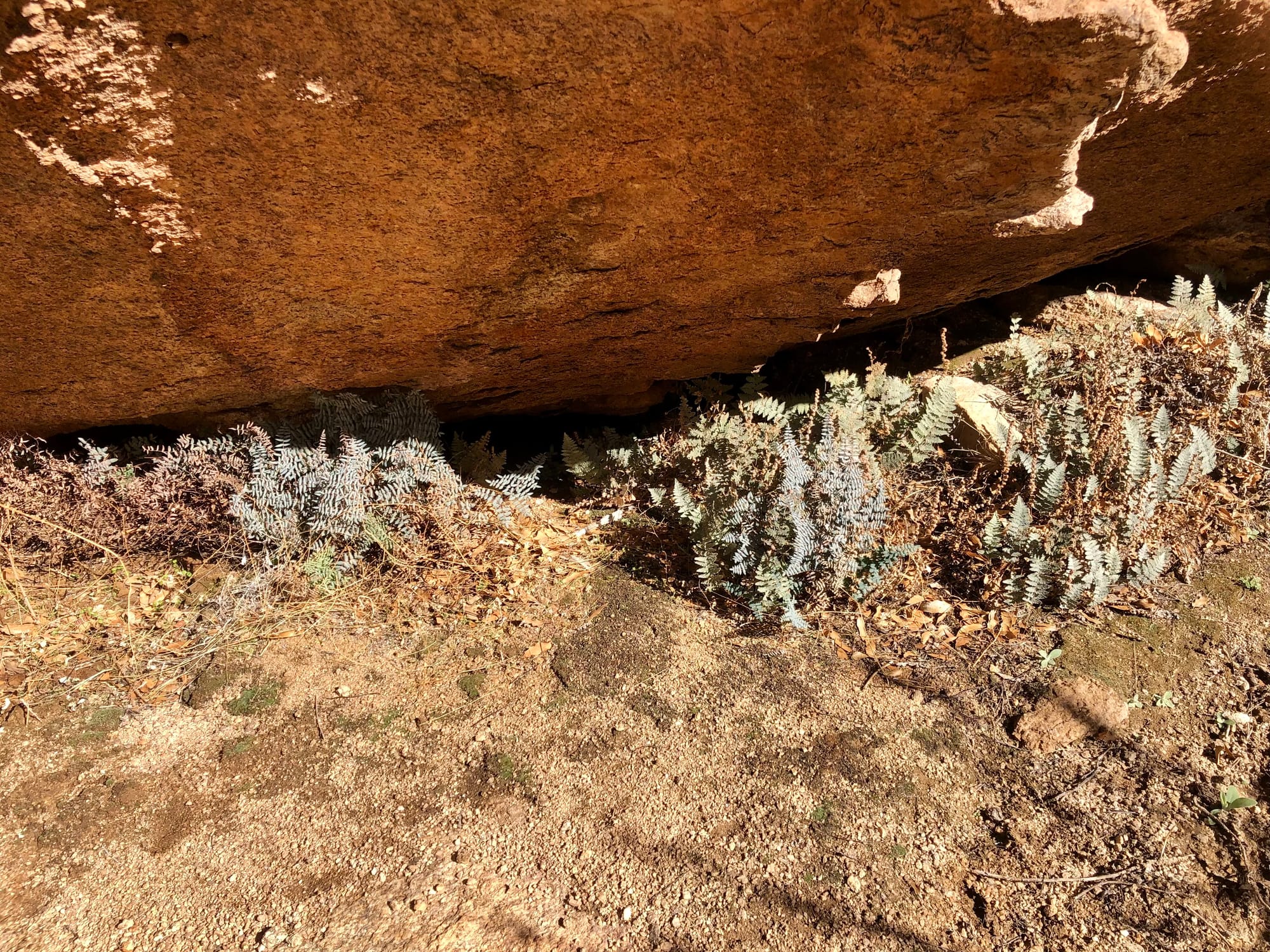
Ferns sheltering under a boulder.
On a tump of teetering boulders is found the source of the name of the place. I was surprised to see an array of holes in the flat granite most filled with sand or water. About 6 inches deep. This is where the local Indians for years had pounded perhaps corn, but I suspect, mesquite beans into flour to make a kind of unleavened bread using poles of some sort.
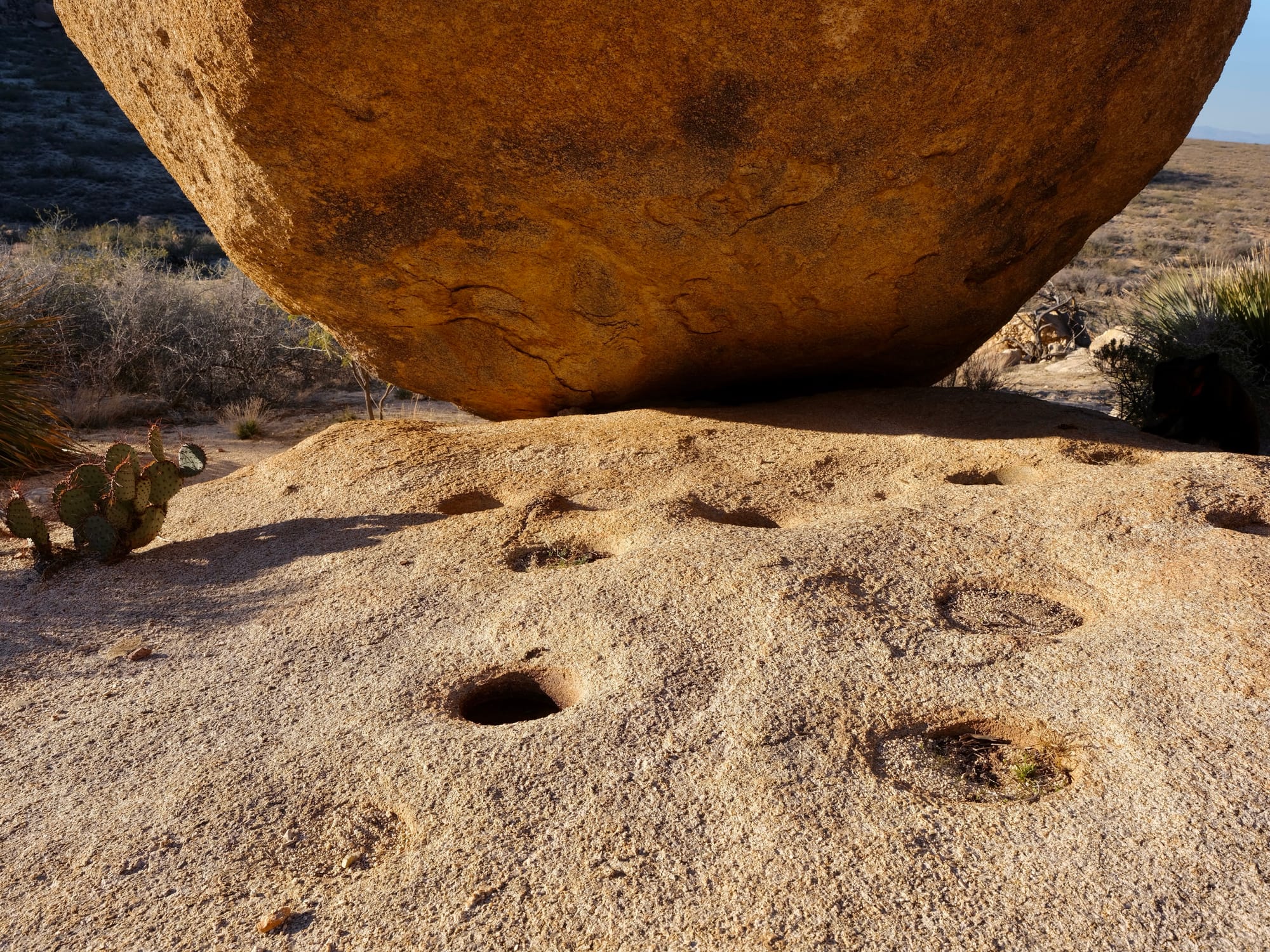
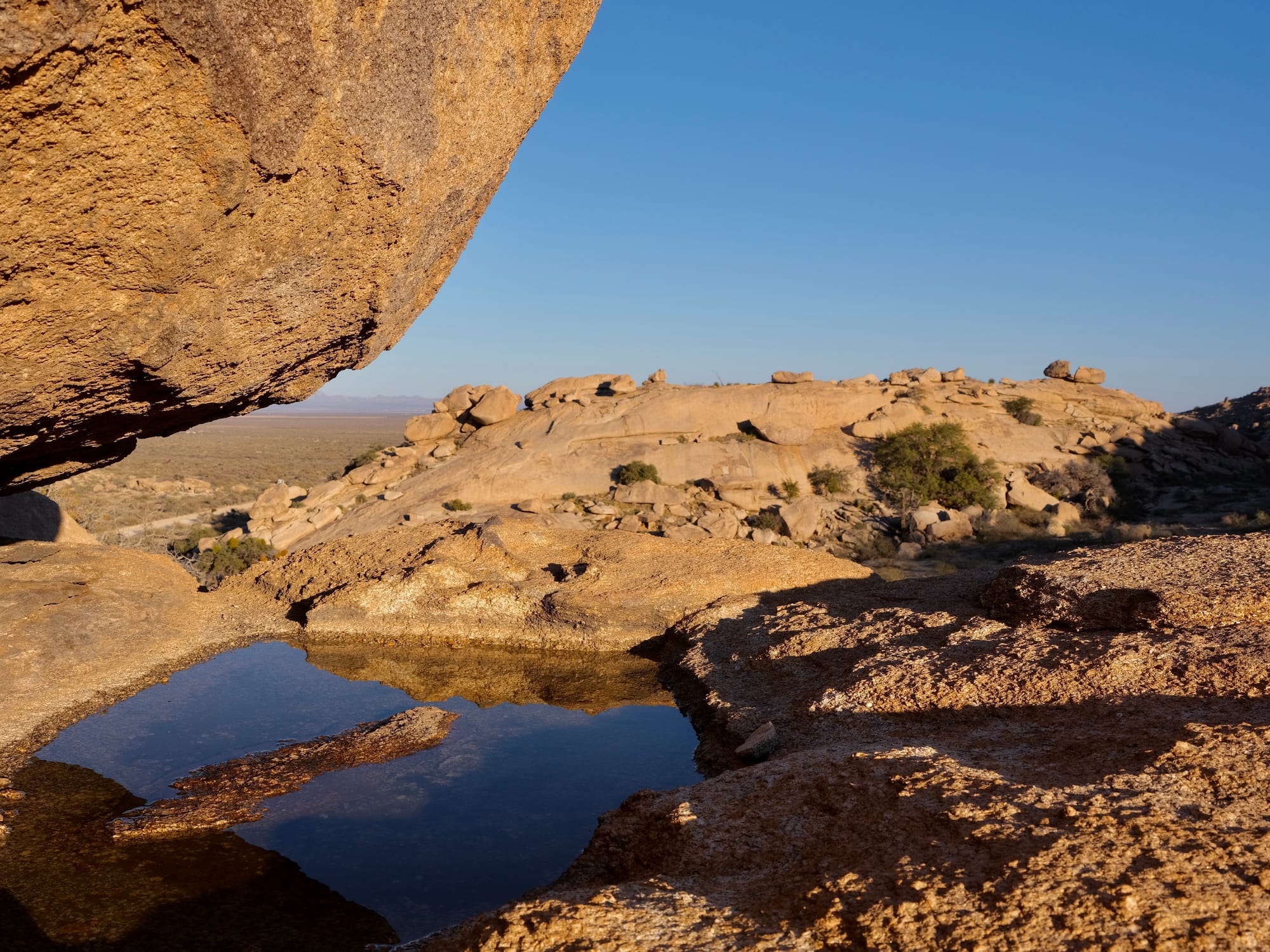
A matrix seed grinding holes and a temporary rock pool.
The proximity to water and mesquite trees must have made the location a compelling draw for many centuries until…
I also can’t help but think the aesthetic beauty of the places tucked amongst the boulders may have played a role. A respite from the dull bleak plain below. But perhaps that is just modern romanticism.
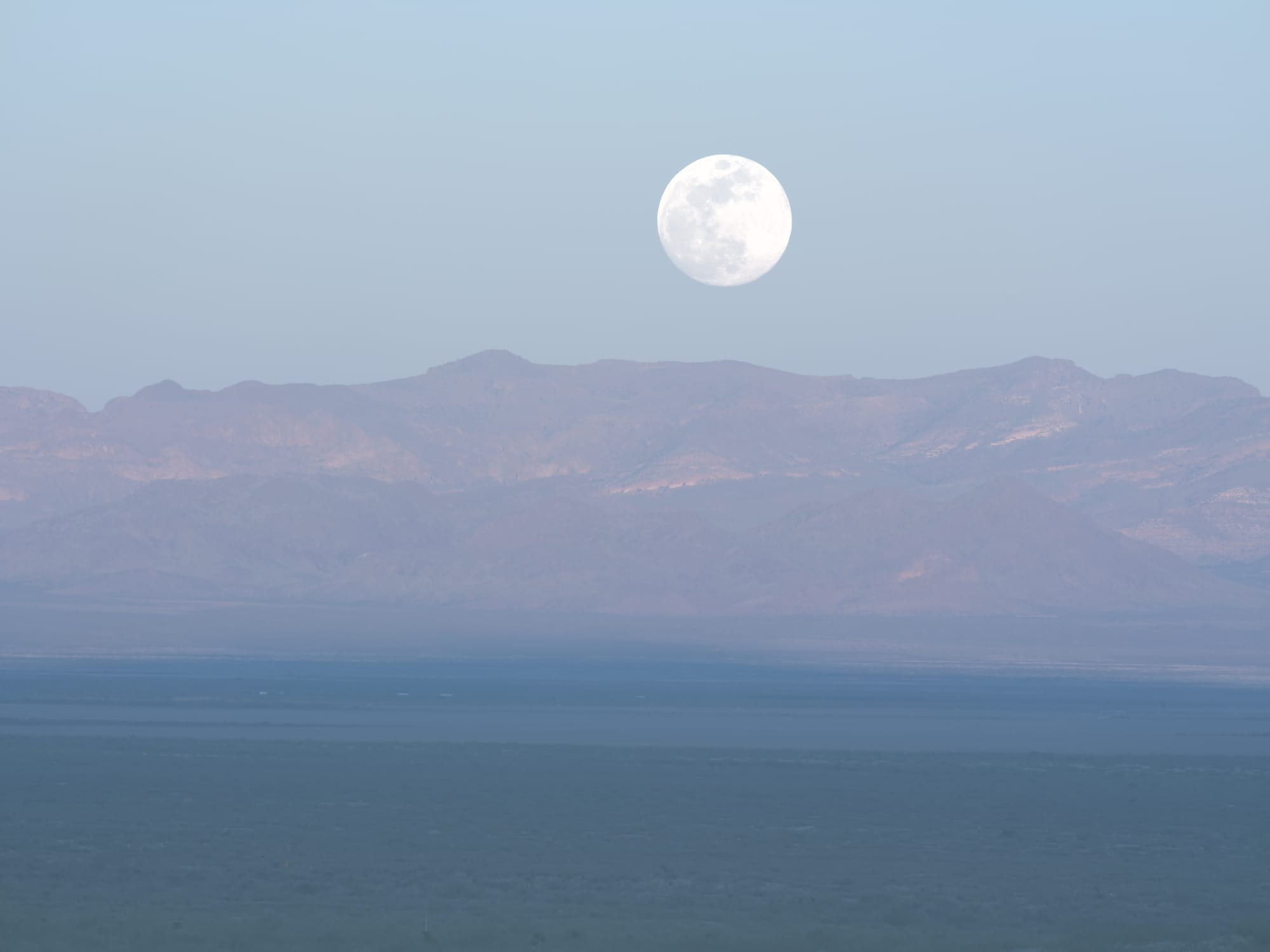
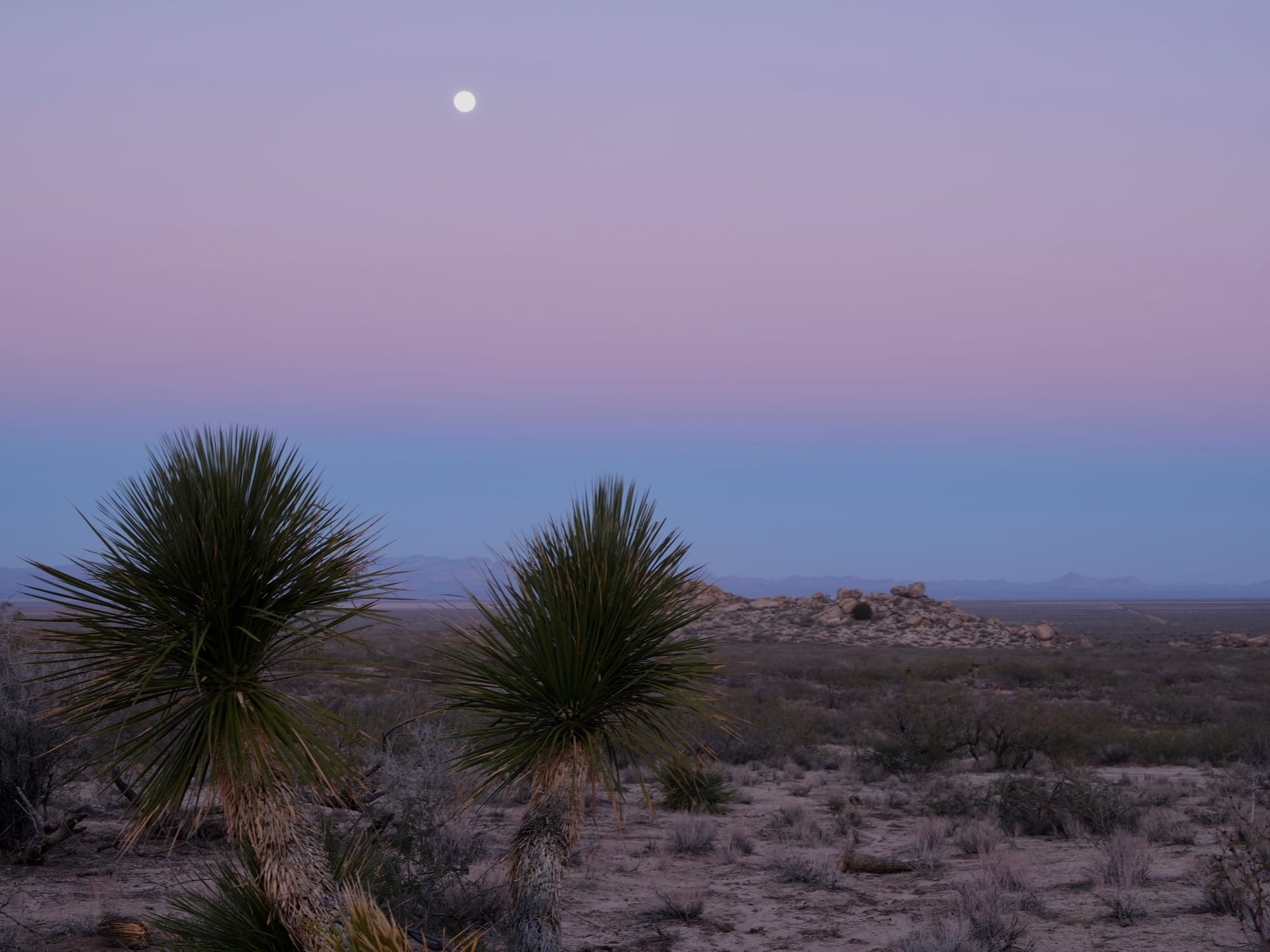
Across the ages; the moon-rise over the Peloncillo Mountains
That era was replaced by settlers and ranchers whose descendants today still graze the sparse desert grass and mesquite with cattle that would look more at home in Mexico than the good old USA.
Hipbones protruding, covered by scarred hide, ribs visible. They look like living versions of the ‘Fresh Beef Jerky’ advertised for one hundred miles on the interstate. The condition of the ranchers should match them but I doubt they do. Grazing cows on public land and their own land does not seem to fatten them.
I struggled up a maze of boulders and steep slopes, cut by thorns and teetering on rocky ledges, to reach a kind of summit with some sense of accomplishment. Only to see two dried cow pats on the rocky summit beside me. Left by 1ooo pounds of sweet bovine stupidity.
That is how motivating hunger is, even for a cow. A few minutes later my dog Mollie walked up with half a cow hoof, toe bones still attached. I have no idea where the rest of it is. They wander these thickets and boulder-strewn slopes in search of sustenance. They stumble, fall, and get stuck. Coyote jubilee, don’t forget to invite the ravens.
They remind me of camping on the beaches of San Carlos Mexico nearly three decades ago. Hot dry desert right up to the bathtub warm Sea of Cortez; full of colorful fish. We slept in a tent to the gentle sound of the surf; I awoke to some noise in camp. Half-worried about banditos, I unzipped the tent and turned on a bright light and just about jumped through the roof.
Here was the full head of a cow, horns and all, practically in the doorway. Hanging out if its mouth was my bag of charcoal briquettes . It blinked once, then with a sharp jerk of its head, ripped off a section of the double layered paper bag and fled with it into the darkness. It had secured a little more cellulose for the day.
That is how desperate these cows in Arizona look.
The world spins and changes. The Shoshone, I have read, began life in Wyoming from an almost stone-age existence (I have no idea how this is claimed.) The Spanish brought the horse which transformed many tribes but the Shoshone became masters. They changed their whole culture to center on the horse and moved to the area we know as Texas and Oklahoma. Almost like they had been waiting for the horse to arrive. There they displaced amongst others the formidable Apaches further west into what we know is New Mexico and Arizona where they in turn pressured and raided the Tohono O'odham further west in Arizona.
The world is displacing these ranchers as the interstate and high speed travel has bypassed these small towns. Towns that likely started as stage stops then later water and fueling stations for trains. The interstate has strangled them.
Six cars at the local Catholic church on Sunday. The only people doing well appear to be the pistachio and pecan farmers and perhaps the small string of truck stops incessantly advertising Indian food. Though I suspect Geronimo the quintessential Indian himself might struggle with the overwrought smell of curry in these places.