Anza-Borrego Desert
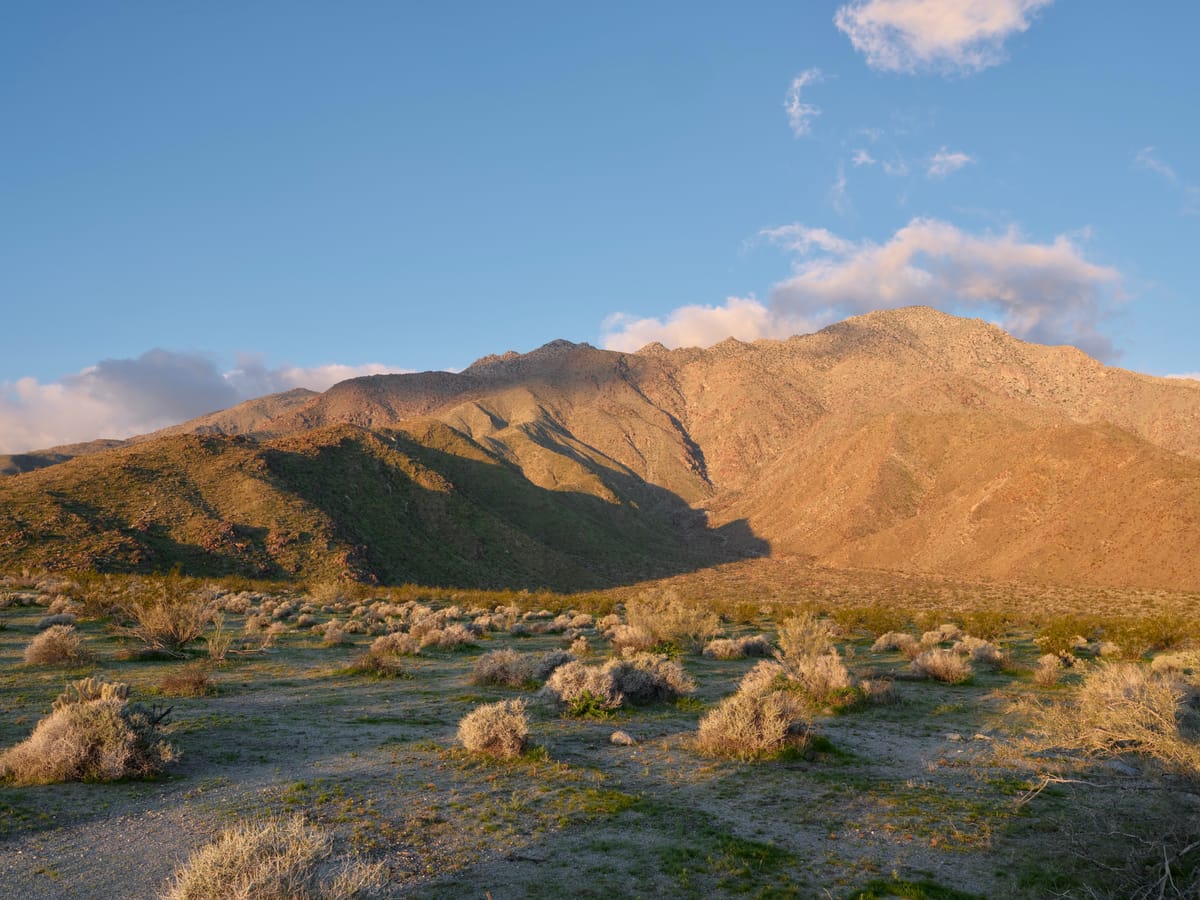
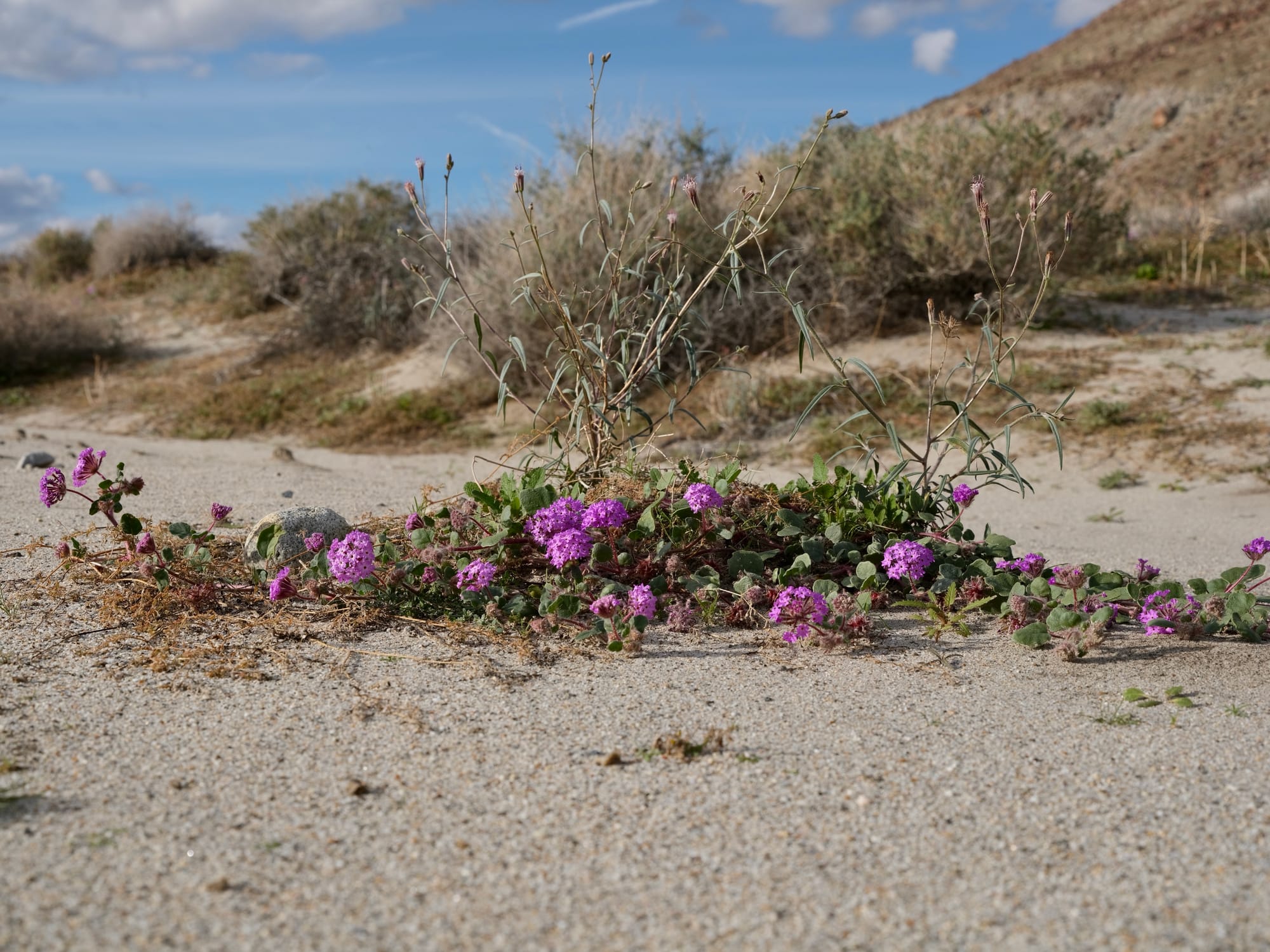
Here in the Anza-Borrego desert we have arrived after unusually heavy rains. The first clue was the pinkish-magenta Desert Sand Verbena coloring the margins of the dunes. Tracks in the dunes were damp where the dry surface sand had been turned up.
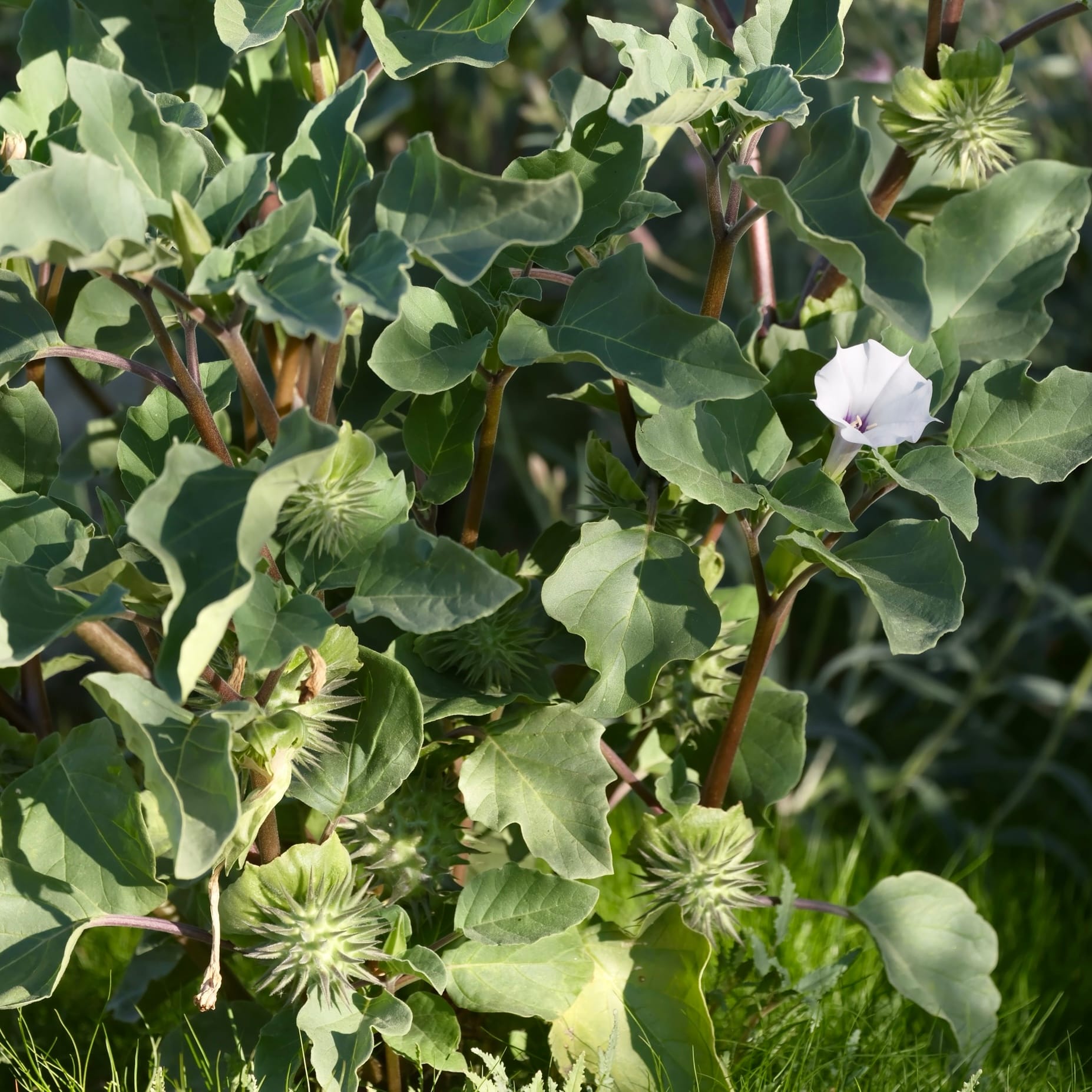
The hills have been transformed; from a distance the normally fine short soft blonde grasses that hug the shade of brittle-bush, creosote, desert lavender, mesquite, ironwood, and smoketree is now deeply green. And deadly and hallucinatory datura (devil’s thornapple) has sprung up thick leafed, unfurling white flowers in the evenings and mornings.
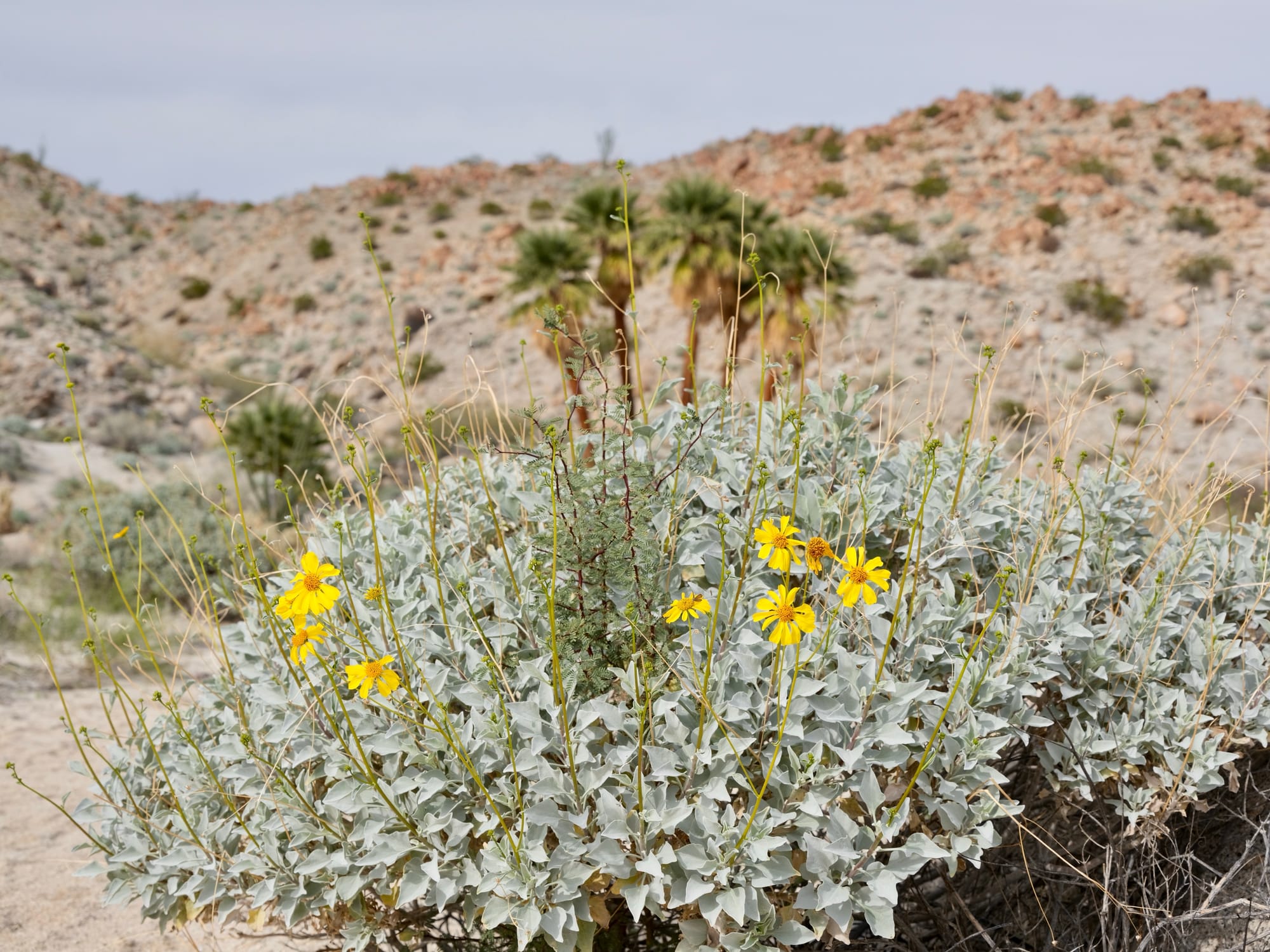
Other plants are emerging from their seeds and they will soon mature and flower. The ocotillo are fully leafed out now as thick erratic stems covered in soft green compared to their spiky everyday look. The brittle-bush have sent out on their stems halos of bright yellow flowers. Ceosote too with their own yellow flowers.
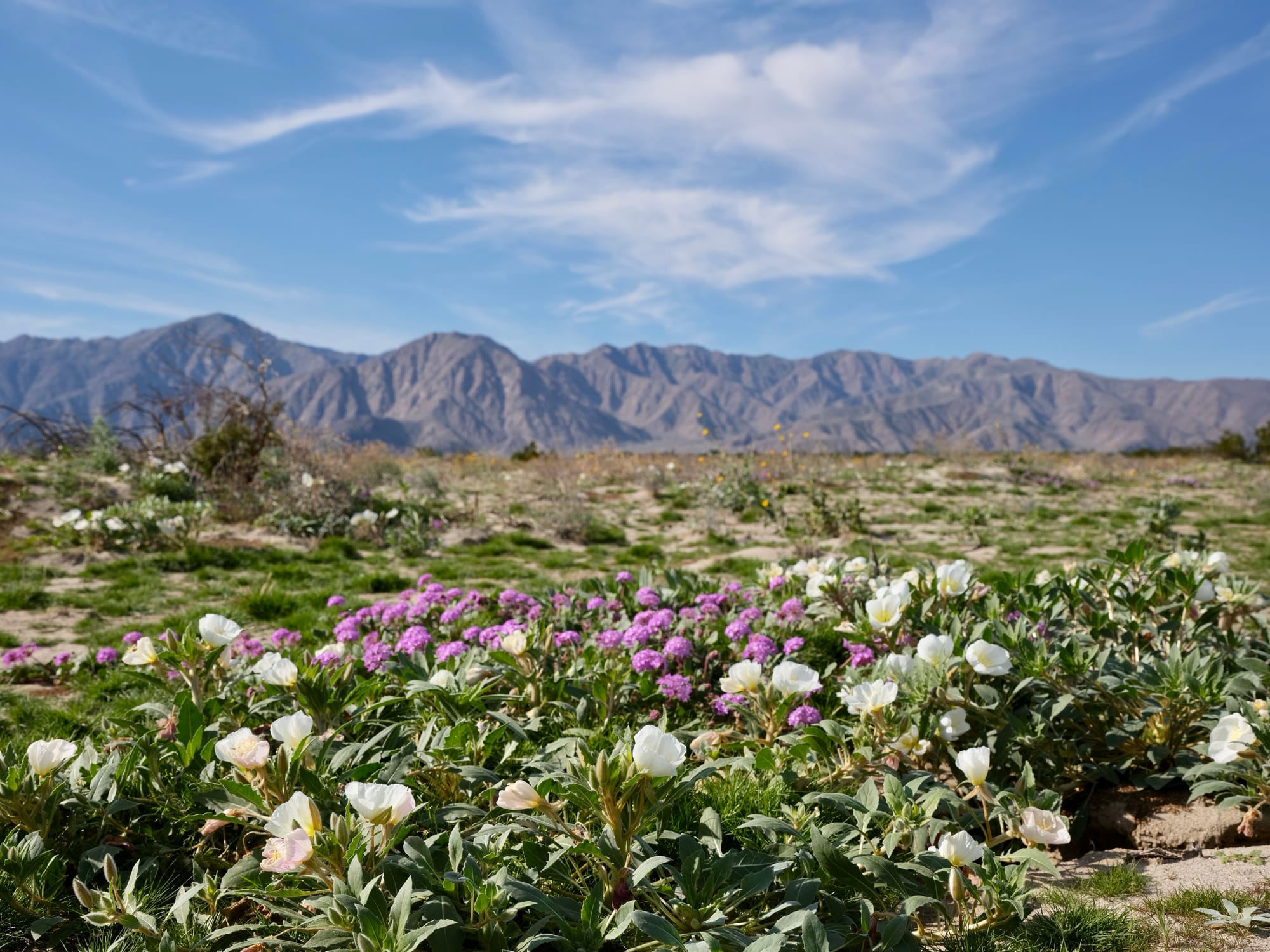
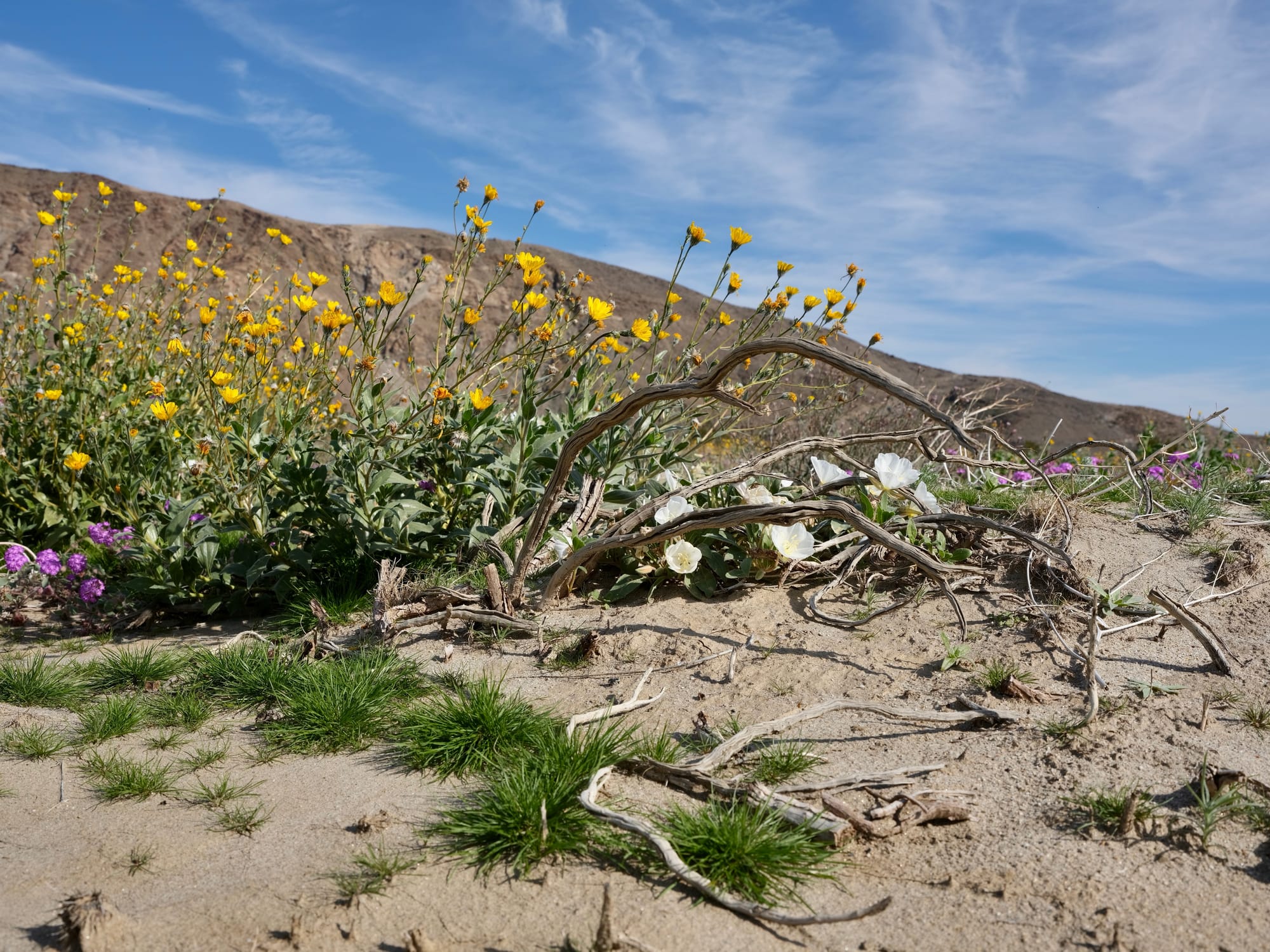
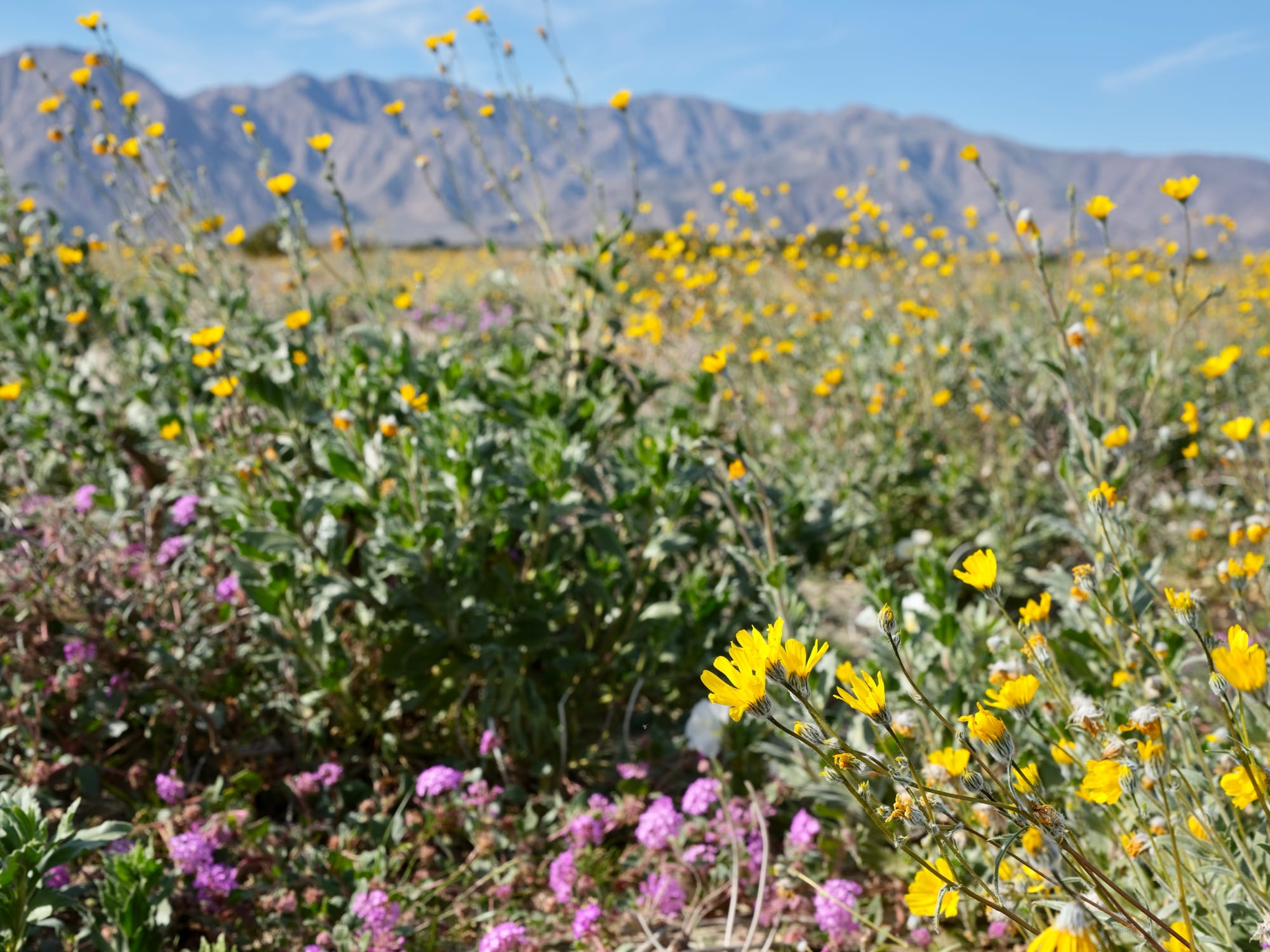
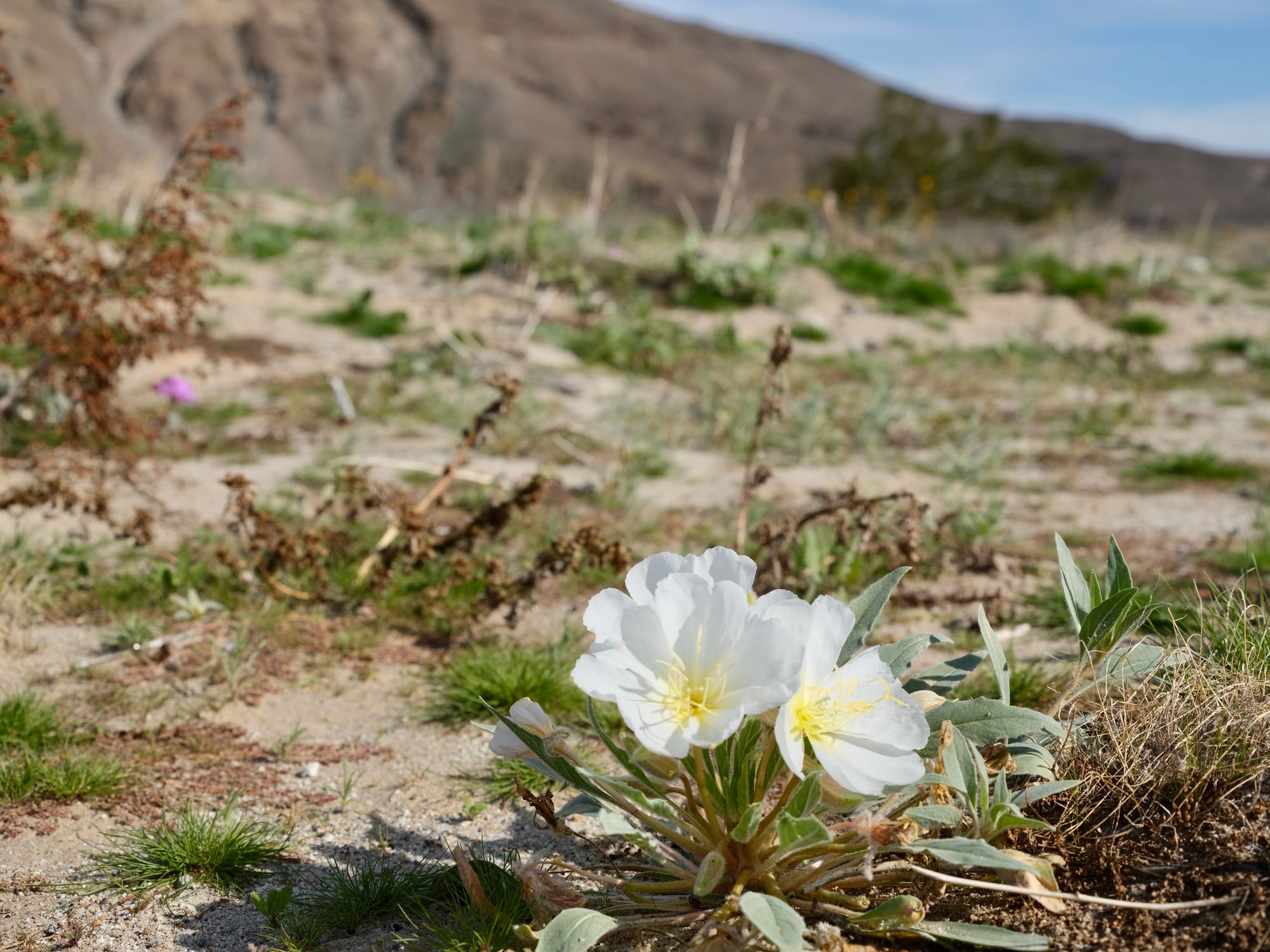
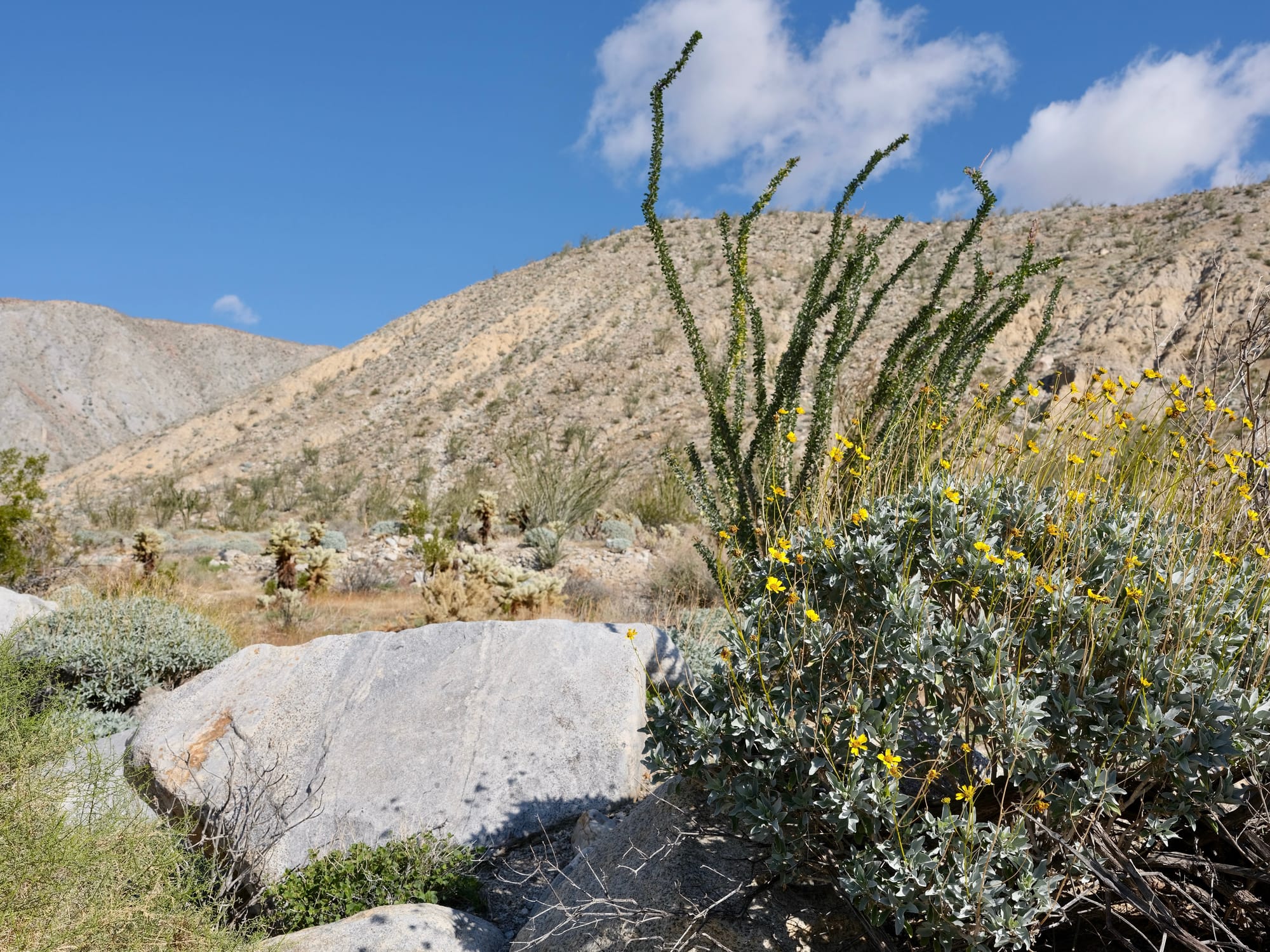
Upper panels: Desert Sand Verbena, Desert Sunflower, Basket evening Primrose. Lower left: Basket Evening Primrose, Lower center Brittle-bush and Ocotillo, Lower right Emory’s Rock Daisy.
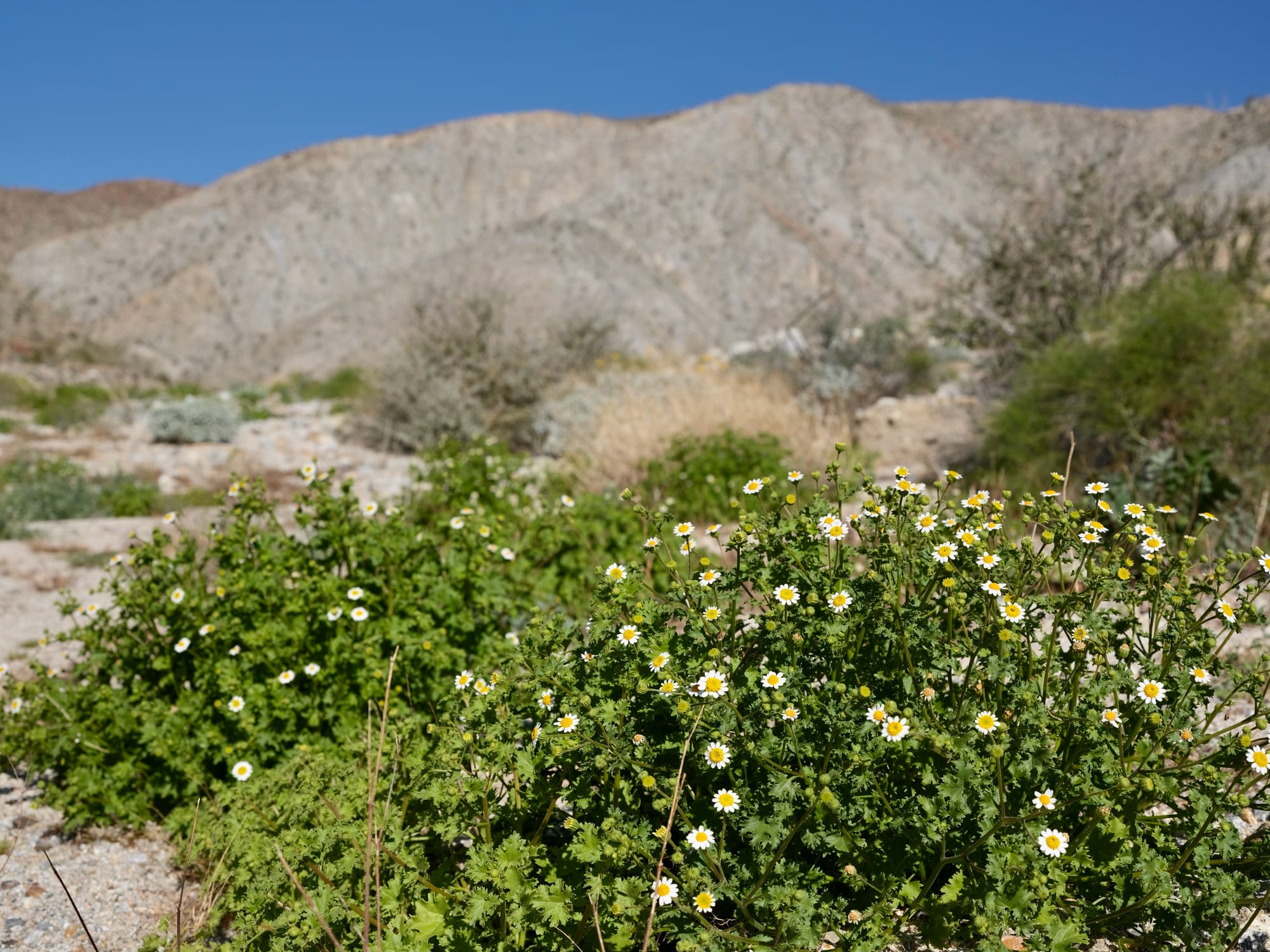
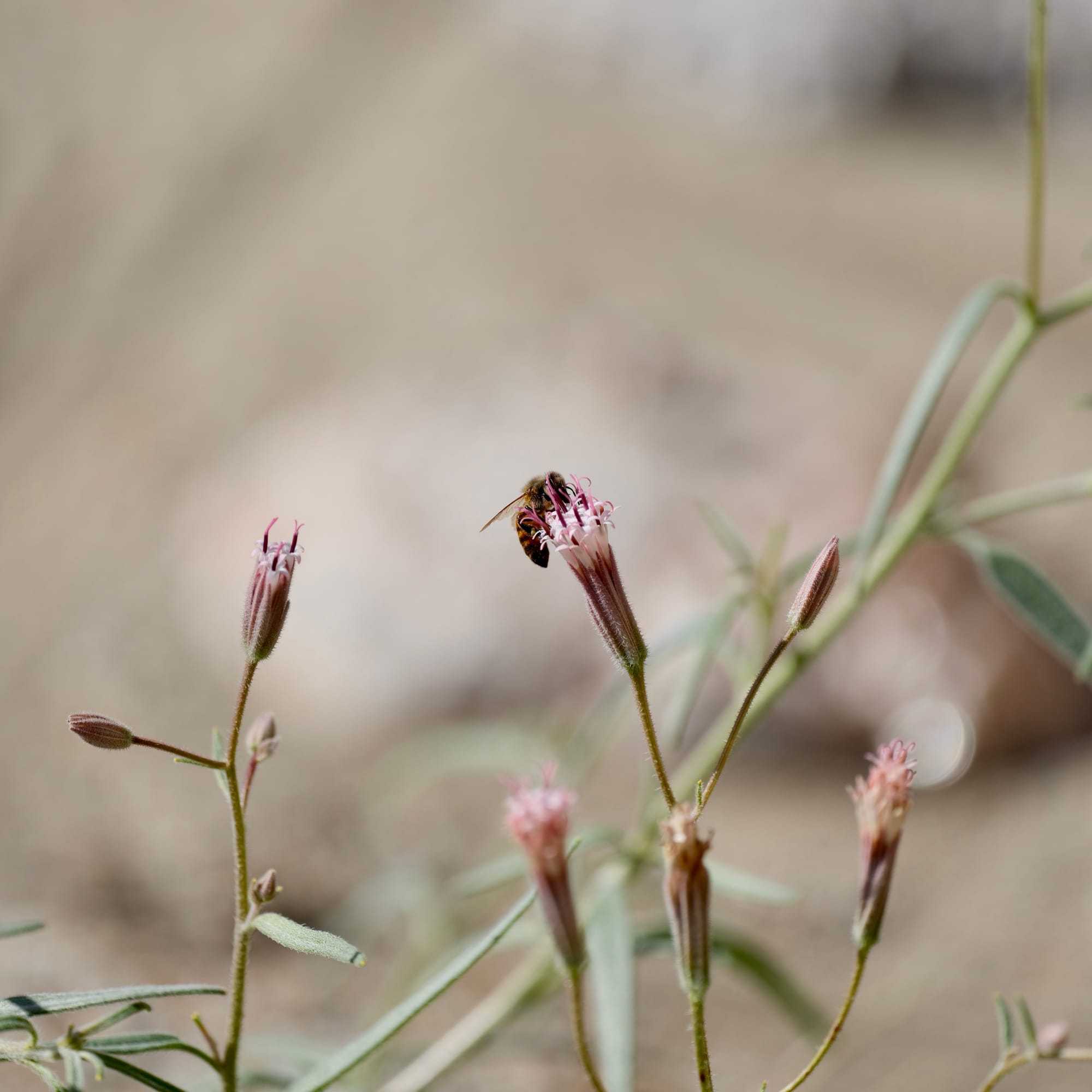
As you walk the wash bottoms the sand is wet and saturated, water forced to the surface into thin shiny streams by impervious rock layers below. In an isolated bend in the wash a few bees and butterflies flit about some Giant Spanish Needle plants whose subtle purple flowers have emerged only here in the wash.
This morning the sun has banished the clouds and one can sit comfortably in the sun and watch on the distant ridges as rains have breached the westward mountains and send a deluge upon the uplands of Coyote wash. Soon it retreats and leaves blue sky and the tattered cloud-remains.
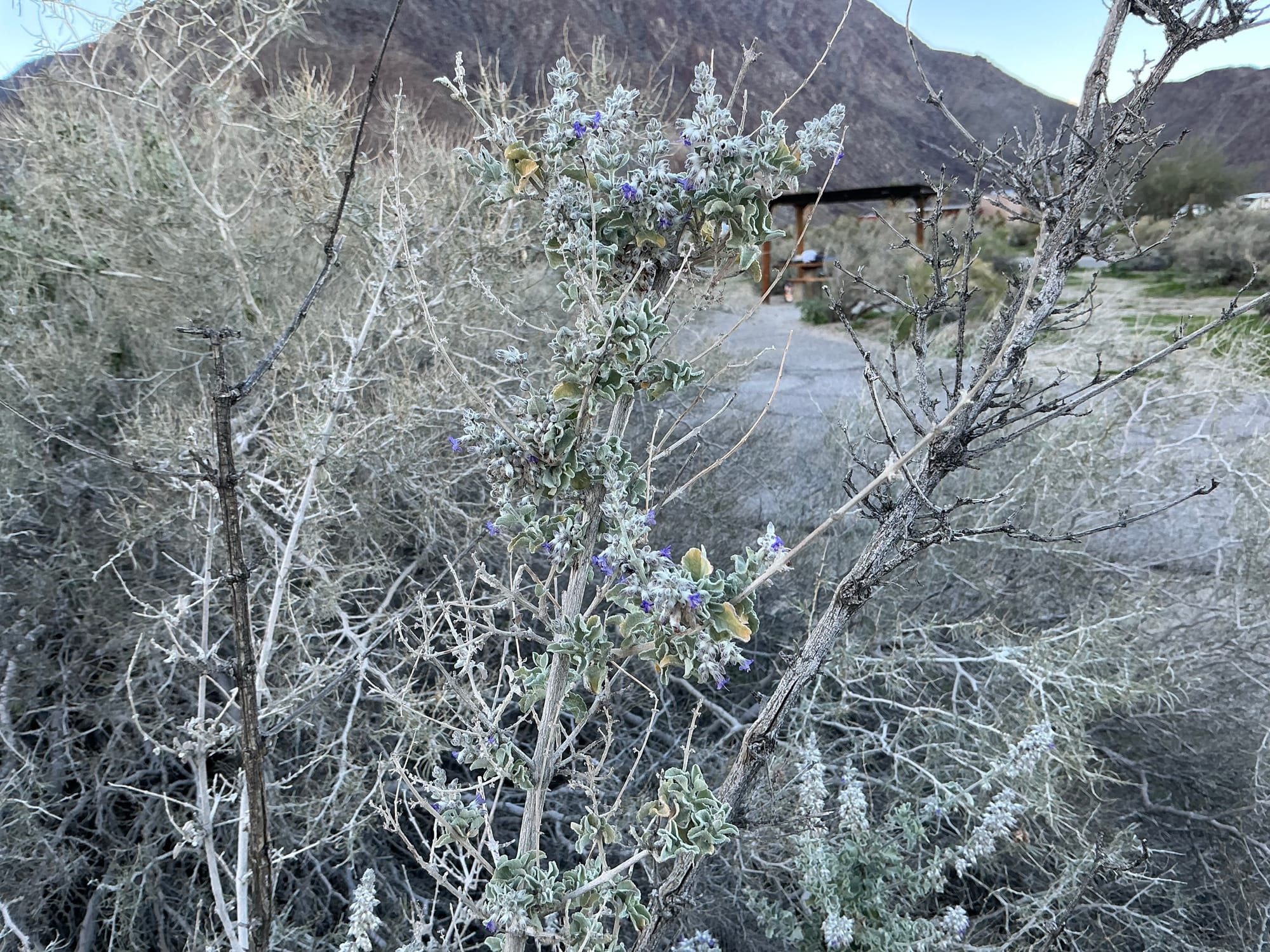
The scent in the air in the morning has the expected notes of creosote but is also colored more spicy probably because we are close to a desert lavender which if one crushes the soft velvety leaves between your fingers there comes a smell like lavender and yet something else as well, sweeter and sharper. It sports small purple flowers as well but it has none of the general shape of lavender.
Messages from home and elsewhere tell of what a strange winter this is. Rain and weeks of above freezing daytime temperatures tell of the miserable wet weather of home some 2,000 miles north. The San Juans in southern Colorado report hardly a spot of snow visible from Durango. One wonders in these times what normal is.
Out in Hawk canyon we found of all things a hawk, a Red-tailed, common yet like so many ‘common’ birds beautiful and beguiling none-the-less. Fierce in eye it springs into the air with a lizard grasped tightly in its talons, away to some quieter place to consume its prey.
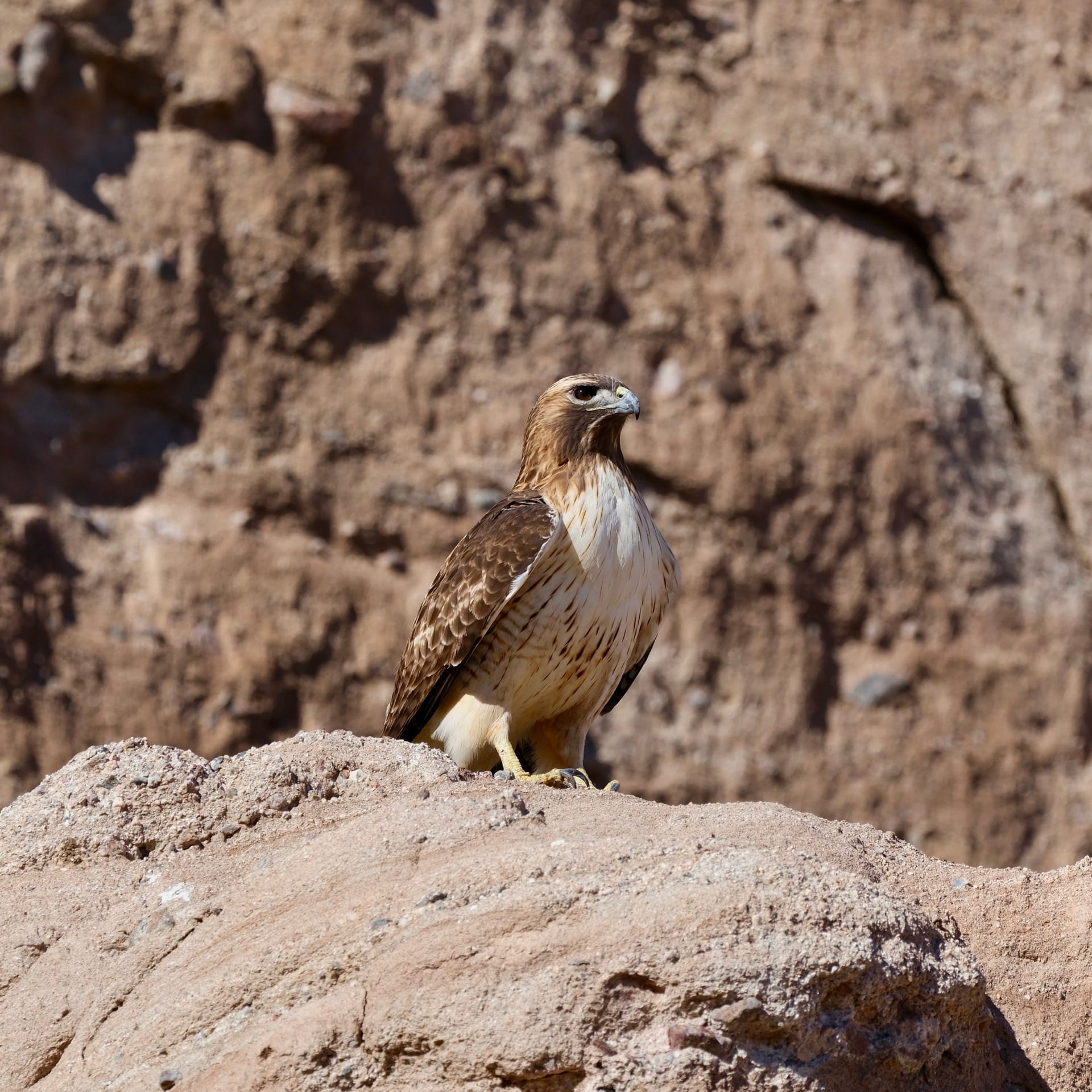
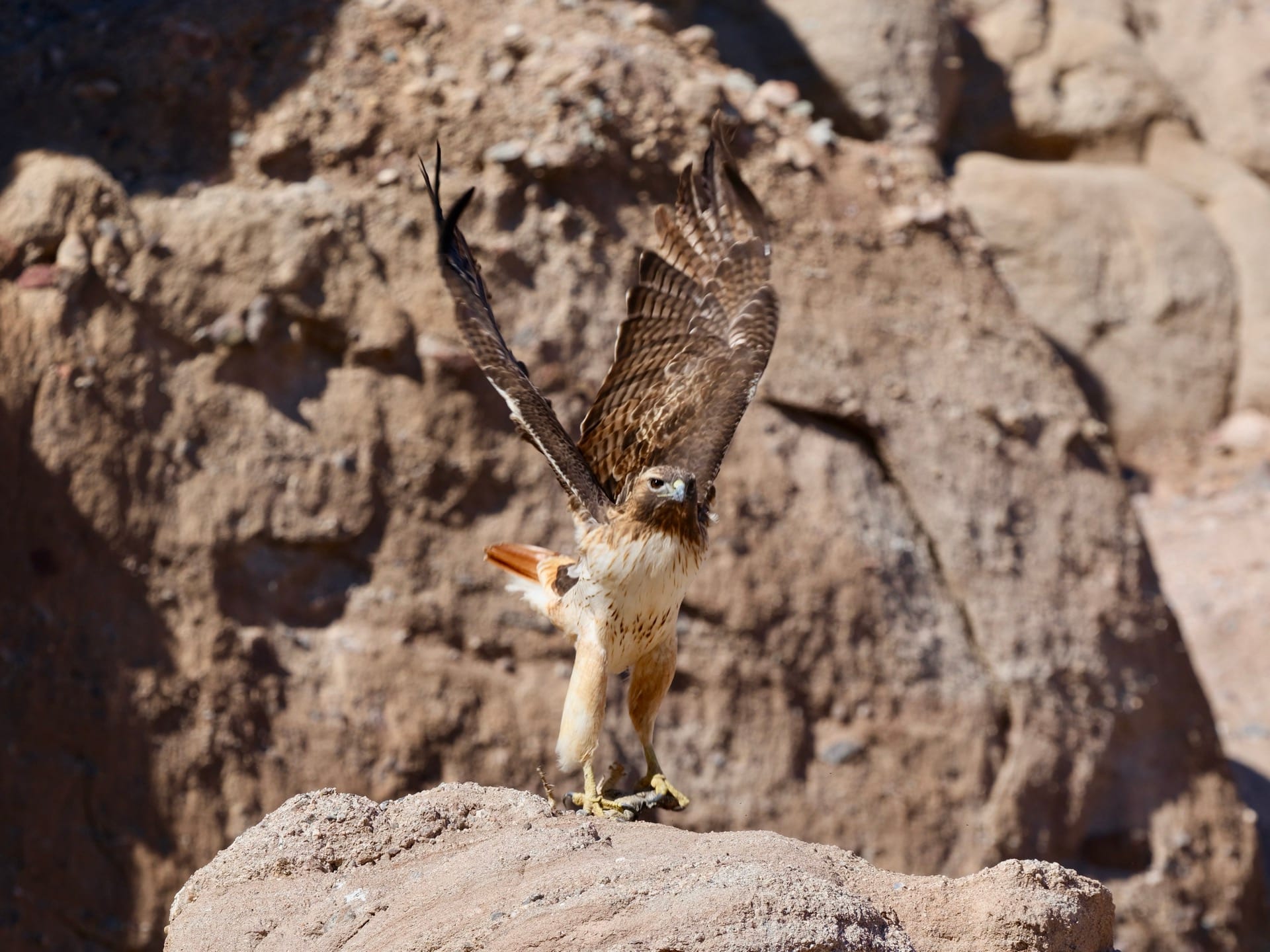
Red-tailed Hawk
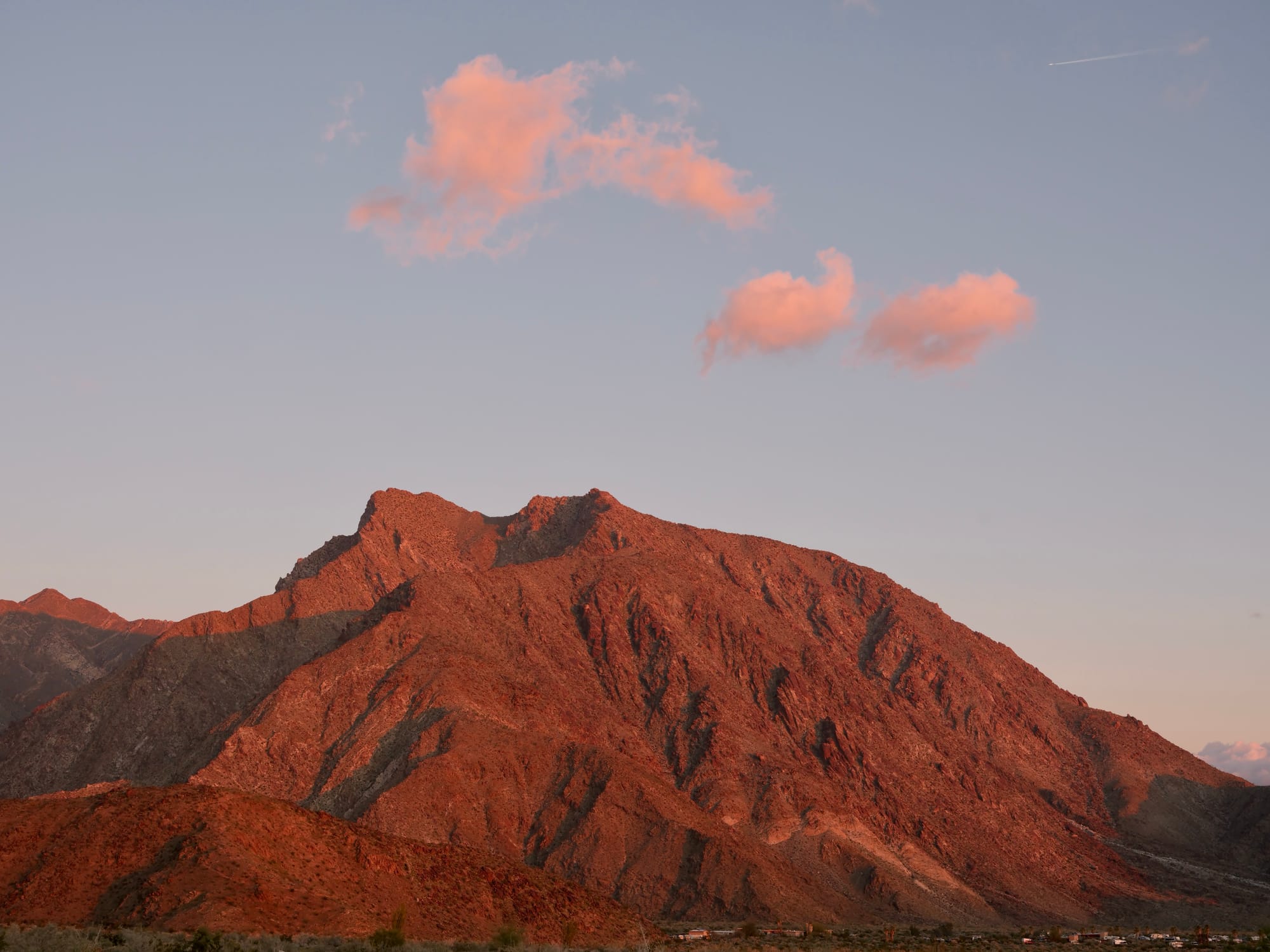
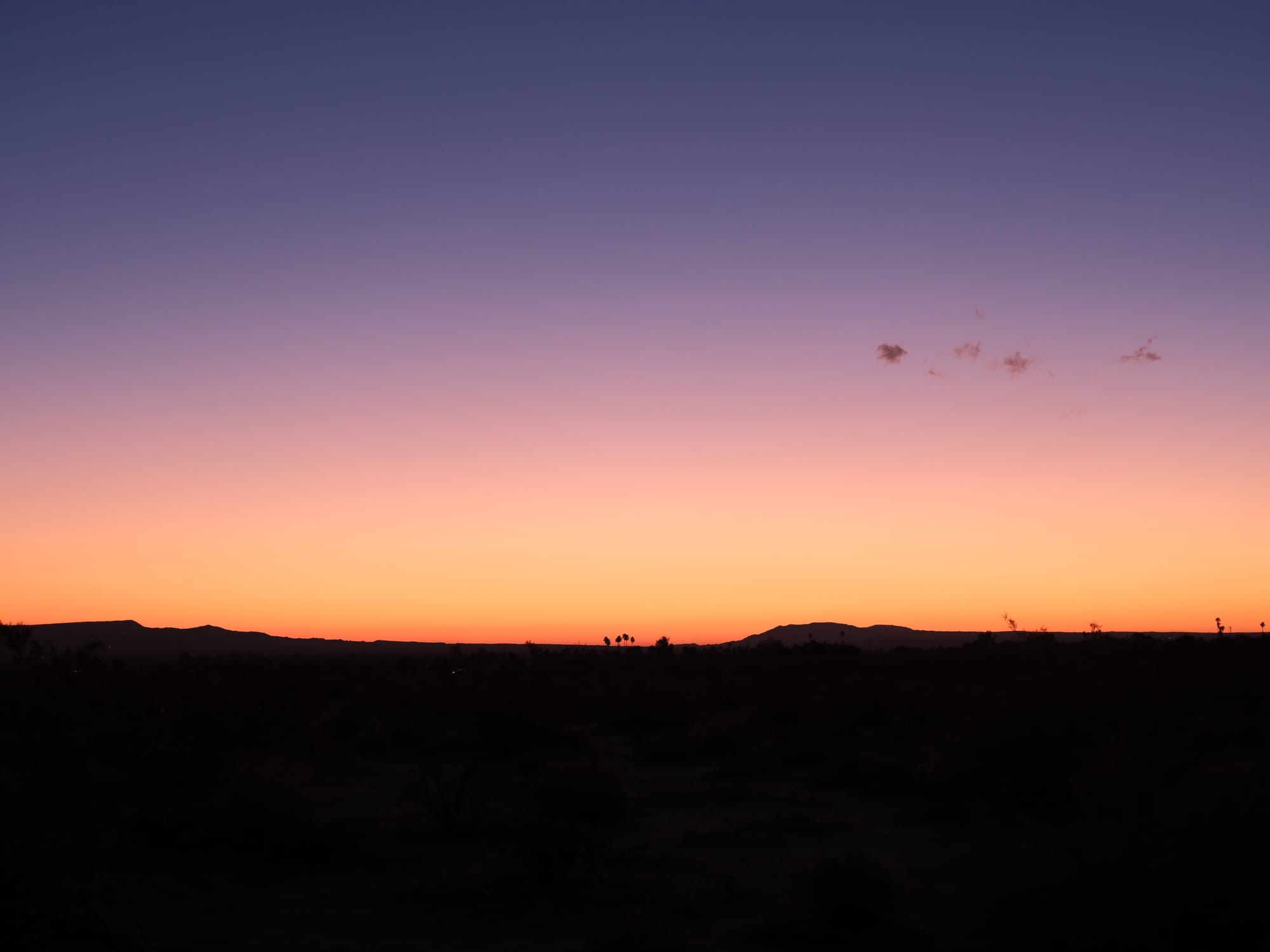
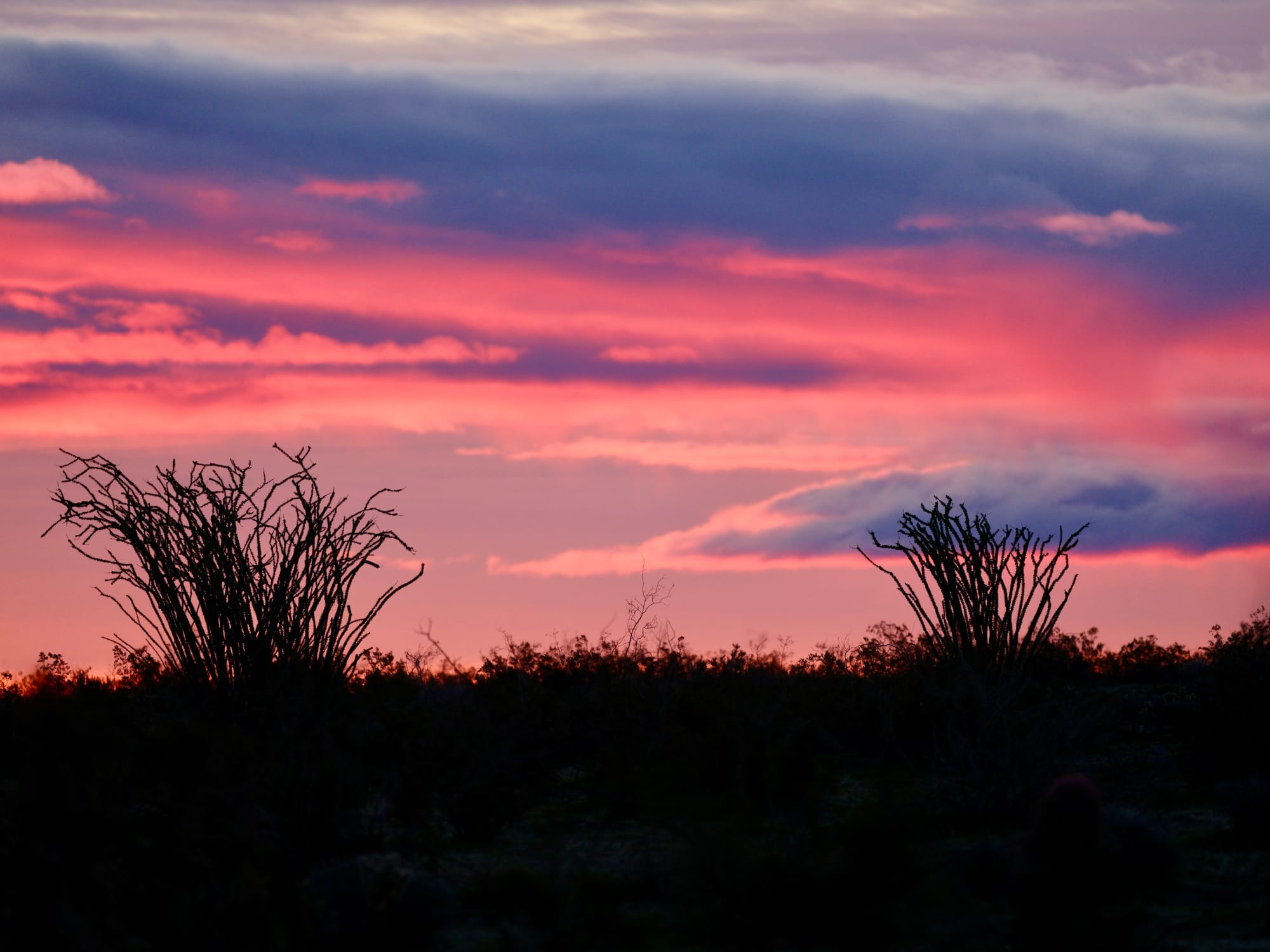
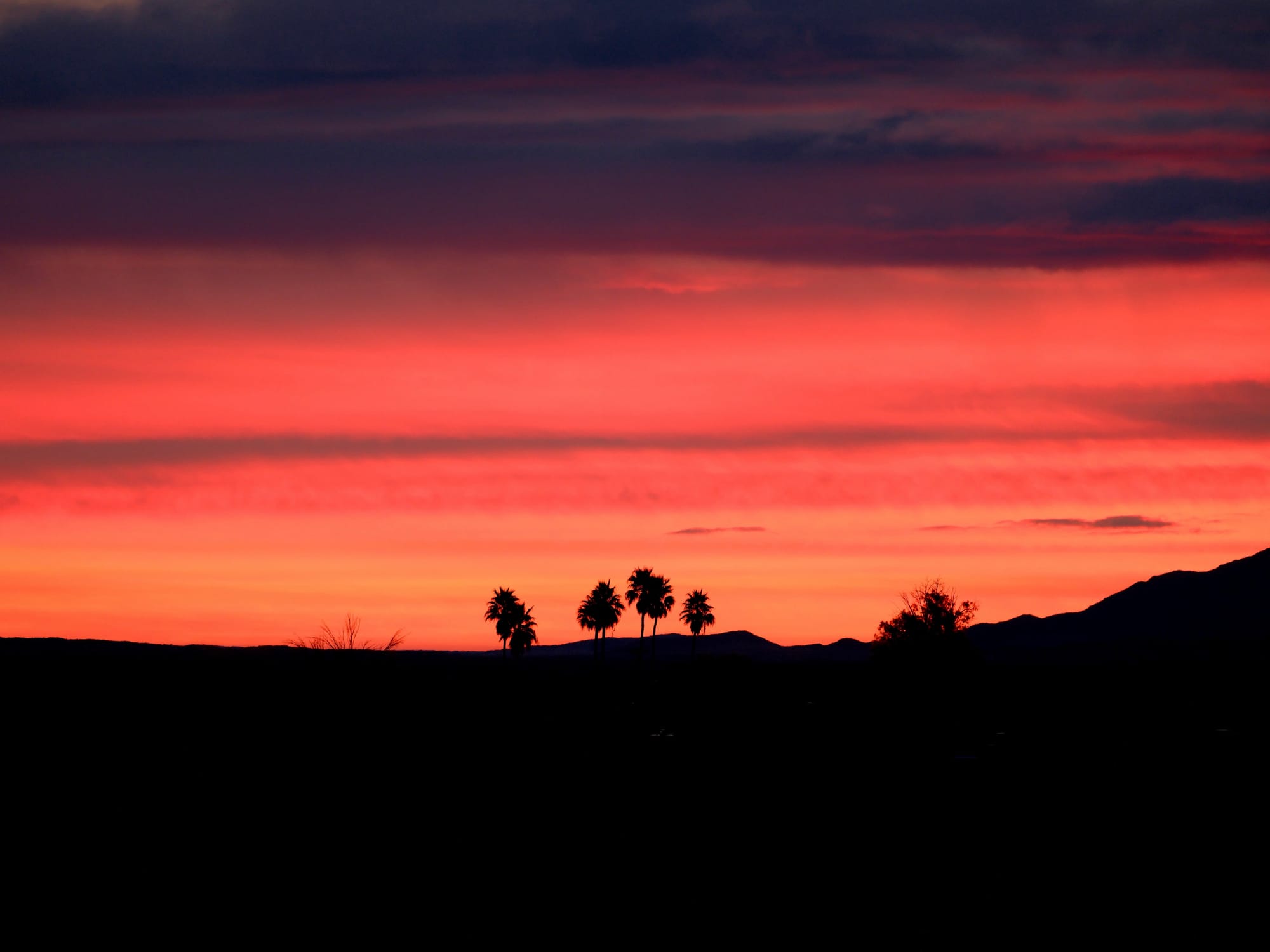
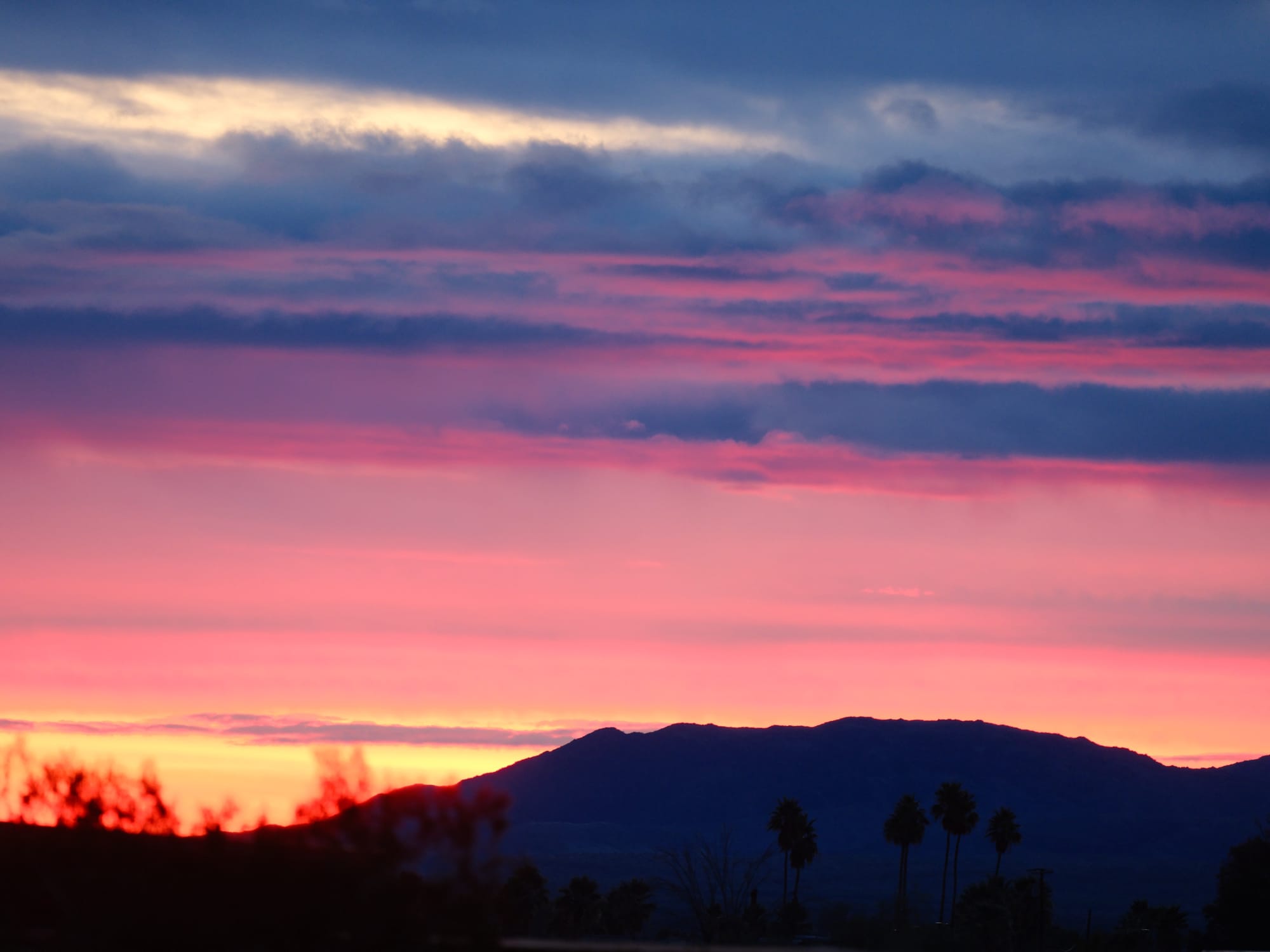
The light in the desert is of such an exquisite quality in the mornings or evenings. It challenges the senses as it moves from deep warm orange rising to a pinkish crescendo while the soft folds of the hills and mountains shelter the bass notes of cool deep blue shadows.
The line of mountain shadow advances across the valley at its steady rotational pace, then climbs the far hills until the tops of the peaks are revealed in deep pink. Off on the horizon is a gradient formed first in deep azure by the Earth’s shadow, fading imperceptibly into purple then pink and orange where the low sun strikes the warm tones and above this fades to a faint blue gradient to the deeper sky blue.
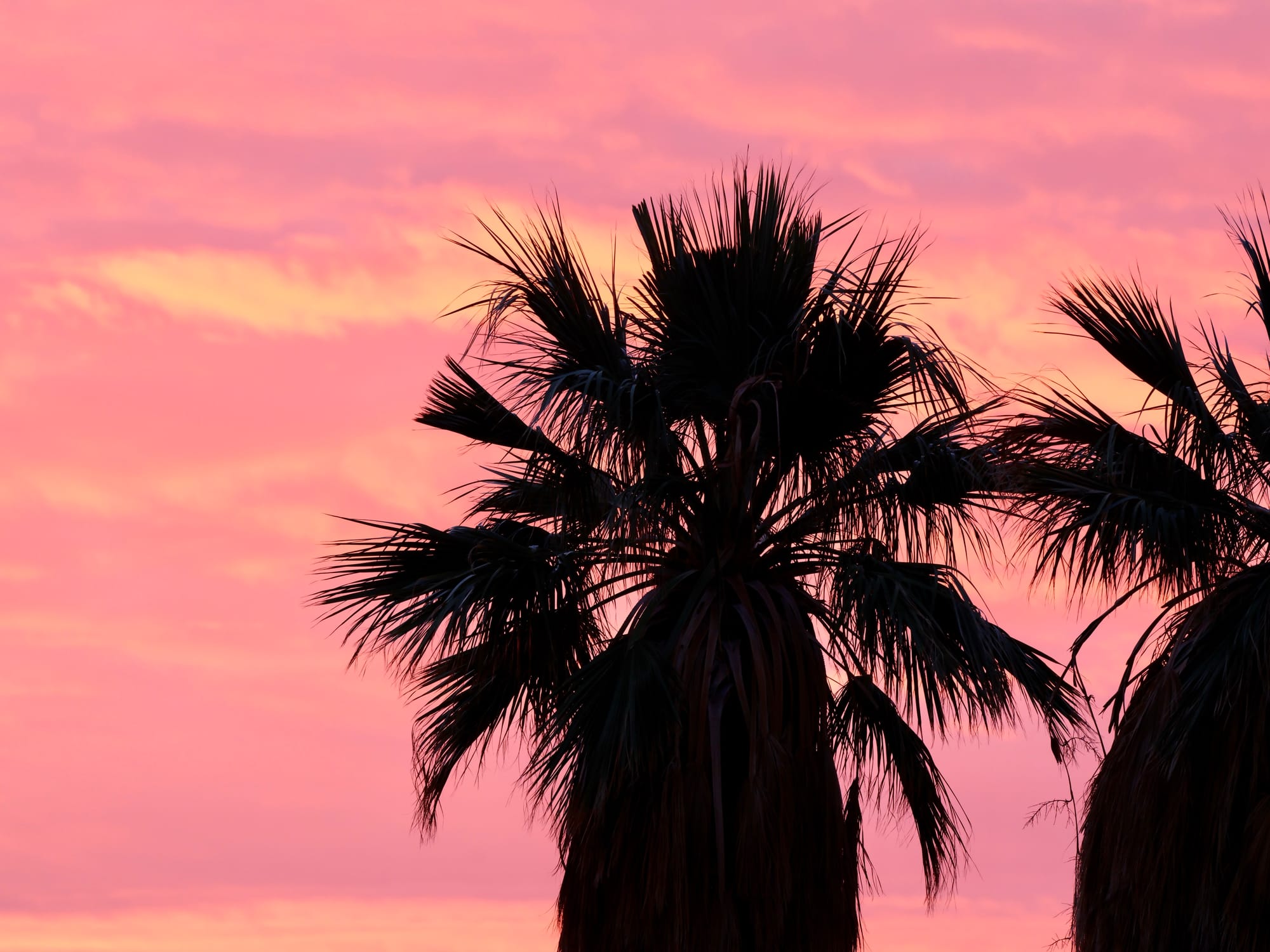
Eventually the light in the west shifts itself to warm oranges and pinks casting a halo above the western ramparts while the eastern ranges reflect this warm light as a last wallow in colored splendor. The eye is magnetically drawn to this display until the last color fades from the sky.
The quality of the silence here is that it is full, thick, and robust. It is like a kind of bubble pierced in small places by birds, then rent by the roar of a jet or chop chop chop of military helicopters. Here though it anneals when the sounds diminish and leaves again profound calm. Nearer the mountains, if one listens carefully, is the rush or roar of air passing over rocks some 3000 feet above.
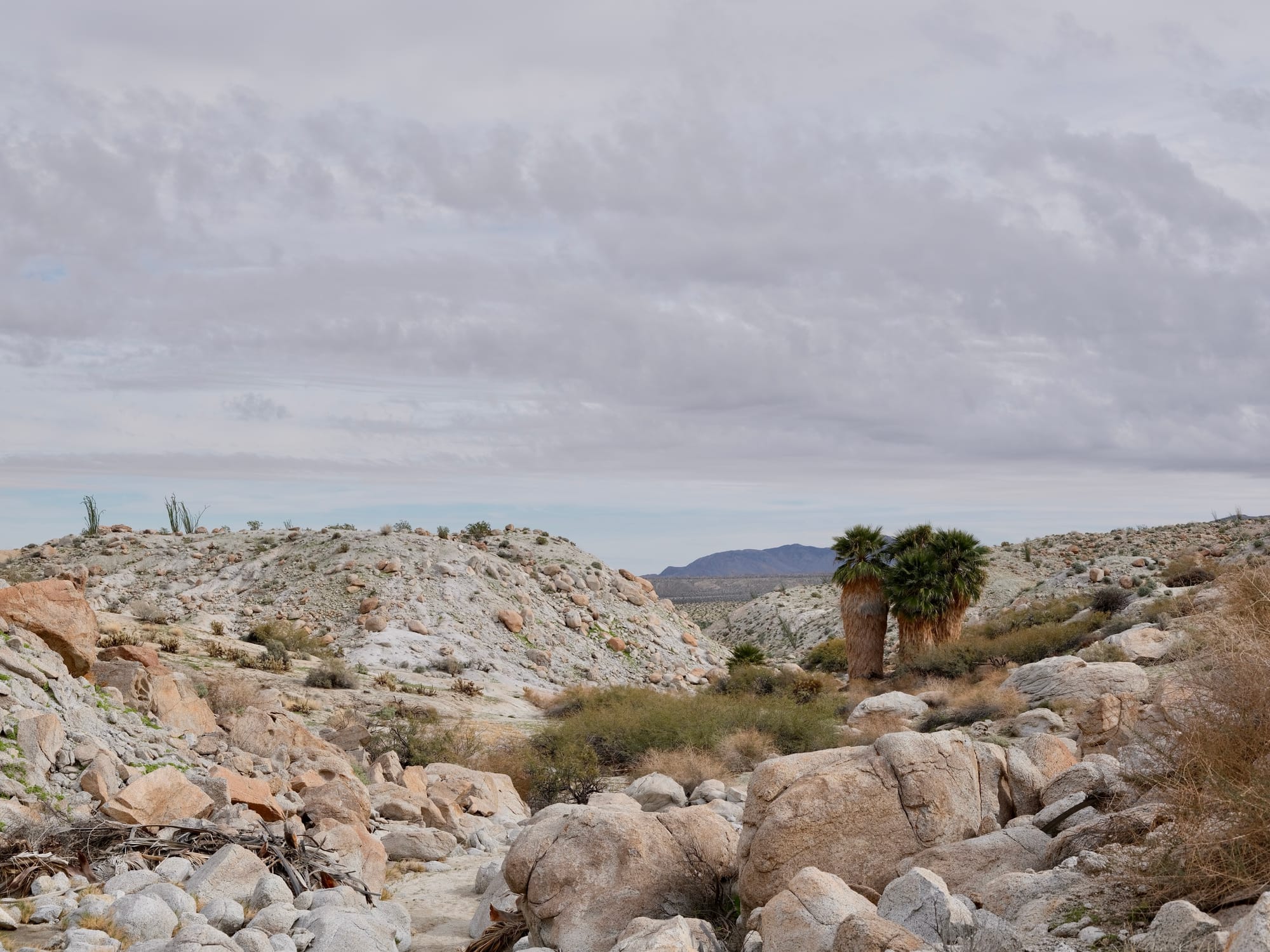
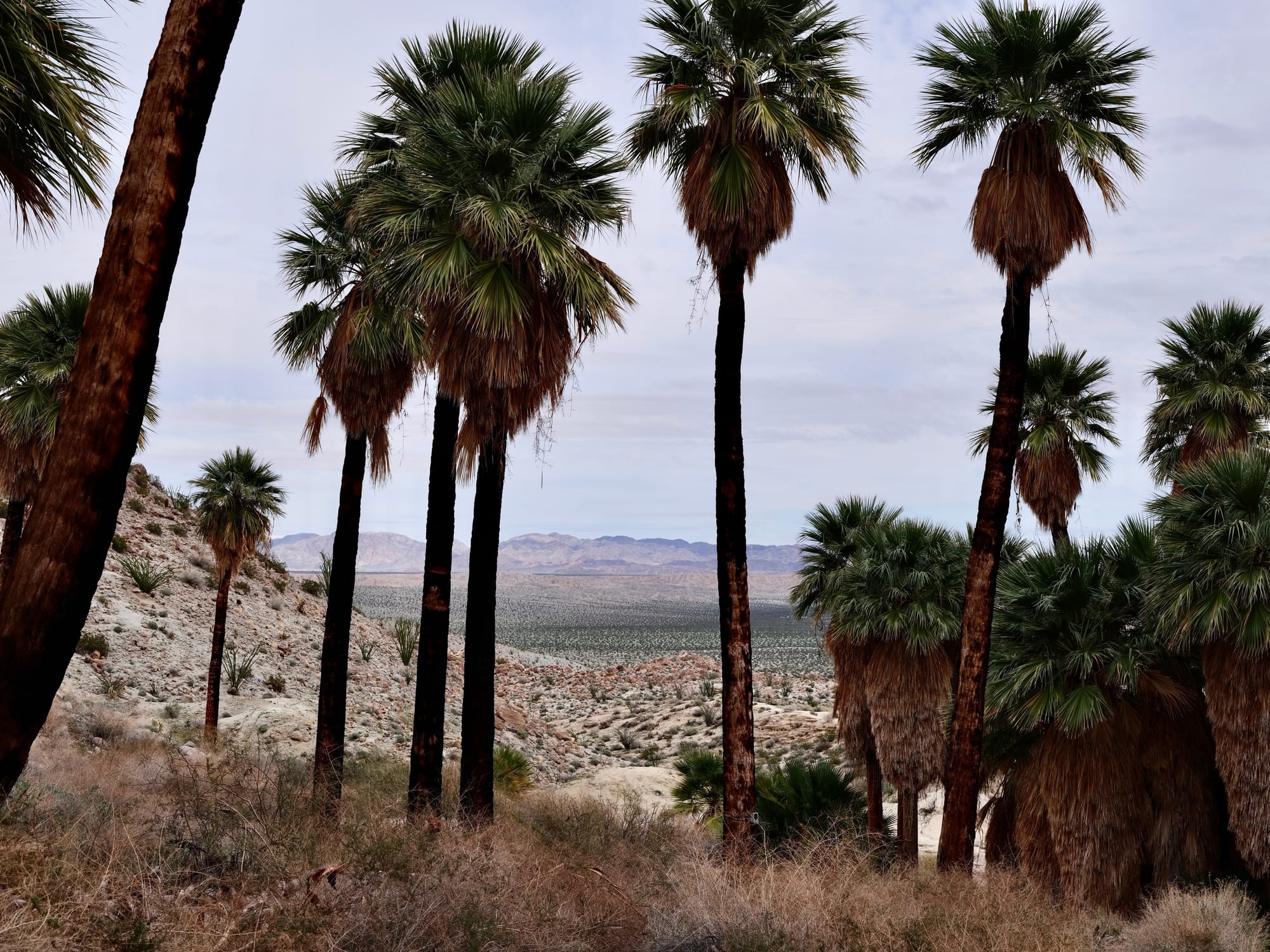
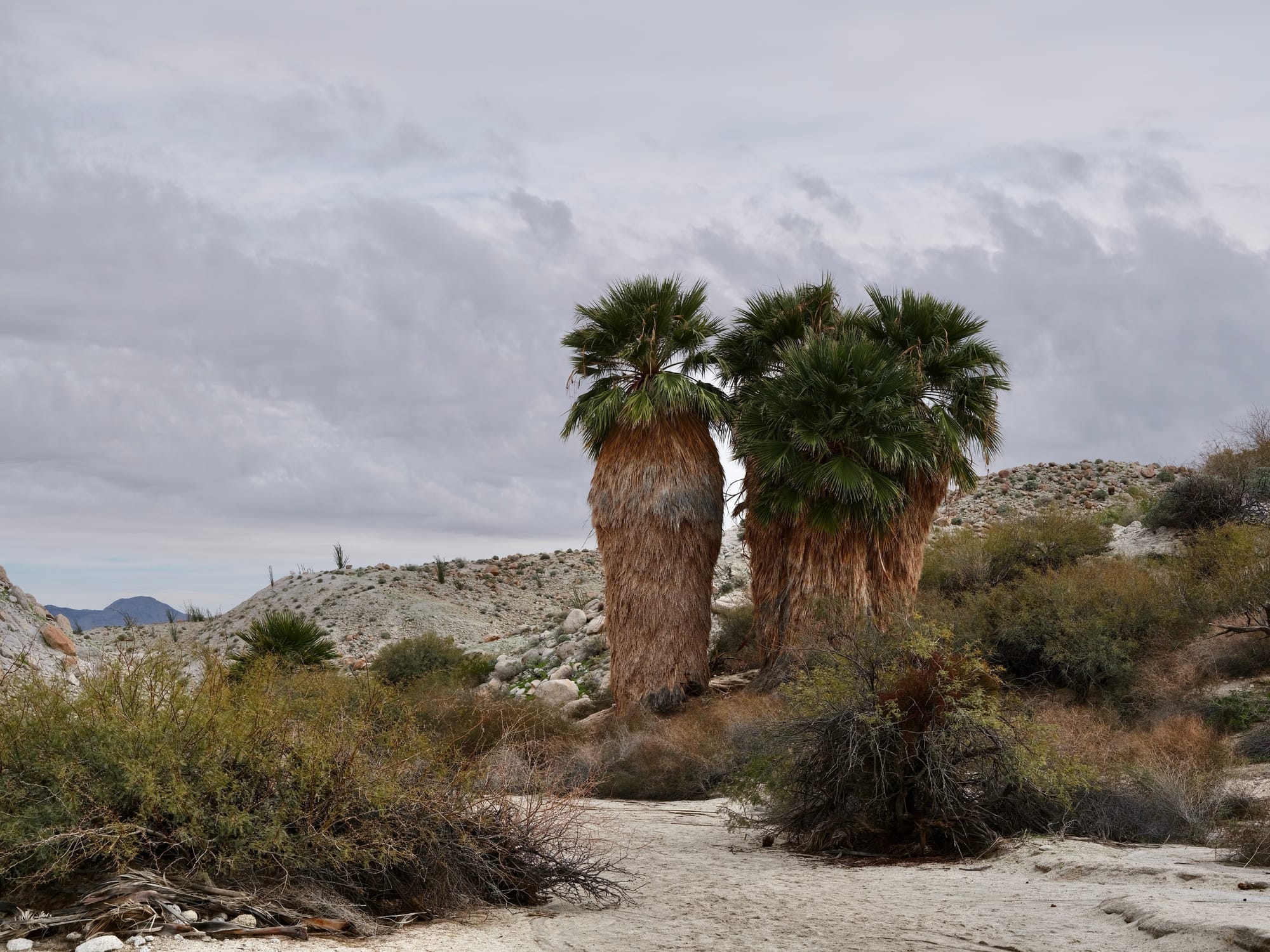
The ancient secluded palms hiding up remote canyons, refugees from the ice age or transplants from further south are a primary feature of the park. They occupy their rocky niches where there are springs.
The birds abound too. There is all number of sweet songs from white-crowned sparrows, verdin, kinglets, rock wren, and western blue birds. The steady churring of the cactus wren tough enough to nest in their cholla castles. The rough voice of the Greater Roadrunner as it sits on ramadas and ruffles its feathers and makes its mating display.
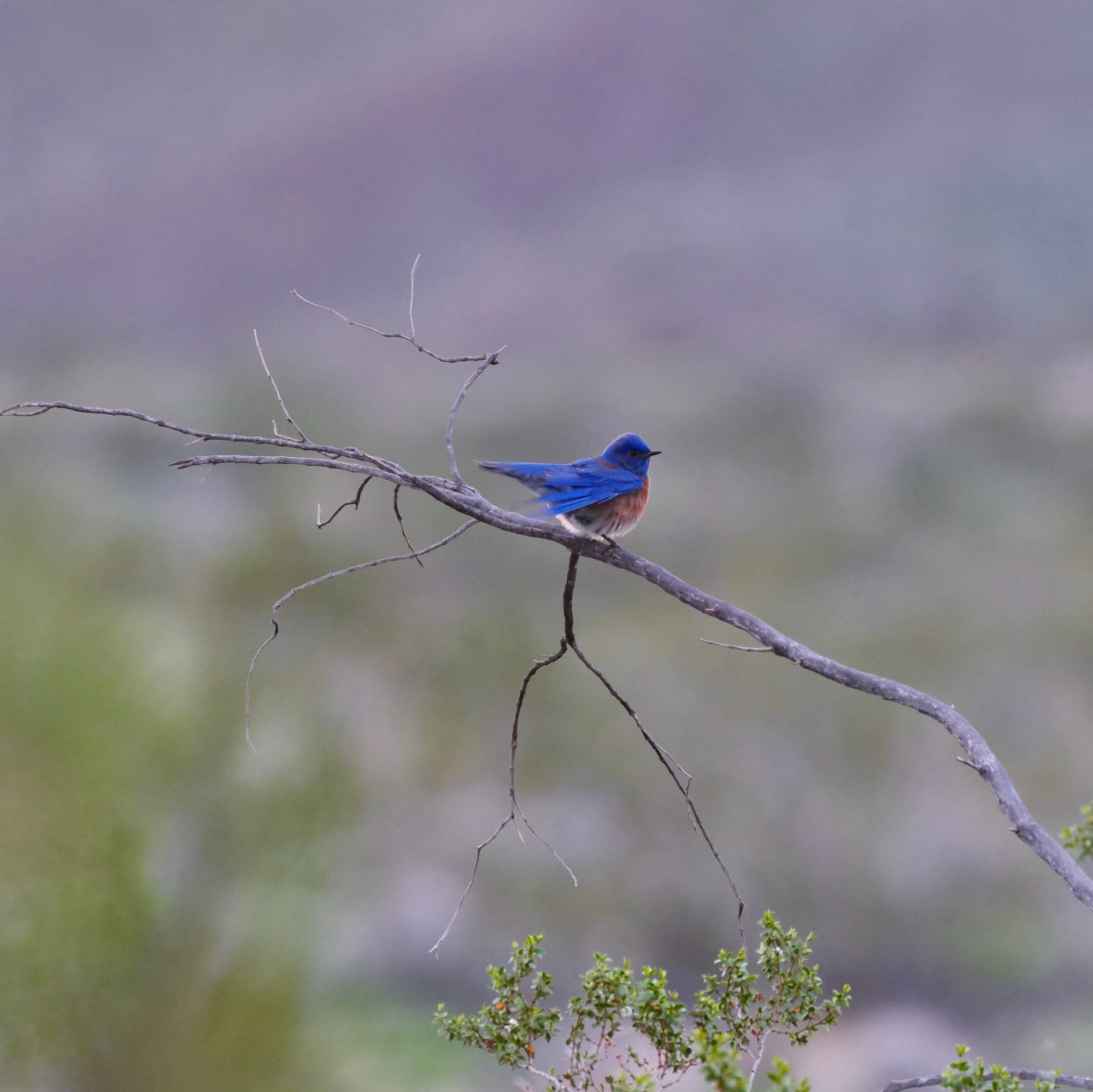
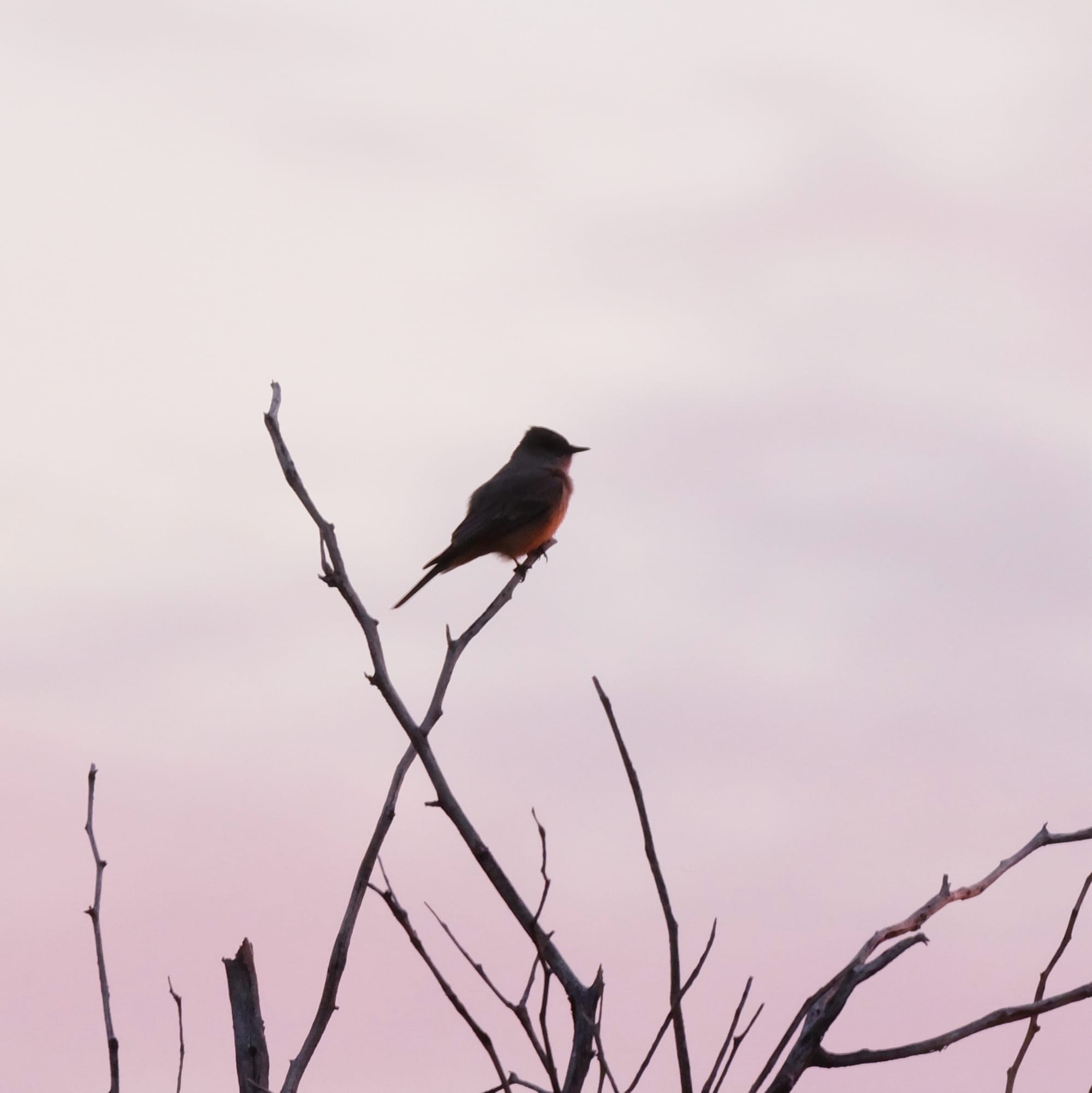
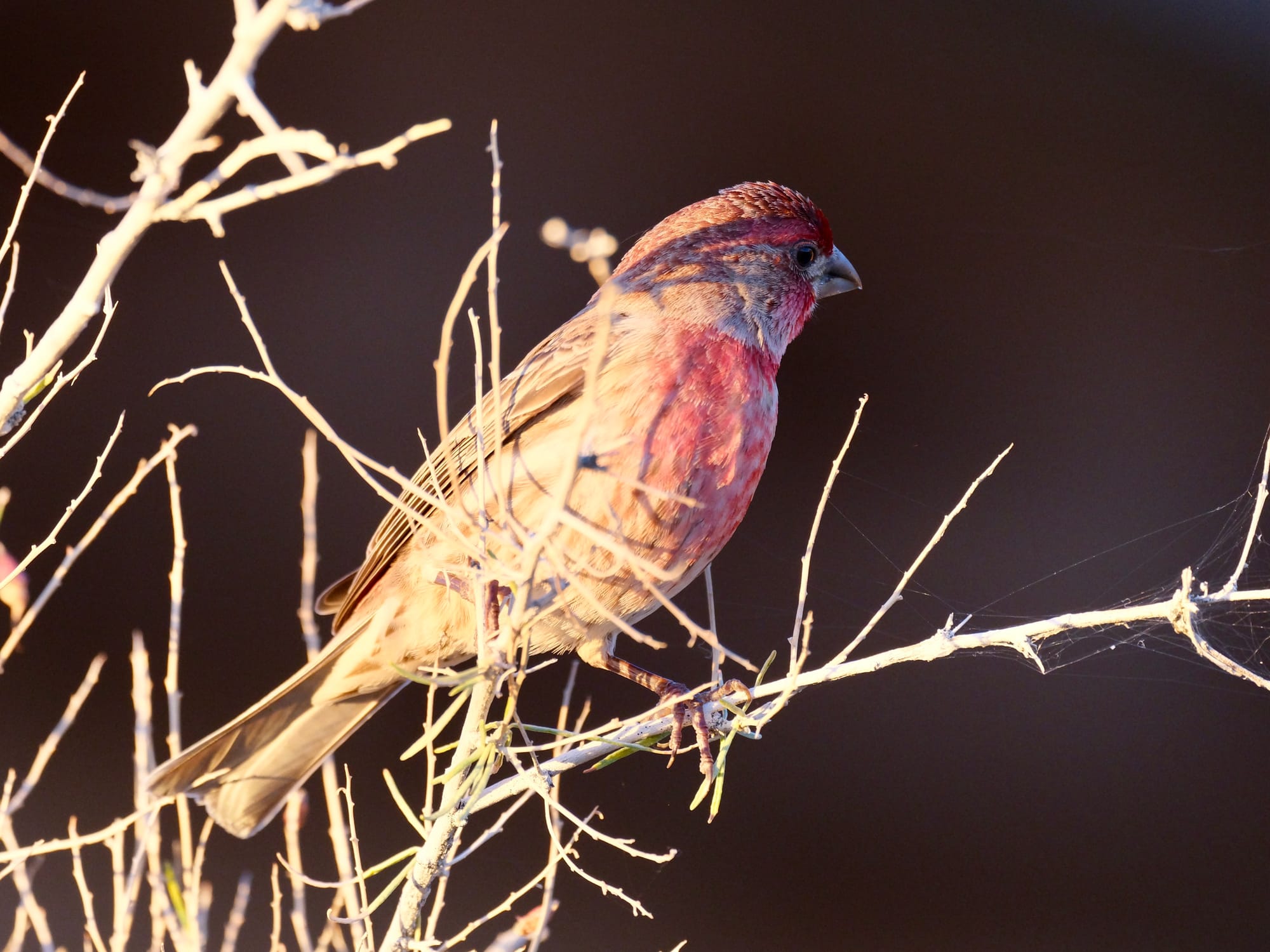
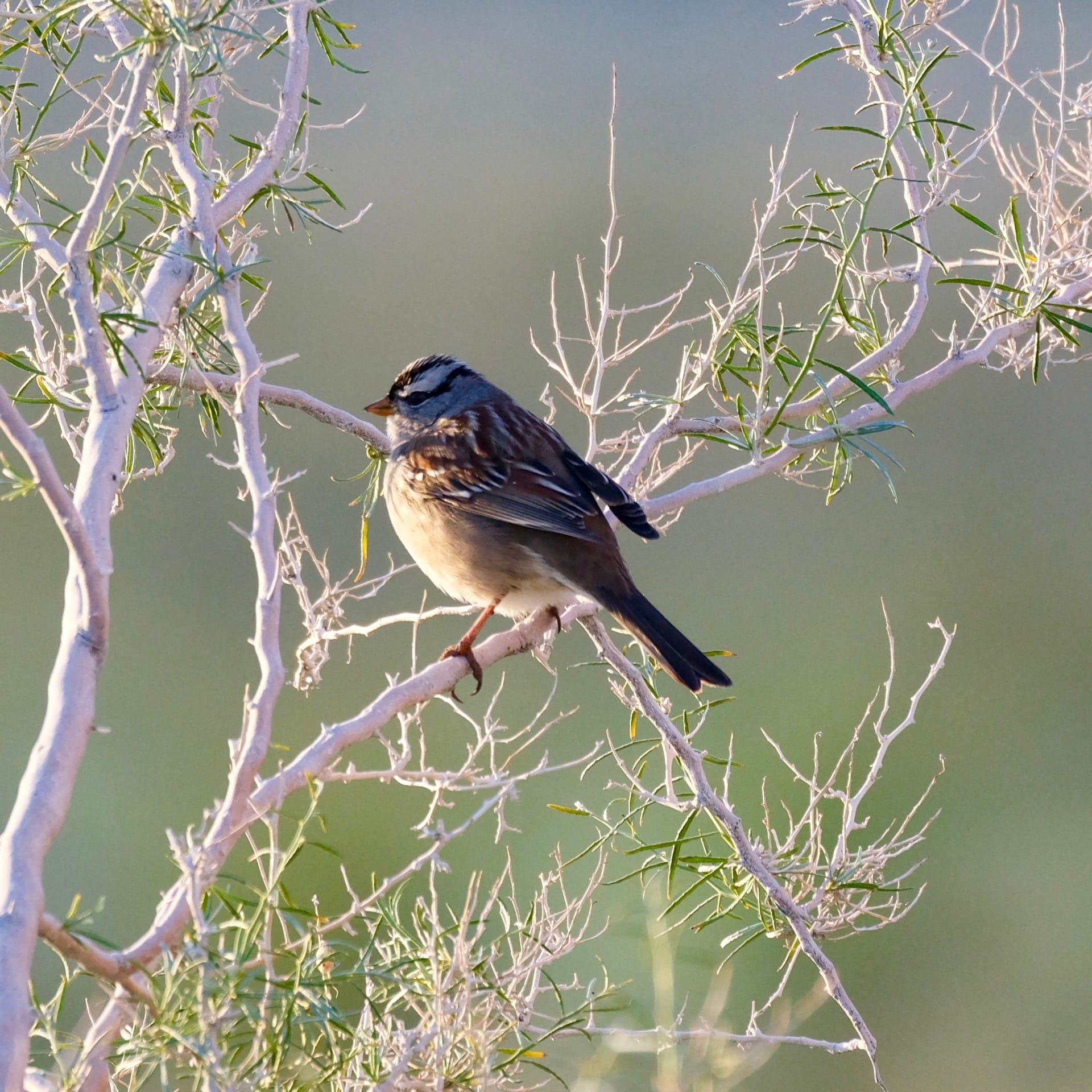
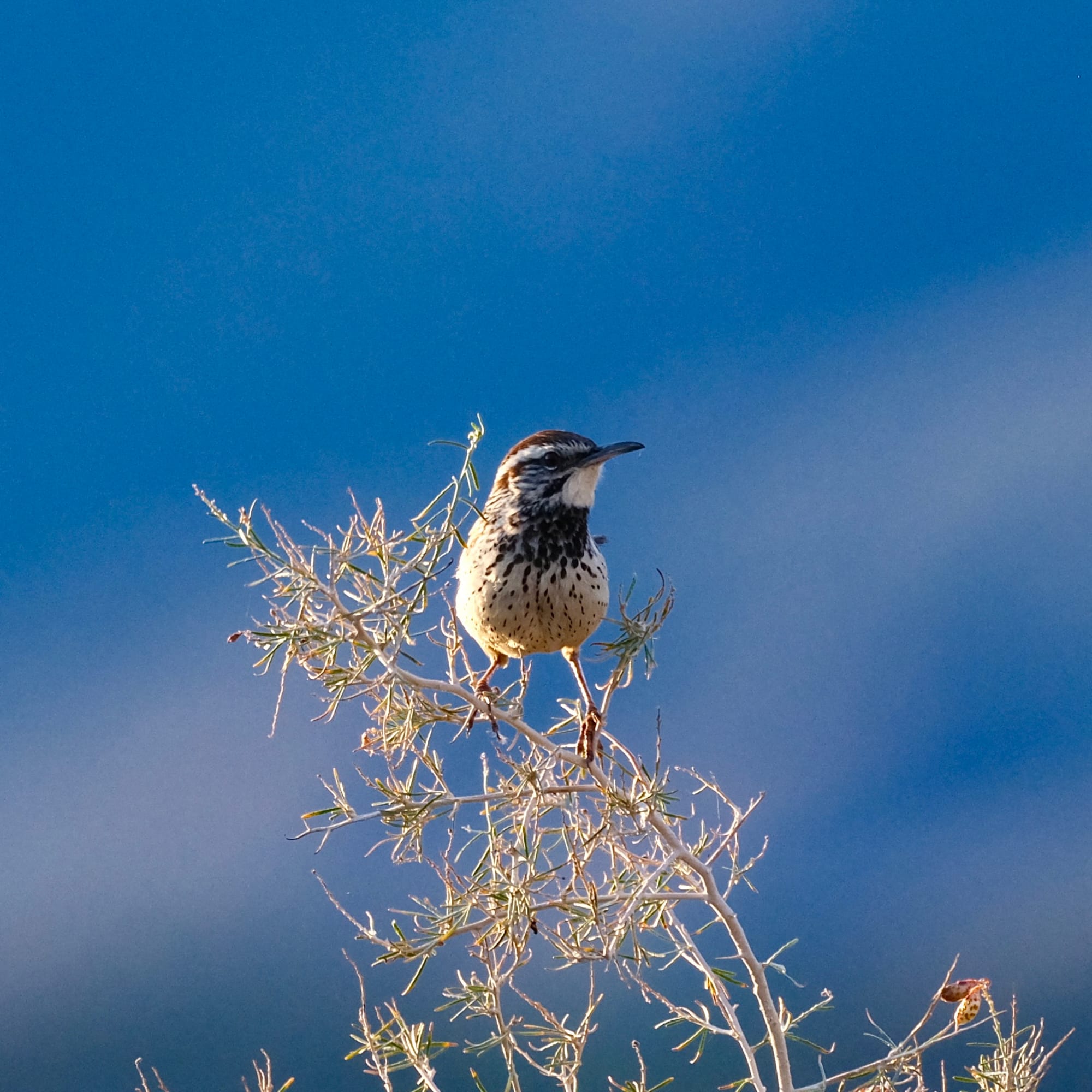
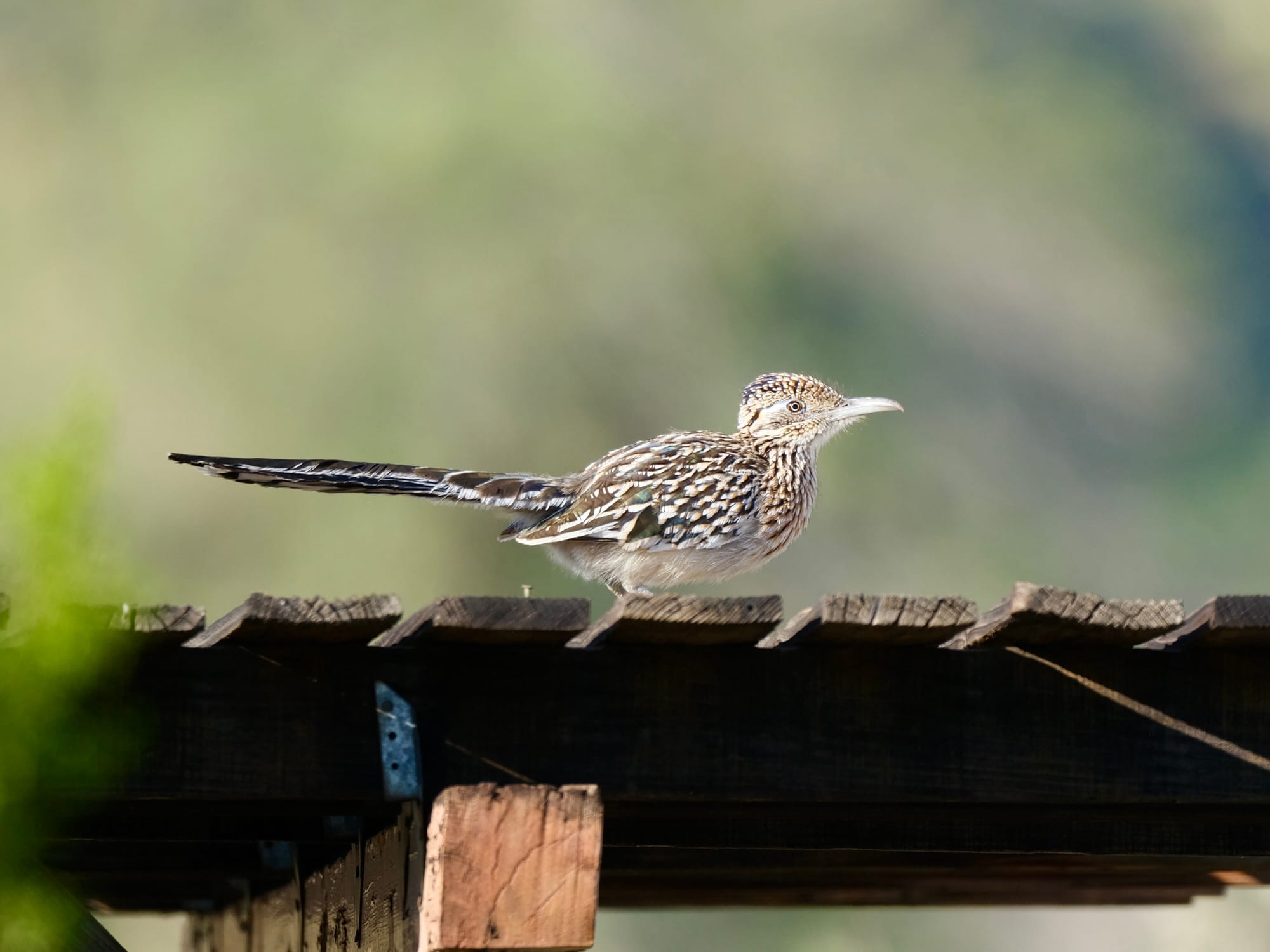
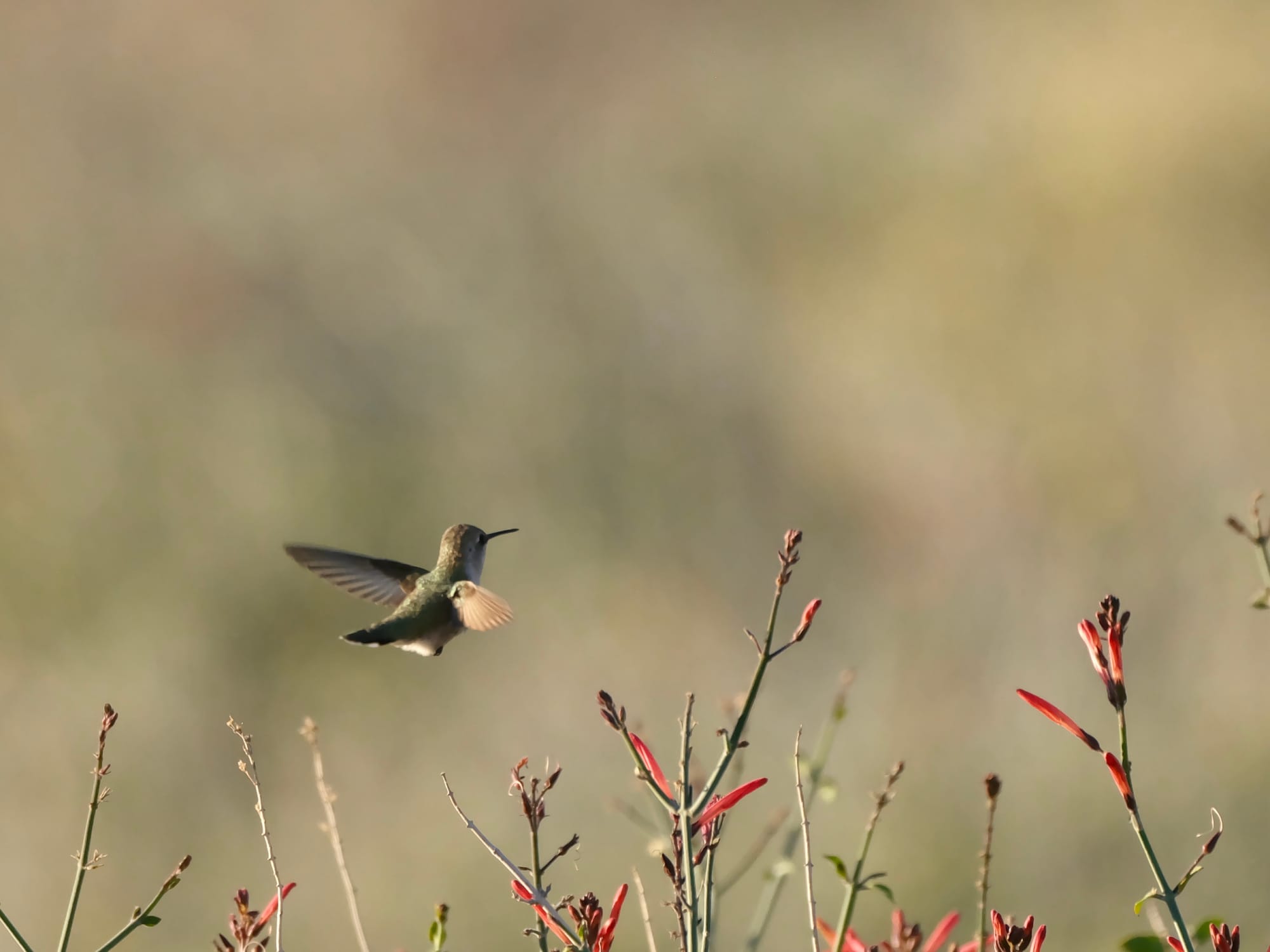
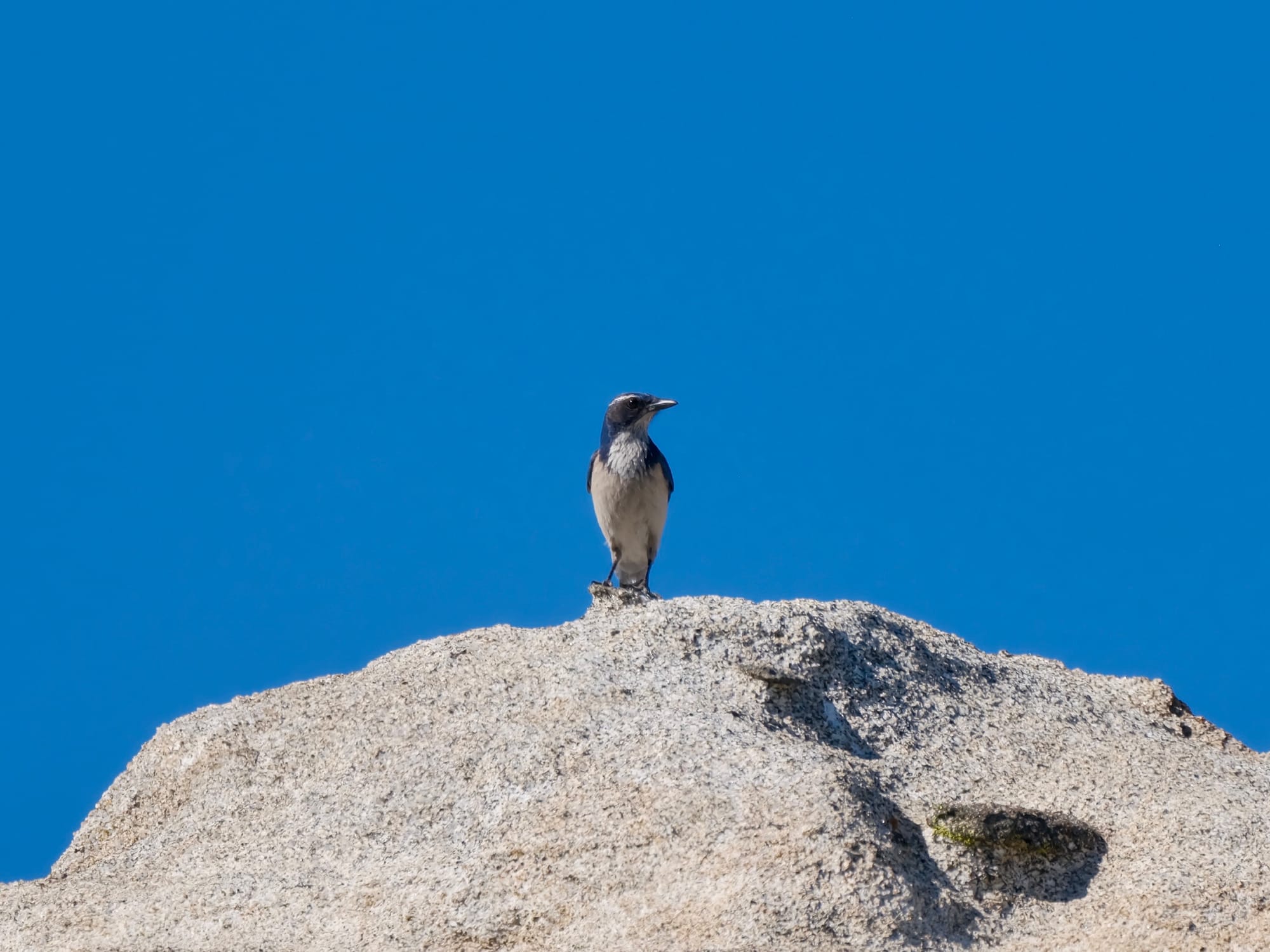
From upper left moving clockwise: Western Blue-bird, Say’s Phoebe, House Finch, White-crowned Sparrow, Cactus Wren, greater Roadrunner, Costa’s Hummingbird, California Scrub Jay, California Thrasher.
The roadrunner’s friend the Ravens call and growl as they stalk the campground for food, keeping their eyes on the dog bowl.
If one thinks about and watches birds closely enough it is hard to say they are not the pinnacle of evolution in terms of beauty and engineering. Surely there may be a few ugly birds but really very few. The evolutionary audacity to take to the air, to conquer it, and occupy it so completely, to express this novel idea of flight with such grace and delicacy seems an ambition beyond our mortal comprehension. It is such an everyday experience, the birds of the air, that we do not reckon it for the miracle it represents. For the blessing it is; to be confronted regularly with such beauty and grace in the skies.
From here we must logically jump off onto the blessings of the wild Earth. A place so remarkable that if we catalog and think about the beautiful and queer we cannot suppose that it were real. To describe a world with comets, electric eels, flying creatures, geysers, waterfalls, rainbows, perfect blue skies, thundering lightning, tornados, water falling from the sky as liquid and in frozen orbs, or delicate flakes. Air scented by the delicate smells of forest, desert, or sea. Abundance as perhaps it was originally defined.
Evidence that we were not cast from the garden but into it, that the story may be reversed in that we are now busy casting the garden from us. That we cannot all be intensely grateful of this presence amongst us might suggest we are losing touch with our humanity.